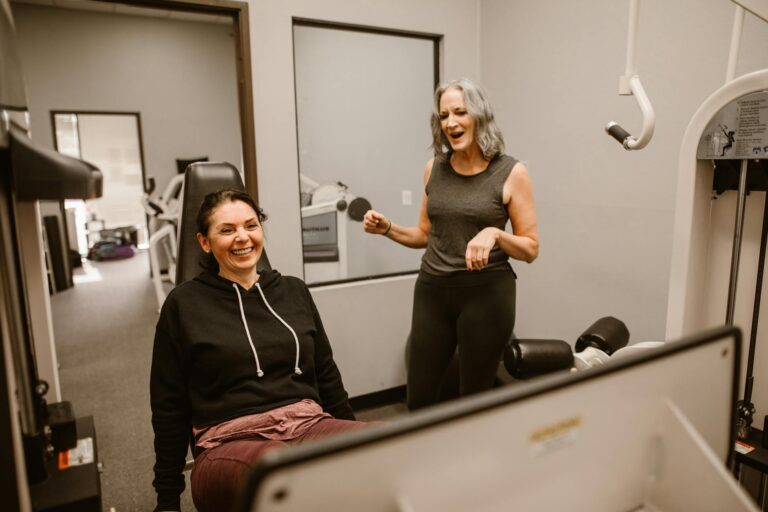
Yes, staying physically active after retirement can meaningfully reduce the risk of developing dementia — and the evidence is now strong enough that researchers are calling physical activity one of the most modifiable risk factors in brain aging. A landmark study published by Johns Hopkins Bloomberg School of Public Health in February 2025 found that adults who engaged in just 35 minutes per week of moderate-to-vigorous physical activity — compared to none at all — had a 41% lower risk of developing dementia over a four-year follow-up period. That is not a small effect. For context, consider a 70-year-old retiree who takes a brisk 20-minute walk three times a week.
According to this research, that modest routine could cut their dementia risk nearly in half compared to a sedentary peer. What makes this finding particularly relevant for retirees is that the protective effect does not diminish with age — it may actually strengthen. Research from Boston University published in JAMA Network Open in November 2025, drawing on the long-running Framingham Heart Study, found that physical activity during late life, specifically between ages 65 and 88, may reduce dementia risk by up to 45%. The study found late-life exercise showed slightly stronger protective effects than midlife activity alone. This article covers what the research says about how much activity is needed, what is happening inside the brain, who benefits most — including people with a genetic predisposition to Alzheimer’s — and what kinds of exercise are most practical for older adults.
Table of Contents
- How Much Physical Activity After Retirement Is Needed to Protect Against Dementia?
- What Is Exercise Actually Doing to the Aging Brain?
- Does Late-Life Exercise Help Even If You Were Sedentary Before?
- What Types of Exercise Are Most Practical and Effective for Retirees?
- When Does Exercise Not Prevent Dementia — Limitations and Caveats
- The Social and Mental Health Dimension of Exercise After Retirement
- What Future Research May Clarify
- Conclusion
- Frequently Asked Questions
How Much Physical Activity After Retirement Is Needed to Protect Against Dementia?
The Hopkins study offers one of the most accessible thresholds in the literature: 35 minutes per week of moderate-to-vigorous activity is enough to see substantial risk reduction compared to doing nothing. But the data also shows a clear dose-response relationship, meaning more activity produces greater protection. Risk reduction climbed to 60% for those doing 35 to 70 minutes per week, reached 63% for those doing 70 to 140 minutes per week, and hit 69% for those exercising 140 minutes or more per week. The curve does flatten somewhat at higher volumes, but the direction is consistent — more is better, up to a point. To put those numbers in practical terms: 140 minutes per week works out to 20 minutes a day, seven days a week, or roughly 35-minute sessions four days a week. That is achievable for most retirees who are not dealing with serious physical limitations.
A retiree who walks their neighborhood each morning, takes a water aerobics class twice a week, or cycles on a stationary bike during their favorite television program can plausibly hit these thresholds without a gym membership or structured training program. The comparison that matters here is not between elite exercisers and sedentary adults — it is between people doing almost nothing and people doing a little. That gap produces the largest protective signal. It is worth noting that the 41% figure applies to moderate-to-vigorous activity specifically. Light activity — gentle stretching, slow walking — was not the focus of these risk reduction measurements. That does not mean light movement is worthless, but retirees aiming for brain health benefit from pushing their effort level at least into the moderate range, defined generally as activity that raises the heart rate and causes some breathlessness while still allowing conversation.

What Is Exercise Actually Doing to the Aging Brain?
The risk reduction numbers are striking, but understanding the biological mechanisms helps explain why the effect is real rather than coincidental. Exercise appears to act on several of the key pathways involved in Alzheimer’s disease and other dementias. Physical activity reduces the accumulation of amyloid-beta plaques and tau tangles — the two proteins whose buildup is most closely associated with Alzheimer’s pathology. It also lowers neuroinflammation, a chronic low-grade inflammatory state in brain tissue that accelerates neuronal damage as people age. Beyond these Alzheimer’s-specific mechanisms, exercise improves cardiovascular health broadly, reducing blood pressure and lowering the risk of type 2 diabetes — both of which are independently associated with dementia risk. The brain is profoundly dependent on consistent blood flow, and anything that improves vascular health tends to benefit cognitive function over the long term.
One large randomized controlled trial in older adults found that one year of regular aerobic exercise produced a measurable increase in hippocampal volume — the part of the brain most critical to memory formation — equivalent to reversing one to two years of typical age-related brain shrinkage. That is a structural change, visible on imaging, from a behavioral intervention. However, these biological benefits are not instant. The hippocampal volume finding came after a full year of consistent aerobic exercise. Retirees who begin exercising after a long sedentary period should not expect cognitive improvements within weeks. The protective effects of physical activity appear to accrue over months and years, which is why researchers consistently frame this as a lifestyle pattern rather than a short-term intervention. Starting is worthwhile at any age, but the longer the window of consistent activity, the more robust the brain-level changes appear to be.
Does Late-Life Exercise Help Even If You Were Sedentary Before?
One of the most encouraging findings in recent dementia research is that it is not too late to start exercising in your sixties, seventies, or even eighties. The Boston University and Framingham Heart Study analysis found that late-life physical activity — in people aged 65 to 88 — showed protective effects against dementia that were slightly stronger than those observed from midlife activity alone. This challenges the older assumption that habits formed in middle age set the trajectory and that later changes matter less. Even more striking is what the research found regarding people who carry the APOE ε4 genetic variant, which is the most well-established genetic risk factor for late-onset Alzheimer’s disease. In midlife, exercise did not appear to confer significant protection for APOE ε4 carriers — a finding that puzzled researchers.
But in late life, exercise reduced dementia risk for both carriers and non-carriers. In other words, even people with a genetic predisposition to Alzheimer’s appear to benefit from physical activity when that activity occurs in the retirement years. For someone who received an APOE ε4 result from a genetic test and assumed that lifestyle changes would not help much, this finding is a meaningful correction to that fatalism. Frailty is another factor that often discourages older adults from exercising, but the evidence does not support the idea that frail older adults are beyond benefit. Research indicates that even small increases in daily physical activity are associated with lower dementia risk in this population. The threshold for a meaningful effect is lower for someone starting from near-zero activity, which is precisely the situation many frail retirees find themselves in.

What Types of Exercise Are Most Practical and Effective for Retirees?
The research on physical activity and dementia does not point to a single superior exercise modality. The studies examined activity broadly, using measures of overall moderate-to-vigorous physical activity rather than comparing, say, swimming against resistance training. This is practically useful — it means retirees have genuine flexibility to choose activities they find enjoyable and sustainable. Walking remains the most accessible option for most older adults, requires no equipment, and can be scaled in intensity and duration. That said, there is a reasonable case for combining aerobic exercise with some form of resistance or balance training. Aerobic activity drives the cardiovascular and hippocampal benefits most directly documented in the literature.
Resistance training and balance work contribute to fall prevention, which becomes increasingly important as people age — a serious fall can disrupt an active lifestyle abruptly and trigger a prolonged sedentary period. The tradeoff to consider is this: a retiree with limited time and energy who can only commit to one type of exercise is probably better served by prioritizing aerobic activity for the dementia-specific benefits, while adding some strength or balance work when capacity allows. For those already experiencing mild cognitive decline, the timeline for starting activity becomes more urgent. A Texas A&M study published in December 2025 found that just 20 minutes of exercise twice a week may help slow dementia progression in people with existing mild cognitive decline. This is a different finding from the prevention literature — it suggests that physical activity may have a role not just in delaying onset but in managing the condition once early symptoms have appeared. For families supporting a loved one with mild cognitive impairment, this represents an actionable, low-cost intervention worth discussing with their care team.
When Does Exercise Not Prevent Dementia — Limitations and Caveats
Physical activity is one of the most promising lifestyle interventions in dementia research, but it is not a guaranteed shield. It is worth being clear about what the evidence does and does not say. The studies linking exercise to reduced dementia risk are largely observational, meaning they track what happens to people who exercise more versus less — they are not experiments in which researchers randomly assign people to exercise and then wait decades to count dementia cases. The Johns Hopkins study used a four-year follow-up, which is relatively short for a condition that develops over many years. Randomized controlled trials on dementia outcomes are difficult to conduct at scale, so the evidence base has real methodological constraints. There is also the question of reverse causation: people who are beginning to develop dementia may reduce their physical activity before a diagnosis is made, which could artificially inflate the apparent protective effect of exercise in observational studies.
Researchers attempt to control for this, and the consistent dose-response relationship across multiple large studies strengthens confidence in a genuine effect, but the possibility of unmeasured confounders cannot be eliminated entirely. Physical activity also does not operate in isolation. The Alzheimer’s Society meta-analysis of 58 studies found that regular exercisers are up to 20% less likely to develop dementia — a meaningful reduction, but not elimination of risk. People with very strong genetic risk factors, significant vascular disease, or other major risk contributors may develop dementia despite being active. Exercise should be understood as one component of a brain-healthy lifestyle that also includes sleep quality, cognitive engagement, social connection, and management of cardiovascular risk factors. Retirees who invest heavily in physical activity while ignoring poor sleep or uncontrolled hypertension are leaving risk on the table.

The Social and Mental Health Dimension of Exercise After Retirement
Physical activity after retirement rarely happens in a vacuum, and some of its brain-health benefits may come indirectly through social engagement. Group exercise — whether that is a walking club, a water fitness class, or a community yoga session — combines physical activity with social contact, which is itself an independently protective factor against cognitive decline.
Retirement can bring social isolation for people whose primary social networks were built around work, and exercise can serve as a structured reason to maintain regular contact with others. There is no clean way to separate the direct neurological effects of exercise from the downstream effects of reduced depression, improved sleep, and increased social engagement that often accompany an active retirement lifestyle. But from a practical standpoint, this is an argument for choosing exercise formats that involve other people when possible, particularly for retirees who live alone or who have limited social activity outside the home.
What Future Research May Clarify
The evidence base for exercise and dementia prevention is growing rapidly, but several important questions remain open. Researchers are working to identify whether specific exercise intensities, durations, or combinations produce distinctly different outcomes at the neurological level. The role of exercise in people who already carry a high amyloid burden — measurable now through PET imaging and blood biomarkers — is an active area of investigation.
Early results suggest that physical activity may still slow progression even in people with established preclinical Alzheimer’s pathology, but longer follow-up data is needed. There is also increasing interest in personalized exercise prescriptions for dementia prevention — matching exercise type, intensity, and timing to an individual’s genetic profile, existing health conditions, and baseline fitness level. As blood-based biomarkers for Alzheimer’s become more widely available in clinical settings, it may become possible to use biomarker changes as a real-time measure of whether an exercise intervention is producing the desired neurological effects. For now, the practical message from the current evidence is clear enough to act on without waiting for that precision: regular moderate-to-vigorous activity in the retirement years is one of the most powerful things an older adult can do for their brain.
Conclusion
The evidence is now consistent across multiple large studies: staying physically active after retirement is associated with substantially lower dementia risk, and the benefit appears to hold even for people who were sedentary earlier in life. The Hopkins data suggests that even 35 minutes per week of moderate-to-vigorous activity — a single 35-minute brisk walk — produces a 41% risk reduction compared to doing nothing. More activity produces more protection, with the risk reduction climbing to 69% for those hitting 140 minutes per week. For people with the APOE ε4 gene variant, late-life exercise still reduces dementia risk, which is an important finding for the growing number of people who have received genetic testing results and are trying to understand what they can do.
For retirees and their families looking at practical next steps, the research points to accessible, sustainable activity — walking, swimming, cycling, group fitness classes — pursued consistently over months and years rather than intensively for short bursts. Those already experiencing mild cognitive decline have reason to start immediately rather than wait for more certainty; the Texas A&M findings suggest even minimal exercise twice a week may slow progression. Dementia is not entirely preventable, and exercise is not a cure. But among the modifiable factors available to older adults, physical activity stands out as among the most powerful and the most underused.
Frequently Asked Questions
Is it too late to start exercising if I am already in my 70s or 80s?
No. The Boston University research specifically examined adults aged 65 to 88 and found meaningful dementia risk reduction from late-life physical activity. The evidence suggests it is not too late to start, though the benefits accrue over time with consistent activity.
Does the type of exercise matter — walking versus strength training versus swimming?
The research focuses primarily on moderate-to-vigorous aerobic activity as the driver of dementia risk reduction and hippocampal volume changes. Walking, cycling, swimming, and similar activities are well-supported. Resistance and balance training add fall-prevention benefits but have less specific evidence for dementia outcomes.
I have the APOE ε4 gene. Will exercise actually help me?
Yes, based on current evidence. While midlife exercise did not show significant protection for APOE ε4 carriers in the Framingham study, late-life exercise reduced dementia risk for both carriers and non-carriers. This is an encouraging finding for people with this genetic variant.
My parent already has mild cognitive decline. Is it worth them starting to exercise now?
Research from Texas A&M published in December 2025 found that just 20 minutes of exercise twice a week may help slow dementia progression in people with mild cognitive decline. It is worth discussing with their physician, but the current evidence supports physical activity as a useful component of their care.
How quickly will I notice cognitive benefits from starting to exercise?
The structural brain changes documented in research — including hippocampal volume increases — were measured after one year of consistent aerobic exercise. Short-term cognitive improvements may be noticeable sooner, but the significant neuroprotective effects appear to build over months and years.
Does light activity like slow walking or gentle stretching count?
The major risk reduction figures in the research are linked to moderate-to-vigorous activity — effort levels that raise the heart rate noticeably. Light activity is not without value, but retirees seeking the strongest brain-health benefit should aim for activity that creates some cardiovascular demand.