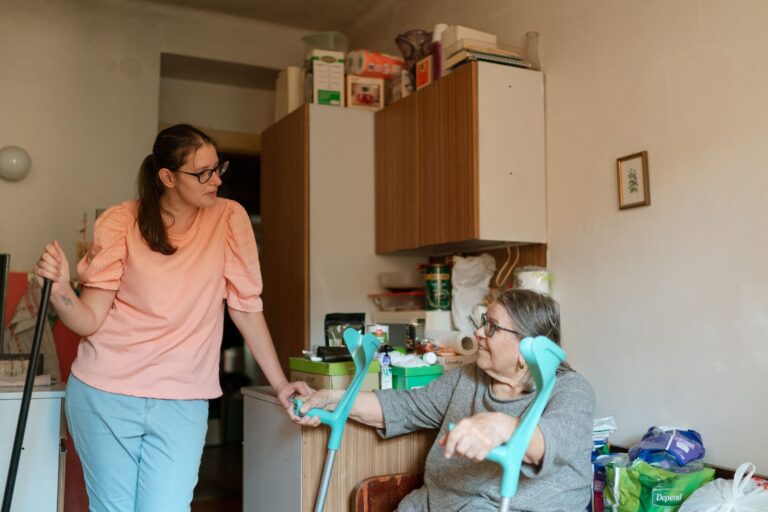
Dementia patient sits at the center of this dementia and brain health question.
When a dementia patient says something sexually explicit to a caregiver, grabs at clothing, or makes unwanted physical contact, the immediate response matters enormously. The right approach is calm redirection, not confrontation. Move out of reach, use a neutral tone, introduce a distraction — a familiar activity, a tactile object, a change of scenery — and avoid any reaction that involves shame, scolding, or raised voices. In most cases, this kind of behavioral redirection is enough.
Research suggests that non-pharmacological strategies succeed in close to 75% of cases, making them the clear first-line response before any medication is considered. This is a topic many caregivers struggle to discuss openly, which means it often goes unaddressed until a situation has already become distressing. Inappropriate sexual behavior (ISB) in dementia affects somewhere between 4 and 25 percent of patients, with higher rates in skilled nursing facilities where multiple patients share close quarters with staff. The wide range reflects how differently ISB presents — from verbal comments and exposure to unwanted touching — and how inconsistently it gets documented. This article covers why this behavior happens, how dementia type affects its expression, what caregivers and facilities can do immediately and over time, when medication becomes relevant, and how to protect everyone involved.
Table of Contents
- Why Do Dementia Patients Become Sexually Inappropriate?
- What Does Inappropriate Sexual Behavior in Dementia Actually Look Like?
- The Role of Triggers — and Why Boredom Matters More Than Most Caregivers Realize
- How to Respond in the Moment — Practical Steps for Caregivers
- When Non-Pharmacological Strategies Are Not Enough
- Medical Rule-Outs Before Assuming It’s Purely Behavioral
- Protecting Caregivers and Building Institutional Support
- Conclusion
- Frequently Asked Questions
Why Do Dementia Patients Become Sexually Inappropriate?
The short answer is brain damage. Dementia progressively impairs the frontal lobes, which govern impulse control, social judgment, and the ability to read context. When those systems fail, behaviors that a person would normally suppress — sexual comments, touching, exposure — can emerge without the internal braking mechanism that would ordinarily prevent them. This is not a personality change in the sense that the person “wants” to behave this way; it reflects a loss of the cognitive machinery that regulates behavior. The type of dementia matters significantly here. In frontotemporal dementia (FTD), sexual disinhibition can appear early — sometimes as one of the first noticeable symptoms — because FTD directly attacks frontal and temporal regions responsible for social behavior. In Alzheimer’s disease, ISB more typically emerges in moderate-to-severe stages when broader cognitive decline has eroded inhibitory controls.
Vascular dementia presents differently again, depending on the location of vascular damage. Caregivers who notice ISB in a relatively early-stage dementia patient should ask whether FTD has been properly ruled out, because the distinction affects both prognosis and treatment approach. It’s also worth stating clearly: the most common sexual change in dementia is not hypersexuality. It’s the opposite. Most people with dementia experience decreased sexual interest and emotional withdrawal. ISB is a real and serious issue, but it represents a subset of patients, not a universal feature of the disease. Understanding this helps caregivers avoid over-pathologizing normal affection-seeking while still responding appropriately when genuine ISB occurs.

What Does Inappropriate Sexual Behavior in Dementia Actually Look Like?
ISB in dementia falls into two broad subtypes that reflect different underlying dynamics. The first is disinhibited behavior — public masturbation, explicit language, unwanted touching of caregivers or other residents — which tends to reflect frontal lobe damage and loss of social filtering. The second is intimacy-seeking behavior, which involves a patient misidentifying a caregiver as a spouse or partner and making sexual advances accordingly. This second type is less aggressive in character but can be just as distressing for the caregiver on the receiving end. A common scenario: a male patient with moderate Alzheimer’s calls out to a female nurse using his late wife’s name, reaches for her hand, and makes a sexually suggestive comment. He is not predatory; he is confused and lonely.
His brain has misfiled the nurse’s presence into a schema of intimate partnership. Recognizing this distinction matters because the appropriate response differs from how one would handle genuinely disinhibited or aggressive behavior. Gentle redirection and avoiding physical proximity are still the right first steps, but understanding the intimacy-seeking dynamic can help caregivers respond with more patience. However, not all ISB is benign or easily explained. In some patients, particularly in institutional settings with multiple residents, the behavior may be directed at other cognitively impaired individuals who cannot meaningfully consent. This situation is ethically and legally distinct from a patient making a comment to a staff member, and it requires facility-level policy and possible safeguarding intervention. The intimacy-seeking versus disinhibited distinction is a useful clinical framework, but it should not be used to minimize situations where another vulnerable person is at risk.
The Role of Triggers — and Why Boredom Matters More Than Most Caregivers Realize
ISB rarely appears out of nowhere. Like most behavioral symptoms in dementia, it tends to cluster around specific conditions: certain times of day, particular environments, transitions like bathing or dressing, or states like boredom, discomfort, or loneliness. Before assuming a behavioral intervention needs to be escalated, caregivers and clinical teams should conduct a structured assessment of what precedes the behavior — who is present, where it happens, what time of day, what the patient was doing immediately before, and whether anything in the environment changed. Boredom deserves special attention. A patient who spends hours with nothing to engage them, no stimulation, no purposeful activity, is far more likely to exhibit behavioral symptoms of all kinds, including sexual ones.
Structured activity programming — adapted to the patient’s cognitive level — is not a luxury; it is a direct clinical intervention. Occupational therapists who work in memory care often find that adding even modest structured engagement reduces behavioral incidents across the board, including ISB. Caregiver-specific triggers are also worth examining. Some patients associate certain caregivers — particularly those of a specific gender, with a particular scent, voice, or physical resemblance — with a former intimate partner. Staff who work with a patient who consistently misidentifies them may find it helpful to alter their presentation: wearing scrubs or a different color, changing their approach angle, or having a different staff member take over certain personal care tasks. This is not about blaming the caregiver; it is a practical environmental adjustment that removes a triggering association.

How to Respond in the Moment — Practical Steps for Caregivers
When ISB occurs, the immediate priority is to de-escalate without reinforcing the behavior. The standard approach: stay calm, avoid eye contact that could be misread as engagement, put physical distance between yourself and the patient (arm’s length or more), and use a neutral, matter-of-fact tone to redirect attention. Introduce a distractor — a familiar object, a snack, a piece of music, a simple task. If redirection doesn’t work, calmly leave the room and return after a brief interval. What not to do is just as important. Scolding, raising your voice, expressing disgust, or attempting to reason with the patient about why the behavior is inappropriate are all counterproductive.
These responses can agitate the patient, escalate the behavior, and create a confrontational cycle that makes future care interactions harder. The patient lacks the cognitive capacity to process the social correction; what they register instead is the emotional temperature of the interaction, which tends to go up when caregivers react with visible distress. Keeping hands occupied is a simple but effective tactic. Sensory objects — soft textured items, weighted blankets, fidget tools, familiar personal items — give patients something to do with their hands and can redirect restless, tactile behavior before it escalates. Some memory care environments make these available as standard in common areas. The tradeoff is that these objects require monitoring and replacement, and they are not effective for every patient. But as a low-risk, low-cost intervention, they are worth incorporating early.
When Non-Pharmacological Strategies Are Not Enough
Behavioral strategies work in the large majority of cases, but they have limits. When ISB is frequent, severe, resistant to redirection, or poses a risk to other residents, a referral to a geriatric psychiatrist or neurologist for pharmacological evaluation becomes appropriate. The decision to medicate should not be taken lightly, particularly in older adults, where medication side effects carry greater risk. SSRIs — citalopram and sertraline are the most commonly cited — are the first-line pharmacological option. They address the underlying neurochemical dysregulation associated with ISB without the heavier side effect burden of antipsychotics. In elderly men with vascular dementia specifically, finasteride has shown effectiveness.
Quetiapine, an atypical antipsychotic, has case-report evidence for reducing sexual disinhibition, though it carries risks including sedation and metabolic effects that must be weighed carefully. Two important warnings. First, benzodiazepines should generally be avoided for ISB in dementia patients. They can paradoxically worsen hypersexual behavior in some patients and carry well-documented risks in the elderly, including falls, cognitive worsening, and respiratory depression. Second, if a patient is on dopamine agonists — often used in Parkinson’s disease, which can overlap with dementia — those medications are a known trigger for hypersexual behavior. Reviewing and potentially discontinuing dopamine agonists is one of the first medication adjustments to consider before adding anything new.

Medical Rule-Outs Before Assuming It’s Purely Behavioral
Not every episode of sexually inappropriate behavior in a dementia patient is driven purely by neurological disinhibition. Before initiating behavioral programs or medications, clinicians should rule out treatable underlying causes. A urinary tract infection (UTI), which is common in older adults and can cause acute behavioral changes, sometimes presents with agitation or disinhibited behavior rather than the classic urinary symptoms. Pain from an untreated source — arthritis, dental problems, pressure injuries — can also manifest as behavioral dysregulation.
Medication review is equally important. Beyond dopamine agonists, other medications can contribute to behavioral changes, including steroids and certain antihistamines. A geriatrician reviewing the full medication list with ISB in mind may identify a culprit that, once addressed, reduces or eliminates the problem without any additional intervention. This medical workup is not optional — it is the foundation of any responsible behavioral assessment.
Protecting Caregivers and Building Institutional Support
ISB in dementia affects caregivers as well as patients. Staff who experience unwanted touching, explicit comments, or exposure from residents may feel embarrassed, distressed, or uncertain about whether to report what happened. Institutional culture plays a large role in whether these incidents get addressed or quietly absorbed.
Facilities that treat ISB as a normal, manageable clinical problem — rather than something shameful or exceptional — tend to handle it better for everyone involved. The most current peer-reviewed synthesis on this topic, a 2025 systematic review in the Journal of the American Geriatrics Society, recommends interdisciplinary team involvement and formal facility policies and procedures as best practice. This means documented protocols for reporting and responding to ISB, regular training for all levels of staff, and clear pathways for caregivers to seek support without stigma. Family caregivers at home also benefit from access to this framing — knowing that ISB is a symptom of disease, not a character failure of their loved one, can meaningfully reduce the emotional toll of caregiving in this situation.
Conclusion
Managing sexually inappropriate behavior in dementia requires a clear-eyed, clinical approach that centers on understanding the behavior as a symptom rather than a moral failing. The first and most effective response is calm, consistent behavioral redirection — removing triggers, keeping hands occupied, using distraction, and maintaining physical distance. These strategies succeed in the majority of cases and should be exhausted before pharmacological options are considered. When medication does become necessary, SSRIs are the preferred starting point, with specialist guidance required for any escalation. The broader context matters equally.
Caregivers need training, institutional support, and policies that normalize reporting and responding to ISB without shame. Family members need to understand what they’re observing and why. And clinicians need to assess systematically — ruling out infections, pain, and medication effects — before assuming the behavior is purely neurological. Dementia strips away many things, including the social controls that regulate intimate behavior. Responding to that reality with structure, compassion, and evidence-based practice is both possible and necessary.
Frequently Asked Questions
Is sexually inappropriate behavior a sign that my loved one has always had these tendencies?
No. ISB in dementia is a neurological symptom caused by damage to the brain regions that regulate impulse control and social behavior. It does not reflect underlying character or lifelong attitudes. Many families find this reassuring — the behavior is the disease, not the person.
Should I tell other family members when ISB occurs?
In a home caregiving context, it is worth discussing with anyone involved in direct care, so responses are consistent and caregivers are not caught off guard. It does not need to be shared with family members who are not involved in caregiving, unless the situation creates safety concerns.
Can ISB get better on its own?
In some cases, yes — particularly if it was triggered by a medication, infection, or environmental factor that gets addressed. In other cases, it may fluctuate with the overall trajectory of the dementia. It is rarely a permanent, unchanging feature; behavioral symptoms in dementia tend to shift over time.
What if the behavior is directed at another resident in a care facility?
This requires immediate facility-level response. When a cognitively impaired person is directing sexual behavior toward another cognitively impaired person, consent cannot be assumed, and safeguarding protocols should be activated. The care team should assess both individuals and implement supervision and separation measures as needed.
Are there certain dementia types where ISB is more likely?
Yes. Frontotemporal dementia (FTD) is associated with ISB appearing early in the disease course due to its direct impact on frontal lobe function. In Alzheimer’s disease, ISB is more likely to emerge in moderate-to-severe stages. Knowing the dementia type can help anticipate and prepare for this possibility.
You Might Also Like
- How to handle a dementia patient who wants to go home
- How to handle a dementia patient who refuses to bathe
- How to help a dementia patient who thinks deceased family is alive
For more, see NIH MedlinePlus — cognitive testing.