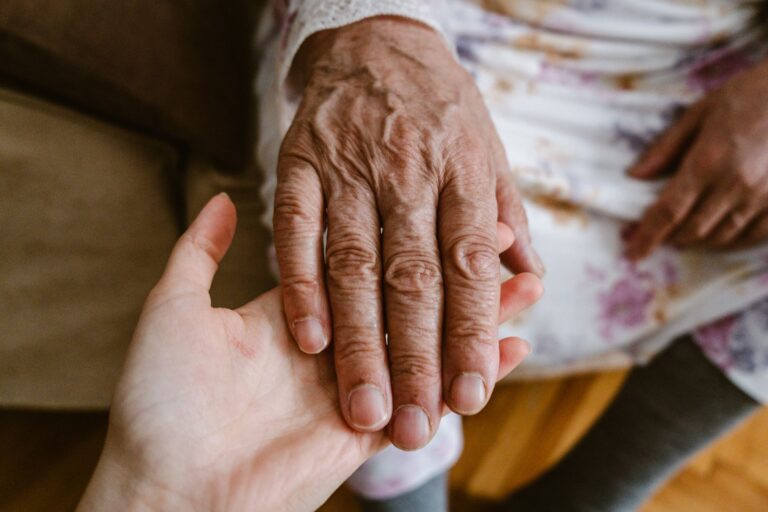
Dementia sometimes sits at the center of this dementia and brain health question.
People with dementia sometimes revert to their native language because the brain loses its most recently acquired skills first, and for bilingual or multilingual individuals, a second language learned later in life is often among the first abilities to erode. This phenomenon, sometimes called “language reversion” or “first language regression,” occurs because the native tongue is typically stored in deeper, more resilient neural pathways formed during early childhood, while languages learned later rely on cognitive networks that dementia damages earlier in its progression. A woman who emigrated from Poland to the United States at age twenty-five and spoke fluent English for fifty years may, in the later stages of Alzheimer’s disease, begin responding exclusively in Polish, leaving her English-speaking children unable to understand her.
This pattern is not a choice or a sign of stubbornness. It reflects the fundamental architecture of how multilingual brains store and retrieve language. The shift can be gradual, with occasional word substitutions at first, or it can seem sudden, as though a switch has been flipped. This article examines the neuroscience behind why this happens, how it affects communication between caregivers and patients, what families can do when a loved one no longer speaks their shared language, and why this reversion sometimes reveals things about a person’s history that their family never knew.
Table of Contents
- Why Does Dementia Cause People to Revert to Their Native Language?
- How Language Loss in Dementia Differs From Normal Forgetting
- What Language Reversion Reveals About Identity and Memory
- How Caregivers Can Communicate When a Loved One Reverts to Their Native Language
- When Language Mixing and Confusion Become a Safety Concern
- Cultural and Emotional Dimensions of Language Reversion
- What Ongoing Research Suggests About Bilingualism and Dementia
- Conclusion
- Frequently Asked Questions
Why Does Dementia Cause People to Revert to Their Native Language?
The explanation lies in a neurological principle sometimes called Ribot’s Law, named after the nineteenth-century French psychologist Théodore Ribot. His observation, made in 1881, was that memory loss in degenerative conditions tends to follow a reverse chronological pattern. The most recent memories and skills degrade first, while older, more deeply encoded ones persist longer. For someone who learned English at age thirty but grew up speaking Cantonese, English exists in neural networks that were built on top of an already established linguistic foundation. As dementia progressively destroys neurons and synaptic connections, particularly in the temporal and frontal lobes, the later-acquired language becomes harder to access. The first language, wired into the brain during the critical period of childhood language acquisition, remains more intact because those neural pathways were established earlier and reinforced over more years of early life. There is also a distinction between how the brain processes a first language versus a second one.
Research using functional MRI scans has shown that people who learn a second language after early childhood often use partially different brain regions for each language. The native language tends to be more procedural, almost automatic, while the second language requires more active cognitive effort, drawing on executive function and working memory. Dementia attacks exactly those higher-order cognitive systems. When the prefrontal cortex deteriorates, the effortful control needed to retrieve and produce a second language breaks down, but the more automatic first language remains accessible for longer. A useful comparison is the way dementia affects other learned skills. A retired concert pianist with Alzheimer’s might forget how to operate a microwave, a skill learned in adulthood, but still sit down and play a Chopin nocturne learned at age twelve. Language reversion follows the same logic. The deeply practiced, early-acquired skill outlasts the later one.

How Language Loss in Dementia Differs From Normal Forgetting
It is important to distinguish between the occasional word-finding difficulties that come with normal aging and the systematic language breakdown that dementia causes. Healthy older adults sometimes struggle to recall a specific word or name, a phenomenon linguists call “tip of the tongue” states. This is annoying but normal, and the word usually comes back eventually. In dementia, the problem is not retrieval delay but progressive loss. Words do not come back. Entire grammatical structures can collapse. A person may lose the ability to form coherent sentences in their second language while still producing fluent speech in their first. However, it would be misleading to suggest that the first language remains perfectly intact throughout dementia.
In later stages, all language deteriorates, including the native tongue. The reversion to a first language is most noticeable in the mild to moderate stages of dementia, when the contrast between the preserved native language and the deteriorating second language is sharpest. By the severe stage, a person may lose meaningful speech altogether, regardless of which language it is in. Families should understand that the window during which their loved one speaks fluently in their native language is itself temporary, not a permanent plateau. There are also cases where the pattern does not follow the expected trajectory. Some people who were truly balanced bilinguals, having learned both languages simultaneously from birth, may not show a clear reversion to one language over the other. Instead, they may experience parallel decline in both, or they may mix languages unpredictably. The “native language reversion” pattern is most pronounced in sequential bilinguals, those who learned their second language after the age of roughly six or seven.
What Language Reversion Reveals About Identity and Memory
One of the most striking aspects of language reversion is how it can surface parts of a person’s identity that their current family and social circle never knew. A man who left Greece at eighteen, built a life in Australia, and rarely spoke Greek in the home may, in his eighties, begin speaking Greek as his primary language. His Australian-born grandchildren may hear him singing Greek songs they have never encountered, or calling out for his own mother using her Greek name. For some families, this is the first time they realize how much of their loved one’s inner life remained rooted in the language and culture of childhood. This has led some researchers and clinicians to describe language reversion as a form of emotional memory surfacing. The native language is not just a communication tool.
It is bound up with the earliest emotional experiences, the language of lullabies, of parental comfort, of childhood play. As the cognitive scaffolding of a second-language life falls away, what remains is the emotional core, and that core speaks the first language. Caregivers in nursing homes have reported residents who seem distressed and agitated when addressed in English but who visibly calm when spoken to in their native language, even if the words used are simple greetings or reassurances. This phenomenon also raises difficult questions about personhood and identity in dementia. The person speaking Polish or Greek or Mandarin is expressing something genuine about who they are at the deepest level. When families cannot understand that language, they may feel they have lost their loved one twice: once to the disease and once to a linguistic barrier they cannot cross.

How Caregivers Can Communicate When a Loved One Reverts to Their Native Language
The most practical step is to find someone who speaks the person’s native language and involve them in care. This might be a family member, a professional interpreter, a bilingual care worker, or even a volunteer from a local cultural community organization. Some memory care facilities in cities with large immigrant populations have begun hiring multilingual staff specifically because language reversion is so common among their residents. If a facility serves a neighborhood with a significant Vietnamese community, having staff who speak Vietnamese is not a luxury but a clinical necessity. When a bilingual caregiver is not available, families can still use several strategies. Simple phrases in the person’s native language, learned phonetically if necessary, can provide comfort even if the caregiver does not understand the responses.
Music in the native language is often remarkably effective at reaching people whose verbal communication has broken down. Visual cues, gestures, and touch become more important as shared verbal language diminishes. Some families have created picture boards or used translation apps as a bridge, though the effectiveness of technology depends heavily on the person’s remaining cognitive ability. There is a tradeoff here that families should acknowledge honestly. Bringing in a native-language speaker can dramatically improve the person’s quality of life and reduce agitation, but it can also make the English-speaking family members feel more excluded from their loved one’s world. This is painful, and it is worth naming. The goal is not to find a perfect solution but to prioritize the comfort and dignity of the person with dementia, even when doing so is emotionally costly for everyone else.
When Language Mixing and Confusion Become a Safety Concern
Language reversion is not always a clean switch from one language to another. Many people with dementia go through a phase of language mixing, where they combine words and grammar from two or more languages within a single sentence. Linguists call this code-switching when it happens in healthy bilingual speakers, but in dementia, the mixing is often involuntary and disorganized rather than strategic. A person might start a sentence in English, insert a Spanish verb, and finish with a phrase that does not belong to either language. This can make it extremely difficult for anyone, in any language, to understand what the person is trying to communicate. This matters for safety in concrete ways.
If a person with dementia is trying to report pain, describe symptoms, or communicate an urgent need, and their language output is fragmented across two languages, medical staff may miss critical information. Emergency rooms are particularly risky environments for bilingual dementia patients. A non-English-speaking elderly patient brought in after a fall may be assessed as more confused than they actually are if the evaluating physician interprets native-language speech as incoherent babbling rather than coherent communication in an unfamiliar language. Misdiagnosis of delirium or psychiatric disturbance has been documented in these situations. Families should ensure that medical records clearly note the person’s linguistic background, including which language they are likely to revert to. A simple notation in the chart, “Patient is a native Korean speaker who may not respond in English during periods of stress or cognitive decline,” can prevent serious misunderstandings during medical emergencies.
Cultural and Emotional Dimensions of Language Reversion
In immigrant communities, language reversion in dementia carries particular emotional weight. Many people who emigrated as adults made deliberate, sometimes painful choices to assimilate into their adopted country’s language and culture. They may have discouraged their children from speaking the old language at home, wanting them to succeed in the new country. To then watch a parent or grandparent return to that abandoned language can stir complex feelings of guilt, grief, and reconnection.
A Japanese American family in California described how their grandmother, who had been interned during World War II and afterward refused to speak Japanese for decades, began speaking only Japanese in her final years with Alzheimer’s. The family had to locate a Japanese-speaking caregiver through their local Buddhist temple. For the grandchildren, hearing the language their grandmother had suppressed for most of her life was both heartbreaking and revelatory. It reframed their understanding of her entire life story.
What Ongoing Research Suggests About Bilingualism and Dementia
One of the more encouraging findings in dementia research over the past two decades is that bilingualism itself appears to offer some protective benefit against cognitive decline. Multiple studies, including a widely cited 2007 study by Ellen Bialystok and colleagues, have found that bilingual individuals tend to develop dementia symptoms an average of four to five years later than monolinguals with comparable education and health profiles. The hypothesis is that the constant mental exercise of managing two language systems strengthens executive function and builds cognitive reserve, essentially giving the brain more capacity to absorb damage before symptoms appear. This does not mean bilingualism prevents dementia.
It means the clinical onset may be delayed. And paradoxically, once dementia does take hold in a bilingual brain, the language reversion phenomenon can make the disease’s progression feel more abrupt and disorienting to families. The person seemed fine for years, and then suddenly they are speaking a language half the family does not understand. Understanding both the protective effect and the reversion pattern gives families a more complete picture of what bilingualism means in the context of this disease.
Conclusion
Language reversion in dementia is not a quirk or an anomaly. It is a predictable consequence of how the brain stores language, with the deepest and earliest pathways persisting longest as later-acquired networks break down. For families, it can be one of the most disorienting aspects of the disease, especially when it creates a communication barrier with a loved one who previously spoke their language fluently.
Understanding the neuroscience behind it does not make it less painful, but it can help families stop interpreting the reversion as willful or random and start seeing it as a window into their loved one’s earliest self. The practical response is straightforward even when execution is difficult: identify native-language speakers who can be part of the care team, document linguistic history in medical records, use music and familiar phrases as emotional anchors, and accept that the person’s comfort in their first language should take priority over everyone else’s convenience. Language reversion is, in its own way, a reminder that the person with dementia is still in there, still communicating, still reaching for connection. The language may have changed, but the need has not.
Frequently Asked Questions
Is it normal for someone with dementia to suddenly start speaking a different language?
Yes. This is a well-documented phenomenon in bilingual and multilingual individuals with dementia. It typically reflects the brain’s tendency to lose more recently acquired skills before older ones, so a second language learned in adulthood often deteriorates before the native language.
Does this mean my loved one has forgotten English entirely?
Not necessarily, especially in early and middle stages. They may understand English better than they can produce it, or they may have good days and bad days. In later stages, all language ability tends to decline regardless of which language it is.
Should I try to learn my loved one’s native language to communicate with them?
Learning a few key phrases can help, particularly expressions of comfort, affection, and basic needs. You do not need to become fluent. Even simple greetings or terms of endearment in their native language can reduce agitation and help the person feel understood.
Can bilingual people get dementia earlier than monolingual people?
The research actually suggests the opposite. Bilingual individuals tend to show clinical symptoms of dementia four to five years later than comparable monolingual individuals, likely due to the cognitive reserve built by managing two language systems throughout life.
What should I tell hospital staff if my parent with dementia speaks another language?
Make sure it is clearly documented in their medical records that they are a native speaker of a specific language and may revert to it during periods of confusion or stress. Carry a written note with this information in case of emergency room visits, and request interpreter services proactively.
Does language reversion happen with all types of dementia?
It has been most studied in Alzheimer’s disease, which is the most common form, but it can occur with other types of dementia as well, including vascular dementia and frontotemporal dementia. The pattern may differ depending on which brain regions are most affected.
You Might Also Like
- Why do some people with dementia stop eating
- Why do people with dementia wander and how to prevent it
- Why do people with dementia repeat the same questions
For more, see NIH MedlinePlus — cognitive testing.