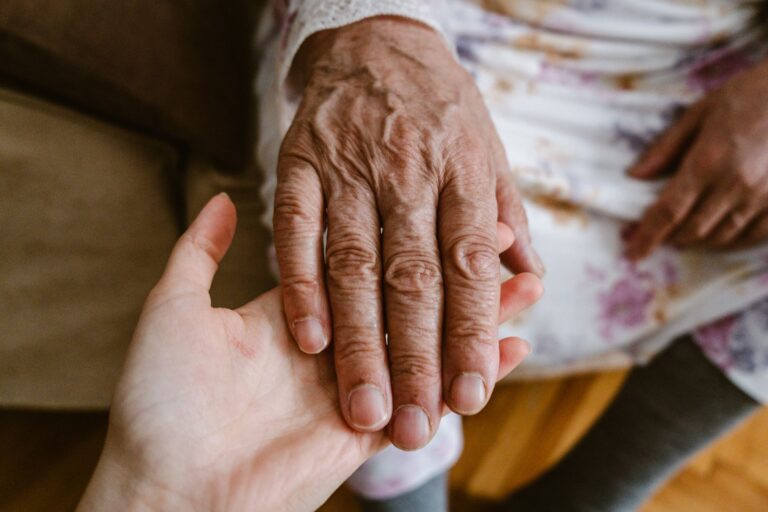
Dementia does not confine itself to memory loss and confusion. It is a whole-body disease that progressively dismantles the brain’s ability to regulate muscles, organs, the immune system, breathing, heart function, digestion, and bladder control. A person in the later stages of Alzheimer’s, for instance, may lose the ability to swallow safely, develop pneumonia from food entering the lungs, and ultimately die not from forgetting a loved one’s name but from the body’s basic systems shutting down one by one. Over 57 million people worldwide are living with dementia right now, and for most of them and their families, the physical toll comes as a shock.
This matters because caregivers, families, and even some clinicians still think of dementia primarily as a cognitive problem. That framing leaves people unprepared for the muscle wasting, the falls, the skin breakdown, the infections, and the cardiovascular complications that define the later stages. In the United States alone, an estimated 7.2 million Americans age 65 and older are living with Alzheimer’s dementia, a number projected to nearly double to 13.8 million by 2060. Women are disproportionately affected, both as patients and as caregivers who provide roughly 70 percent of care hours. This article walks through the specific body systems dementia damages, explains why pneumonia is the leading killer, and covers what families should watch for as the disease progresses.
Table of Contents
- Why Does Dementia Affect the Entire Body and Not Just the Brain?
- How Dementia Destroys Muscles, Mobility, and Bone Strength
- Swallowing Failure and Why Pneumonia Kills More Dementia Patients Than Anything Else
- What Families and Caregivers Can Do to Manage Physical Decline
- The Immune System, Cardiovascular Damage, and the Cascade of Organ Failure
- Skin Breakdown and Pressure Ulcers in Advanced Dementia
- Why Dementia Must Be Understood as a Terminal, Whole-Body Disease
- Conclusion
- Frequently Asked Questions
Why Does Dementia Affect the Entire Body and Not Just the Brain?
The brain is not an isolated organ. It is the command center for every system in the body, sending electrical signals through the spinal cord and peripheral nerves to muscles, organs, glands, and tissues. When dementia destroys neurons in the motor cortex, a person loses coordination. When it reaches the hypothalamus, temperature regulation falters. When it spreads to the brainstem, the most primitive and essential functions — breathing, heart rate, swallowing — begin to fail. Dementia does not kill brain cells at random. It follows pathways, and those pathways connect to everything. Consider mobility.
Research has shown that people who walked slowly and had poor balance were more likely to be diagnosed with Alzheimer’s within the following six years, meaning physical decline can actually precede noticeable memory loss. This is not coincidence. The same neurodegenerative process that will eventually impair recall is already degrading the brain regions responsible for gait, posture, and motor planning. By the time a family notices forgetfulness, the body may have been losing ground for years. The relationship is also bidirectional. A large study found that physical and psychological multimorbidity increased the risk of dementia by 86 percent in Europe and 176 percent in the United States among older adults. In other words, a body already burdened by chronic disease is more vulnerable to dementia, and dementia in turn accelerates the deterioration of an already compromised body. This feedback loop is one reason dementia is so devastating — it does not just add to existing health problems, it multiplies them.

How Dementia Destroys Muscles, Mobility, and Bone Strength
As dementia advances, the brain cells responsible for sending signals to muscles progressively die. The result is weakness, loss of coordination, and impaired balance that worsens over months and years. In the early and middle stages, this might look like stumbling, difficulty getting out of a chair, or trouble with fine motor tasks like buttoning a shirt. In the later stages, muscles may tighten into fixed positions — a condition called contractures — and waste away from both disuse and the loss of neural stimulation that keeps muscle fibers active. The consequences cascade. Reduced mobility leads to bone density loss, which increases fracture risk dramatically.
A hip fracture in a person with advanced dementia is not just a broken bone; it is frequently the beginning of a rapid decline because the person may not be able to participate in rehabilitation, may become bed-bound, and may develop complications like blood clots or pneumonia. Falls are one of the most common reasons people with dementia end up hospitalized, and each hospitalization tends to accelerate cognitive decline further. However, it is important to note that physical decline is not uniform across all types of dementia. Lewy body dementia, for example, tends to produce motor symptoms much earlier than Alzheimer’s, sometimes resembling Parkinson’s disease with rigidity and shuffling gait. Vascular dementia may cause sudden mobility changes following small strokes. Families should not assume that a person in the early stages of Alzheimer’s who is still physically active is somehow immune to these effects — the trajectory varies, but the direction does not.
Swallowing Failure and Why Pneumonia Kills More Dementia Patients Than Anything Else
Dysphagia — difficulty swallowing — is one of the most dangerous and underrecognized complications of advanced dementia. As the brain loses its ability to coordinate the dozens of muscles involved in swallowing, food, liquid, and saliva can slip into the airway instead of the esophagus. This is called aspiration, and it leads directly to aspiration pneumonia, the single most common cause of death in people with dementia. The numbers are stark. Pneumonia accounts for approximately 30 percent of dementia deaths overall, and in autopsy-confirmed cases, the figure reaches as high as 50 percent.
People with dementia have twice the risk of pneumonia-associated death compared to those without the condition. One study identified dysphagia as the only factor that significantly increased the risk of pneumonia-caused death in dementia patients — not age, not other comorbidities, but the loss of the ability to swallow safely. This creates an agonizing situation for families. When a person with advanced dementia can no longer eat or drink safely, the options narrow to modified-texture diets, careful hand-feeding, or in some cases the question of a feeding tube. Research has consistently shown that feeding tubes do not extend life or improve comfort in advanced dementia, yet families are often presented with the decision as though it were a clear medical choice. Understanding that dysphagia is a sign of the disease reaching the brainstem — the part of the brain that keeps the body alive — helps frame these conversations more honestly.

What Families and Caregivers Can Do to Manage Physical Decline
There is no way to stop dementia from progressing, but there are meaningful ways to slow the physical complications and preserve quality of life for longer. The tradeoff families face is between intervention and comfort — aggressive physical therapy may maintain mobility but cause distress in a person who no longer understands why they are being asked to exercise, while allowing complete inactivity accelerates every physical complication described in this article. For mobility, gentle daily movement — even assisted walking or range-of-motion exercises in a chair — can delay contractures, maintain some bone density, and reduce the risk of blood clots. For swallowing, a speech-language pathologist can assess dysphagia risk and recommend texture modifications or positioning strategies that reduce aspiration.
For skin, repositioning a bed-bound person every two hours and using pressure-relieving mattresses can prevent the pressure ulcers that develop when immobility cuts off blood flow to skin and tissue. For bladder and bowel incontinence, which results from the brain losing the ability to send and receive the signals that manage these functions, timed toileting schedules in the earlier stages can help preserve dignity and reduce skin breakdown. The comparison between early intervention and reactive care is significant. A family that understands the physical trajectory of dementia can plan ahead — installing grab bars before the first fall, consulting a swallowing specialist before the first choking episode, and discussing end-of-life care preferences before the person can no longer participate in those conversations. Reactive care, by contrast, means emergency rooms, hospitalizations, and decisions made under crisis conditions.
The Immune System, Cardiovascular Damage, and the Cascade of Organ Failure
Dementia accelerates immunosenescence, the natural age-related decline of the immune system. The result is a chronic state of low-grade inflammation that damages multiple organ systems simultaneously. Add reduced mobility and poor nutrition — both direct consequences of the disease — and immune signaling becomes further impaired, leaving the body increasingly defenseless against infections that a healthy immune system would handle without difficulty. The cardiovascular system takes a parallel hit. As dementia advances, the brain’s regulation of heart rate and blood pressure falters. Hospitalized dementia patients face a 37 percent higher risk of cardiovascular dysfunction, including irregular heartbeats, blood pressure fluctuations, and decreased cardiac output.
Respiratory function declines as well, with dementia associated with a 30 percent higher risk of respiratory dysfunction. When the disease finally reaches the brainstem — the structure that controls breathing rhythm, blood pressure, and heart rate — the body’s most fundamental life-support systems begin to fail. A critical warning for families: infections in people with advanced dementia often present atutely differently than in cognitively healthy adults. A urinary tract infection might show up as sudden confusion or agitation rather than the typical burning or fever. Pneumonia might present as lethargy and refusal to eat rather than cough and shortness of breath. Caregivers who understand these atypical presentations can seek medical attention sooner, which can make the difference between a treatable infection and a fatal one.

Skin Breakdown and Pressure Ulcers in Advanced Dementia
In the later stages, when a person is bed-bound or chair-bound for most of the day, the risk of pressure ulcers becomes severe. These wounds develop when prolonged pressure on the same area of skin cuts off circulation, causing tissue to die. Common locations include the sacrum, heels, hips, and shoulder blades. In a person with advanced dementia who cannot reposition themselves and may not be able to communicate pain, a pressure ulcer can develop in hours and take months to heal — if it heals at all.
Pressure ulcers are not just painful. They are open wounds that serve as entry points for infection in a person whose immune system is already compromised. A stage four pressure ulcer that reaches bone can become life-threatening. Prevention through regular repositioning, proper nutrition, moisture management, and pressure-relieving surfaces is far more effective than treatment after the fact, and it is one of the clearest areas where informed caregiving directly affects outcomes.
Why Dementia Must Be Understood as a Terminal, Whole-Body Disease
Dementia is a terminal condition. This is a fact that many families are not told clearly or early enough. As the disease progresses to its final stages, damage spreads to the brainstem, and the body loses its ability to regulate the systems that keep a person alive. The most common immediate causes of death — aspiration pneumonia, infections, blood clots, and cardiovascular failure — are not separate illnesses.
They are the direct result of the brain progressively losing control of the body it is supposed to govern. With 10 million new cases diagnosed worldwide each year — one every 3.2 seconds — and projections reaching 139 million people living with dementia globally by 2050, the scale of this challenge is difficult to overstate. Reframing dementia as a whole-body disease rather than a memory disorder has real consequences for how we fund research, train caregivers, design long-term care facilities, and support families. Every body system described in this article represents an area where better understanding can lead to better care, even in the absence of a cure.
Conclusion
Dementia is not a disease of the mind alone. It is a progressive, ultimately fatal condition that damages the muscular system, the digestive tract, the cardiovascular and respiratory systems, the immune system, the bladder and bowel, and the skin. Pneumonia — caused by the loss of safe swallowing — kills more people with dementia than any other single complication. Falls, fractures, pressure ulcers, infections, and organ failure follow as the brain loses its ability to coordinate the body’s most basic functions.
For families and caregivers, understanding this physical trajectory is not about losing hope. It is about planning ahead, asking better questions, and providing care that addresses the whole person rather than just their cognition. Early intervention for mobility, swallowing assessment, skin care, and infection monitoring can meaningfully improve quality of life and reduce suffering. And honest conversations about the terminal nature of the disease — held early, while the person can still participate — remain one of the most important and most neglected aspects of dementia care.
Frequently Asked Questions
At what stage does dementia start affecting the body?
Physical effects can begin earlier than most people expect. Research shows that slow walking speed and poor balance can appear years before a formal Alzheimer’s diagnosis. However, the most severe physical complications — dysphagia, incontinence, immobility, and organ system decline — typically occur in the moderate to advanced stages.
Is pneumonia preventable in people with dementia?
It can be delayed but not always prevented. Good oral hygiene reduces the bacterial load in the mouth, which lowers aspiration pneumonia risk. Swallowing assessments, proper food textures, and upright positioning during meals all help. However, as the brainstem becomes involved in later stages, the swallowing reflex itself deteriorates, and aspiration becomes increasingly difficult to avoid.
Why do people with dementia lose bladder and bowel control?
The brain normally sends and receives signals that manage when the bladder empties and when the bowels move. As dementia damages the brain regions involved in this signaling, the person gradually loses the ability to recognize when they need to go, to hold it until they reach a bathroom, or to coordinate the muscles involved. Timed toileting schedules can help manage this in the earlier phases of incontinence.
Does dementia directly cause death, or is it always a complication?
Dementia is classified as a terminal condition and can be listed as the underlying cause of death. While the immediate cause is usually a complication — most commonly aspiration pneumonia, infection, or cardiovascular failure — these complications arise directly because the brain can no longer regulate the body’s vital functions. The distinction between “dying of dementia” and “dying of a complication of dementia” is largely semantic.
Are all types of dementia equally hard on the body?
No. Lewy body dementia tends to produce motor symptoms and autonomic nervous system problems earlier than Alzheimer’s. Vascular dementia may cause sudden physical changes following small strokes. Frontotemporal dementia can affect eating behavior and appetite early on. The physical trajectory varies by type, but all forms of dementia eventually affect the body beyond the brain.