Most people with dementia can live at home safely for roughly two to four years after diagnosis, though the range stretches considerably depending on the type of dementia, the person’s age, the home environment, and the strength of their care network. Research shows that the median time from diagnosis to nursing home admission is about 3.9 years, with 13 percent of people entering a facility within the first year and 57 percent by the five-year mark. A 72-year-old diagnosed with early-stage Alzheimer’s who has a dedicated spouse, a single-story home with grab bars already installed, and a geriatrician managing medications may stay safely at home for six or seven years. A person diagnosed at 84 with vascular dementia who lives alone in a two-story house with steep stairs may need to move within a year or two.
The honest answer is that there is no universal timeline. What determines how long someone can remain at home is not just the disease itself but a web of factors: physical safety, caregiver health and availability, financial resources, and whether the home can be adapted as needs change. Currently, about 85 percent of Americans with dementia live at home or in community-based settings rather than nursing facilities, which tells us that most families are making home care work for a significant stretch of the disease. This article walks through the stage-by-stage progression, the warning signs that home is no longer safe, specific modifications that extend safe home living, the caregiver burden that often becomes the actual breaking point, and how to think about the decision when the time comes.
Table of Contents
- How Long Can Someone With Dementia Realistically Stay at Home?
- What Determines Whether Home Stays Safe as Dementia Progresses?
- The Caregiver Factor That Nobody Talks About Enough
- Home Modifications That Extend Safe Living
- Warning Signs That Home Is No Longer Safe
- What 7.2 Million Families Are Navigating Right Now
- Where Dementia Home Care Is Heading
- Conclusion
How Long Can Someone With Dementia Realistically Stay at Home?
The answer depends first on which type of dementia is involved and how old the person was at diagnosis. Alzheimer’s disease, which accounts for 60 to 80 percent of all dementia cases, has the longest trajectory at 8 to 12 years from diagnosis to death. Vascular dementia progresses faster, with an average survival of about four years. Lewy body dementia falls in between at five to seven years, though the range can stretch from two to twenty years in outlier cases. Age is the single strongest predictor of how the disease will unfold. A diagnosis at age 65 shortens life expectancy by roughly 13 years, while a diagnosis at 85 reduces it by about two years, largely because at 85 the baseline life expectancy is already limited. Within that overall trajectory, the time spent safely at home tracks closely with disease stages.
The early or mild stage typically lasts two to four years, during which a person can often live independently with some support for memory lapses and organizational tasks. The moderate or middle stage, often the longest at two to ten years, is where the question of home safety becomes urgent. Daily tasks like cooking, bathing, and managing finances grow increasingly difficult. The severe or late stage lasts roughly one to two years and almost always requires full-time hands-on care. A person in the early stage whose home has been proactively adapted might live safely at home through much of the moderate stage. Someone whose family waits until a crisis to address safety may find the window closes much sooner. It is also worth noting that women live longer after diagnosis than men on average, which means female patients often spend more total years in the moderate and severe stages. This has direct implications for planning, because a longer disease course means more years of caregiving, higher cumulative costs, and a greater likelihood of eventually needing facility-based care.

What Determines Whether Home Stays Safe as Dementia Progresses?
The safety of a home environment is not static. A house that works perfectly well during the early stage can become hazardous within months as the disease advances. The key factors are physical layout, the person’s specific symptoms, and whether adaptations keep pace with decline. Falls are twice as likely for seniors with dementia compared to those without cognitive impairment, and falls are the single leading cause of injury-related hospitalization in this population. A home with multiple stairways, poor lighting, loose rugs, and a bathtub without grab bars is a fall waiting to happen, and one serious hip fracture can end home living permanently.
Beyond fall risk, the hazards shift with the stage. In moderate dementia, the primary dangers include forgetting to turn off stoves or ovens, medication errors that become frequent rather than occasional, wandering outside the home and getting lost, and inability to respond appropriately in an emergency such as not being able to answer the phone or call for help. Financial mismanagement often appears earlier than families expect and is flagged by the National Institute on Aging as one of the first warning signs. A person who was always sharp with money may start paying bills twice, falling for phone scams, or giving away significant sums. However, if the home is a single-level apartment with an induction cooktop that shuts off automatically, a locked front door with a keypad the person cannot operate independently, and a pill dispenser that only releases the correct dose at the correct time, that same person might live safely at home far longer than someone in an unmodified house with the same cognitive profile. The physical environment is a variable you can actually change, which is why home safety assessment should happen early and be repeated every six months.
The Caregiver Factor That Nobody Talks About Enough
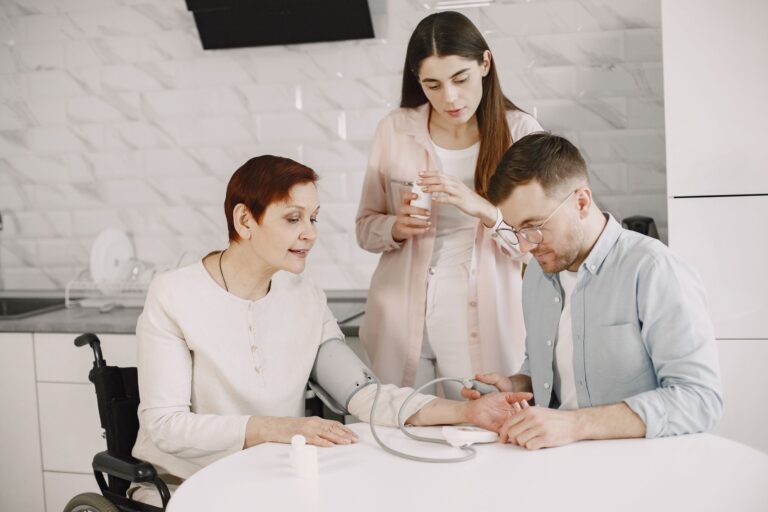
Nearly 12 million unpaid caregivers provided 19.2 billion hours of dementia care in 2024, work valued at an estimated $413.5 billion. Those numbers obscure an uncomfortable reality: the person with dementia often outlasts the caregiver’s capacity. Home care usually ends not because the house becomes unsafe but because the primary caregiver burns out, gets sick, or simply cannot sustain the level of supervision required. A spouse caring for a partner with moderate Alzheimer’s may be managing sundowning episodes every evening, waking multiple times a night to prevent wandering, handling incontinence, and doing all of this while managing their own health conditions. Research consistently shows that dementia caregivers have higher rates of depression, cardiovascular disease, and mortality than non-caregivers of the same age. Consider a common scenario: a 68-year-old woman caring for her 74-year-old husband with moderate Alzheimer’s. She has managed well for three years with help from their adult daughter who lives nearby.
Then the daughter takes a job in another city. Suddenly the wife is covering nights alone, skipping her own medical appointments, and losing weight from stress. The husband’s disease has not meaningfully worsened, and the house is physically safe, but the care arrangement is collapsing. This is the pattern that drives a large share of nursing home admissions, and it is why any honest answer to the question of how long someone can live at home must account for the caregiver’s endurance and support system, not just the patient’s condition. The financial dimension compounds the pressure. Health and long-term care costs for dementia are projected at $384 billion in 2025, and that figure does not include unpaid caregiving. Hiring home health aides to supplement family care can extend safe home living, but the cost adds up quickly. Families who plan early and build in respite care, adult day programs, and eventually part-time professional help tend to sustain home care longer than those who rely on a single caregiver until that person breaks down.

Home Modifications That Extend Safe Living
The National Institute on Aging and the Alzheimer’s Association both publish detailed home safety checklists, and the modifications they recommend are straightforward, relatively inexpensive, and proven to reduce injuries. The most impactful changes include installing handrails and grab bars in bathrooms, hallways, and near all stairs, ensuring bright and even lighting throughout the home to reduce confusion and falls, installing locks above or below eye level on exterior doors to prevent wandering, removing or locking away hazardous household chemicals and sharp objects, and setting water heaters to 120 degrees or lower to prevent scalding, or using automatic temperature controls. Technology continues to close gaps that human supervision cannot cover around the clock. Medication reminder systems that dispense pills on schedule, wearable GPS trackers that alert caregivers to wandering, motion-sensor night lights, stove auto-shutoff devices, and remote video monitoring all allow a person to retain more independence while reducing risk. As these technologies advance into 2026, the range of what can be managed safely at home keeps expanding. However, technology has clear limits. A sensor can detect that someone has fallen, but it cannot help them up.
A GPS tracker can locate a person who has wandered, but it cannot prevent them from walking into traffic during the minutes before someone arrives. Technology supplements human care; it does not replace it. The tradeoff families face is between autonomy and safety. Locking all exterior doors prevents wandering but can also make a person feel trapped and agitated, which may increase behavioral symptoms. Removing a kitchen stove eliminates a fire hazard but also eliminates one of the last activities that gave the person a sense of competence and routine. The best approach is graduated modification, adding restrictions incrementally as the disease demands them rather than stripping away all independence at once. A regular reassessment of balance, coordination, and strength by a medical professional helps families calibrate this progression rather than guessing.
Warning Signs That Home Is No Longer Safe
There is a difference between a challenging situation that can be managed and a genuinely dangerous one. The clearest signs that home living has become unsafe include frequent falls, especially those causing injury; repeated wandering episodes where the person leaves the home and cannot find their way back; violent aggression toward caregivers that is becoming regular rather than occasional; complete inability to manage basic activities of daily living such as feeding, toileting, and hygiene; and medication errors that result in medical emergencies. Any single one of these, if it becomes a pattern rather than an isolated incident, warrants a serious conversation about transitioning to a higher level of care. The difficulty is that these signs often arrive gradually, and the primary caregiver, who sees the person every day, may normalize alarming changes. A daughter visiting once a month may notice that her father has lost fifteen pounds and the house smells of urine, while the mother who lives with him has slowly adjusted to both. This is why outside perspectives matter.
Geriatric care managers, visiting nurses, and even friends who have not seen the person in a while can sometimes identify safety problems that the daily caregiver has unconsciously adapted to. It is worth scheduling periodic assessments by someone who is not in the home every day. One important limitation: there is no bright line where home care definitively becomes impossible. Some families provide excellent late-stage care at home with round-the-clock hired help. Others reach a breaking point in the moderate stage because the behavioral symptoms are severe or the caregiver’s health cannot sustain the demands. The decision is deeply individual, and guilt is almost always part of it. The most useful framing is not whether you are giving up but whether the person’s safety and quality of life would genuinely be better in a structured care environment.

What 7.2 Million Families Are Navigating Right Now
As of 2025, 7.2 million Americans age 65 and older are living with Alzheimer’s disease, and 74 percent of them are age 75 or older. Each of those cases represents a family making daily judgments about safety, independence, and care. The statistics on nursing home admission, with 35 percent admitted by three years and 57 percent by five years, describe a funnel that most families will move through eventually, but the timing and circumstances vary enormously. A family in a rural area with limited access to home health agencies faces a different calculation than one in a city with robust adult day programs, respite care, and geriatric specialists.
Geography, income, family structure, and cultural expectations all shape the trajectory. What the data makes clear is that this is not an edge case or a niche concern. The scale is enormous, the costs are staggering, and the burden falls disproportionately on unpaid family members, most of whom receive little training and limited support. Planning early, before a crisis forces the decision, gives families more options and better outcomes.
Where Dementia Home Care Is Heading
The trend lines point toward longer safe home care in the coming years, driven primarily by technology and by a growing infrastructure of community-based services. Smart home systems that integrate fall detection, medication management, wandering prevention, and remote monitoring into a single platform are becoming more accessible and more affordable. Telehealth allows geriatricians and neurologists to assess patients without requiring a stressful trip to a clinic. Adult day programs, which provide structured activity and supervision during working hours, are expanding in many areas and serve the dual purpose of engaging the person with dementia and giving the caregiver essential time to rest or work.
None of this changes the fundamental nature of the disease. Dementia is progressive, and at some point the level of care required will likely exceed what any home environment can provide. But the window of safe home living is widening, and families who take advantage of early planning, home modification, caregiver support, and available technology can meaningfully extend it. The goal is not to avoid facility care at all costs but to make the time at home as safe, as dignified, and as long as the situation genuinely allows.
Conclusion
Someone with dementia can typically live at home safely for about two to four years after diagnosis, with the median time to nursing home admission landing at roughly 3.9 years. But that number is an average, not a destiny. The actual duration depends on the type and stage of dementia, the person’s age and overall health, the physical safety of the home, the availability and resilience of caregivers, and the financial resources to supplement family care with professional help. Early-stage dementia is almost always manageable at home. The moderate stage is where the real work begins, and the severe stage usually requires full-time care that most homes and families cannot sustain without significant outside support.
The most important step any family can take is to start planning before they need to. Get a home safety assessment done early. Make modifications before the first fall. Line up respite care before the primary caregiver is exhausted. Have honest conversations about when home care might no longer be the safest option, and know what the alternatives look like in your area. The disease will progress on its own schedule, but the care environment is something you can shape, and shaping it early makes every stage more manageable.