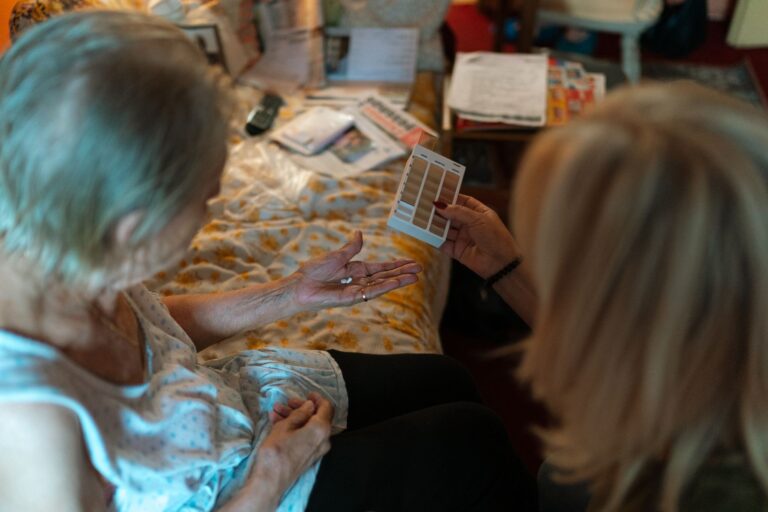
Mid-stage dementia sits at the center of this dementia and brain health question.
Mid-stage dementia aggression typically lasts two to four years, though the range varies enormously from person to person. Some individuals experience aggressive episodes for only a few weeks or months before the behavior subsides, while others cycle through aggressive periods for much longer as they move through the middle and into the late stages of the disease. The middle stage of dementia is generally the longest stage overall, which partly explains why aggression can feel like it will never end for families living through it. Consider a daughter caring for her father with Alzheimer’s who begins shoving her away during bath time around stage five.
She might deal with that behavior intermittently for three years before his disease progresses to a point where he no longer has the physical capacity for it, or the behavior might ease within six months once the right combination of pain management and routine adjustments clicks into place. What makes this question so difficult to answer with precision is that aggression in dementia is not a single phase with a clean start and end date. It is a symptom driven by a constellation of factors, from neurological damage to undiagnosed infections to environmental overstimulation. Research shows that up to 80 percent of dementia patients exhibit some form of behavioral and psychological symptoms during the course of their illness, with 20 to 40 percent showing aggression at some point. This article breaks down what drives that aggression, how long specific patterns tend to persist, what the research says about who is most affected, and what caregivers can actually do to shorten and manage aggressive episodes.
Table of Contents
- How Long Does Aggression in Mid-Stage Dementia Actually Last?
- Who Is Most Affected by Dementia-Related Aggression?
- What Triggers Aggression in Dementia and Why It Matters for Duration
- Managing Aggression Without Medication
- The Four Types of Dementia Aggression and Why Each Requires a Different Response
- How Institutional Settings Change the Aggression Picture
- What New Research Tells Us About the Road Ahead
- Conclusion
- Frequently Asked Questions
How Long Does Aggression in Mid-Stage Dementia Actually Last?
Aggressive behavior most commonly first appears during the middle stage of dementia, corresponding roughly to stages five and six on the commonly used seven-stage scale. At these stages, the person has significant cognitive decline, often struggles with basic activities of daily living, and may no longer fully recognize familiar people or surroundings. The confusion, frustration, and fear that accompany this level of decline create fertile ground for aggressive outbursts. These behaviors may continue into late-stage dementia, though physical aggression often diminishes in the final stage simply because the person loses the motor ability to act on it. The two-to-four-year window is a rough average, not a guarantee. A man with vascular dementia might have a six-month stretch of verbal aggression triggered by a medication change, and once the medication is adjusted, the behavior resolves almost entirely.
Meanwhile, a woman with Alzheimer’s might exhibit escalating physical aggression over three years as her disease steadily worsens. Alzheimer’s patients are more likely to exhibit physical aggression than those with other dementia types, which is worth noting if you are trying to anticipate what lies ahead based on a specific diagnosis. One critical point that often gets lost in discussions about duration: the aggressive “stage” is not truly a stage at all. It is a symptom that waxes and wanes within the broader middle stage. A caregiver might have two peaceful weeks followed by a terrible weekend, then another calm stretch. Tracking the pattern over months rather than days gives a far more accurate picture of whether the behavior is intensifying, holding steady, or beginning to fade.

Who Is Most Affected by Dementia-Related Aggression?
The prevalence numbers paint a sobering picture. A systematic review and meta-analysis found that the overall prevalence of aggression in Alzheimer’s patients was approximately 28 percent in population-based studies and about 23 percent in memory clinic samples. In institutional and nursing home settings, rates are significantly higher, with 40 to 60 percent of residents exhibiting aggression. Individuals with Alzheimer’s have five times higher odds of aggression compared to healthy age-matched controls. However, these statistics do not mean that every person with mid-stage dementia will become aggressive, and families should be cautious about assuming the worst. Roughly 60 to 70 percent of dementia patients never display significant aggression at all.
The risk is real and worth preparing for, but it is not inevitable. If your loved one has a calm temperament and their pain is well-managed, their environment is stable, and their care team is consistent, the odds of severe aggression drop considerably. Conversely, if someone had a history of irritability or anger before their diagnosis, or if they are in a chaotic care environment, the likelihood increases. Research published in the Journal of Neuropsychiatry found that 35 percent of patients were reported to be verbally aggressive, with an additional 18 percent physically assaultive toward caregivers. This means verbal aggression, including shouting, swearing, and making threats, is roughly twice as common as physical violence. For caregivers, this distinction matters because the management strategies differ. Verbal outbursts often respond well to redirection and environmental calm, while physical aggression may require more structural changes to care routines and, in some cases, medical intervention.
What Triggers Aggression in Dementia and Why It Matters for Duration
Understanding triggers is not just an academic exercise. It directly affects how long aggression lasts. When a specific, treatable trigger is identified and addressed, aggressive episodes can resolve in days or weeks rather than persisting for years. Pain is the most common and most underrecognized trigger. Most patients with moderate-to-severe dementia experience pain, but many cannot verbally report it. The PAINAD scale, or Pain Assessment in Advanced Dementia, was developed specifically to help caregivers and clinicians assess pain in people who can no longer say where or how much they hurt. A person with an undiagnosed hip fracture or severe arthritis may lash out during transfers not because of their dementia alone, but because they are in agony every time they are moved. Urinary tract infections are another major culprit that can masquerade as a behavioral crisis.
In dementia patients, UTIs often present as sudden aggression, agitation, confusion, or hallucinations rather than the typical urinary symptoms like burning or frequency. The Alzheimer’s Association has specifically noted that UTIs can cause sudden behavioral changes in people with dementia. A caregiver who notices that her mother went from calm to combative over the span of 48 hours should request a urine test before assuming the aggression is simply disease progression. Treating the infection can return the person to their baseline within a week. Other triggers include constipation, hunger, thirst, disrupted sleep, overstimulating environments with too much noise or too many people, and the person’s own sense of losing control over their life. A man who was fiercely independent his entire life may become aggressive when someone tries to dress him, not because he wants to hurt anyone, but because the indignity of needing help is more than he can process through his damaged brain. Recognizing this does not make the behavior less dangerous for caregivers, but it does point toward solutions. Offering choices, even small ones like picking between two shirts, can reduce the feeling of powerlessness that fuels the outburst.

Managing Aggression Without Medication
Recent research reviews have found that non-pharmacological interventions, including music therapy, structured routines, and environmental modifications, appear more effective than medications for reducing aggression and agitation in dementia patients. This is significant because the medications traditionally used, primarily antipsychotics, carry serious risks for elderly patients with dementia, including increased risk of stroke and death. The FDA has issued black box warnings on these drugs for dementia patients, yet they continue to be prescribed, sometimes because caregivers and facilities feel they have no other option. The tradeoff is real. Non-pharmacological approaches require more time, consistency, and creativity than handing someone a pill.
A structured daily routine with predictable mealtimes, activities, and rest periods demands that every caregiver on every shift follows the same plan. Music therapy, which has shown particular promise in calming agitated patients, requires someone to learn what music the person loved in their younger years and to play it at the right times. Environmental modifications, such as reducing clutter, lowering noise levels, improving lighting, and removing mirrors that can frighten a confused person, require an initial investment of effort. But these approaches address root causes rather than sedating the symptoms, and they do not carry the medical risks of pharmacological alternatives. When medication does become necessary, usually in cases of severe physical aggression that poses immediate danger, it should be used at the lowest effective dose for the shortest possible time, with regular reassessment. The goal is always to return to non-pharmacological management as quickly as possible, not to keep someone medicated indefinitely because it is easier for the care team.
The Four Types of Dementia Aggression and Why Each Requires a Different Response
Not all aggression looks the same, and treating it as a monolith leads to poor outcomes. Verbal aggression, which includes shouting, swearing, and making threats, is the most common form. Physical aggression involves hitting, pushing, kicking, or biting. Sexual aggression, which includes inappropriate touching or comments, is less discussed but deeply distressing for caregivers. Passive aggression, or care resistance, involves non-violent refusal to cooperate with bathing, dressing, eating, or taking medication. A warning for caregivers: the instinct to respond to all four types the same way, usually with firmness or by pushing through the task, almost always makes things worse. A person who is shouting needs space and a calm voice, not someone standing over them insisting they cooperate. A person who is hitting during a bath needs the bath to stop immediately, with a return attempt later using a different approach, perhaps a sponge bath instead.
A person resisting medication may respond to having it mixed into applesauce or offered at a different time of day. Sexual aggression, which is often the most shocking for family caregivers, is almost never intentional in the way a cognitively intact person would understand. The person’s brain has lost the social filters that normally govern behavior. Responding with anger or shame is understandable but counterproductive. Calm redirection and making sure the person is not experiencing physical discomfort in the genital area, which can sometimes trigger these behaviors, is more effective. One limitation of current research is that most studies on dementia aggression focus on Alzheimer’s disease specifically. Less is known about aggression patterns in frontotemporal dementia, Lewy body dementia, and vascular dementia, even though the behavioral profiles of these diseases differ substantially. Caregivers dealing with non-Alzheimer’s dementias should be cautious about applying findings that may not fully translate to their situation.

How Institutional Settings Change the Aggression Picture
Aggression rates in nursing homes and memory care facilities run between 40 and 60 percent of residents, substantially higher than the 20 to 40 percent seen in community-dwelling patients. This is partly because people placed in facilities tend to have more advanced disease with more severe behavioral symptoms, which is often the reason they were placed there in the first place. But the institutional environment itself can contribute. Shared rooms, unfamiliar caregivers rotating on different shifts, rigid schedules, and the loss of personal space and autonomy can all intensify aggressive behaviors.
A woman who lived alone for decades and managed her own household is moved into a memory care unit where a stranger wakes her at six in the morning to give her a shower. She fights back. This is not a mystery. It is a predictable human response to a disorienting and threatening situation, amplified by a brain that can no longer make sense of context. Facilities that invest in person-centered care, learning residents’ histories, preferences, and triggers, consistently report lower aggression rates than those that run on a one-size-fits-all model.
What New Research Tells Us About the Road Ahead
The Alzheimer’s Association’s 2025 Facts and Figures report reinforces that behavioral symptoms, including aggression, remain among the most challenging aspects of dementia care for families and institutions alike. As the population ages and dementia diagnoses climb, the demand for effective aggression management strategies will only grow. Research is increasingly focused on understanding the neurobiological basis of aggression in dementia, which may eventually lead to targeted treatments that address the brain changes driving the behavior rather than simply suppressing it.
There is also growing recognition that caregiver support is inseparable from patient care. A burned-out, sleep-deprived caregiver is more likely to respond to aggression in ways that escalate it, creating a cycle that worsens outcomes for everyone. Programs that provide respite care, counseling, and practical training in de-escalation techniques for family caregivers are not luxuries. They are interventions that directly affect how long and how severely aggression manifests, because a well-supported caregiver can implement the non-pharmacological strategies that research shows work better than pills.
Conclusion
Aggression during mid-stage dementia typically spans two to four years, but that window is not fixed. Treatable triggers like pain, infections, and environmental chaos can extend the duration unnecessarily when they go unaddressed, and resolving them can shorten it dramatically. The type of dementia matters, the individual’s history matters, and the quality of care matters. Approximately 20 to 40 percent of all dementia patients will experience aggression, with higher rates in Alzheimer’s specifically and in institutional settings. For caregivers in the thick of it right now, the most actionable takeaway is this: do not accept aggression as an unchangeable feature of the disease without first investigating what might be driving it.
Request a pain assessment. Ask for a UTI test. Evaluate the environment for overstimulation. Try structured routines and music from the person’s past before accepting a prescription for antipsychotics. And take care of yourself, because your capacity to respond calmly and creatively to difficult behavior is one of the most powerful tools available, and it requires that you are rested, supported, and not doing this alone.
Frequently Asked Questions
Is aggression a guaranteed stage of dementia?
No. While up to 80 percent of dementia patients experience some behavioral and psychological symptoms, only 20 to 40 percent exhibit aggression. Many people move through the entire course of dementia without significant aggressive behavior.
Can aggression in dementia appear suddenly?
Yes. Sudden onset of aggression often points to a treatable medical cause, particularly a urinary tract infection, unmanaged pain, constipation, or a medication side effect. Any abrupt change in behavior warrants a medical evaluation before assuming it is disease progression.
Are there medications specifically approved for dementia-related aggression?
No medication is specifically FDA-approved for aggression in dementia. Antipsychotics are sometimes used off-label but carry a black box warning for increased risk of stroke and death in elderly dementia patients. Non-pharmacological approaches are recommended as first-line treatment.
Does aggression mean the person with dementia is in pain?
Not always, but frequently. Most individuals with moderate-to-severe dementia experience pain they cannot verbally communicate. The PAINAD scale is a validated tool for assessing pain in people who cannot self-report, and treating identified pain often reduces aggressive behavior.
Will aggression get worse as dementia progresses?
Aggression often intensifies during the middle stages and then decreases in late-stage dementia as the person loses physical strength and motor function. However, this trajectory is not universal, and some individuals experience fluctuating patterns rather than a steady escalation.
Should I place my loved one in a facility because of aggression?
This is a deeply personal decision. Facility placement may be appropriate when aggression poses a safety risk to the caregiver or the person with dementia and cannot be managed with available home supports. However, institutional settings have their own aggression triggers, so placement alone does not guarantee improvement. Evaluate the specific facility’s approach to behavioral management before making a decision.
You Might Also Like
- Post-Stroke Dementia: How Fast Does It Progress?
- Loss of Bladder Control in Dementia: When Does It Happen?
- White Matter Disease and Dementia: A Progression Guide
For more, see National Institute on Aging.