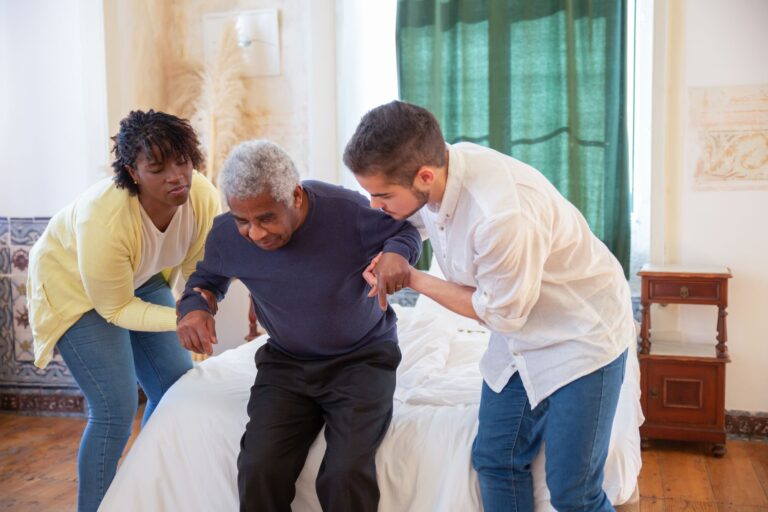
Best chair sits at the center of this dementia and brain health question.
For dementia patients with high pain sensitivity, air-based cushions — specifically ROHO air cell models or alternating pressure cushions — are the strongest clinical recommendation. These cushions produce the lowest interface pressure of any material type, which matters enormously when a patient’s nervous system is already primed to amplify pain signals. A ROHO Quadtro Select, for instance, uses interconnected air cells that conform around bony prominences like the ischial tuberosities, distributing weight so no single point bears excessive load. For a patient with Alzheimer’s-related hyperalgesia who sits for hours each day and cannot shift their own weight, that difference between an air cushion and a basic foam pad can be the difference between manageable comfort and silent, unrelenting pain. This matters more than most caregivers realize.
There is no convincing evidence that brain deterioration in dementia leads to clinically significant reductions in pain intensity. Patients remain fully susceptible to pain, and some research shows that neuroinflammation and activated microglia in Alzheimer’s disease can actually drive heightened pain sensitivity and even allodynia — pain triggered by stimuli that wouldn’t normally hurt at all. A person with dementia may not be able to tell you they’re in pain, and they almost certainly cannot self-correct their posture or shift their weight when pressure builds. That makes the cushion beneath them one of the most consequential decisions a caregiver will make. This article covers the clinical evidence behind why cushion selection is critical for this population, ranks the main cushion types by pressure relief performance, compares specific products and price ranges, and walks through the practical guidelines that should shape your decision — including what to avoid and how to pair a good cushion with other pain management strategies.
Table of Contents
- Why Do Dementia Patients With High Pain Sensitivity Need Specialized Chair Cushions?
- How Air, Gel, and Foam Cushions Compare for Pressure Relief
- Specific Cushion Recommendations and What They Cost
- How to Set Up and Maintain an Air Cushion Properly
- What to Avoid and Why Doughnut Cushions Are Harmful
- Pairing the Right Cushion With Pain Assessment and Non-Drug Strategies
- Specialized Dementia Seating and Where the Field Is Heading
- Conclusion
- Frequently Asked Questions
Why Do Dementia Patients With High Pain Sensitivity Need Specialized Chair Cushions?
The assumption that dementia somehow dulls pain perception has done real harm. For years, undertreated pain in dementia patients was partly rationalized by the belief that cognitive decline blunted physical suffering. The clinical literature tells a different story. A comprehensive review published in PMC found no convincing evidence that dementia reduces pain intensity. What dementia does reduce is the patient’s ability to communicate pain and take corrective action. A cognitively intact person who feels pressure building on their tailbone will shift in their seat, stand up, or say something. A person with moderate to advanced dementia may do none of these things. They may instead become agitated, refuse food, or withdraw — behavioral changes that get attributed to the dementia itself rather than to the treatable pain underneath it. For patients with documented high pain sensitivity, the stakes go further.
Research into the mechanisms linking Alzheimer’s disease and pain has identified neuroinflammation as a driver of hyperalgesia, meaning these patients may experience a given pressure stimulus as more painful than a cognitively healthy person would. Consider a patient with mid-stage Alzheimer’s who sits in a standard wheelchair with a basic foam cushion for six hours a day. The foam compresses under their ischial tuberosities within the first hour, bottoming out and transferring load directly to bone. That patient cannot tell anyone it hurts. They cannot reposition themselves. And their neuroinflammatory state may be amplifying every minute of that pressure into something genuinely agonizing. Approximately 40 percent of advanced dementia patients develop pressure ulcers before death, with advanced dementia independently associated with pressure ulcer development at an odds ratio of 3.0. These aren’t just comfort failures — they’re wound care emergencies that cause severe pain, increase infection risk, and accelerate decline. A proper cushion is preventive medicine, not a luxury.

How Air, Gel, and Foam Cushions Compare for Pressure Relief
Among the three primary cushion materials, the hierarchy for pressure redistribution is clear: air cushions provide the highest pressure relief, followed by gel, then foam. This ranking holds across clinical and manufacturer testing, and it aligns with basic physics. Air cells conform dynamically around the body’s contours, equalizing pressure across the entire seating surface. Gel deforms under load but has limits to how far it redistributes. Foam, especially standard polyurethane foam, compresses and eventually bottoms out, concentrating force on the highest-pressure points. For a dementia patient with high pain sensitivity, this ranking matters directly. An air cushion like the ROHO Quadtro Select uses interconnected air cells that allow the patient to sit into the cushion rather than on top of it. The air shifts and balances, so pressure peaks at the ischial tuberosities and coccyx drop significantly compared to foam.
Gel-foam hybrids — a foam base topped with gel chambers — represent a middle ground. They conform better than foam alone and provide cooling, which can reduce skin irritation. For patients with intact skin and moderate risk profiles, these hybrids are often sufficient and far simpler to maintain than air systems. However, if your patient is immobile for long stretches, has existing skin breakdown, or shows behavioral signs of pain during sitting, a gel-foam hybrid may not be enough. The limitation of gel is that it still has a fixed volume — under sustained load, it displaces but doesn’t continuously redistribute the way air does. Foam’s limitation is more severe: it fatigues over time, losing its pressure-relief properties well before it looks worn out. A foam cushion that felt adequate three months ago may be providing almost no meaningful pressure relief today. For high-risk, high-sensitivity patients, the clinical evidence points consistently to air-based solutions.
Specific Cushion Recommendations and What They Cost
The ROHO Quadtro Select is the most widely recommended air cell cushion for patients at high risk of pressure ulcer development. It features adjustable air cells grouped into four quadrants that can be independently inflated, allowing a caregiver or seating specialist to customize pressure distribution for asymmetric postures — common in patients with dementia-related postural changes. Prices range from roughly $417 to $594 depending on size and supplier. For patients who already have skin breakdown, the ROHO Smart Check High Profile offers deeper immersion and more aggressive pressure redistribution, priced between $563 and $773. These are not casual purchases, but they’re substantially cheaper than treating a stage III or IV pressure ulcer, which can cost thousands of dollars in wound care supplies and nursing time. For caregivers on a tighter budget, the ROHO MOSAIC and ROHO LTV models offer air cell technology at under $100 — a fraction of the clinical-grade models. They don’t provide the same level of customization or immersion depth, but they significantly outperform foam for basic pressure redistribution.
On the foam-gel end, the ComfiLife Gel Enhanced cushion runs $35 to $45 and combines a memory foam base with a cooling gel layer and a coccyx cutout. It’s a reasonable starting point for patients with low to moderate risk who primarily need comfort rather than clinical-grade pressure prevention. Alternating pressure cushions represent a distinct category. Rather than passively redistributing weight, these powered cushions continuously cycle air between chambers, shifting the patient’s pressure points automatically. For a dementia patient who is essentially immobile during sitting hours and cannot be repositioned frequently, an alternating pressure cushion automates what the patient’s body can no longer do on its own. The trade-off is complexity — they require power, they make noise, and they can sometimes cause instability that distresses patients who are sensitive to movement. Pricing varies widely depending on the system, but the clinical rationale for immobile patients is strong.

How to Set Up and Maintain an Air Cushion Properly
Getting the right cushion is only half the job. Air cushions in particular require correct inflation to work as intended, and the most common error is overinflation. When a ROHO cushion is overinflated, the patient sits on top of the air cells rather than sinking into them. The cells become rigid, and instead of conforming to the body, they create their own pressure points. The correct setup involves inflating the cushion, seating the patient, then slowly releasing air until you can feel the bony prominences just barely hovering above the cushion base when you slide your hand underneath. This is called a “hand check,” and it should be performed at least weekly, since air cells lose small amounts of pressure over time.
Compared to foam or gel cushions, which require essentially no setup, air cushions demand more caregiver involvement. A gel-foam hybrid is genuinely set-and-forget — you place it on the chair and check periodically for gel integrity and foam compression. An air cushion requires inflation checks, cleaning of the air cells, and occasional valve inspection. For caregiving situations where the patient has multiple caregivers rotating through shifts, there’s a real risk that an air cushion gets neglected and drifts out of proper inflation range. If your care context can’t support that maintenance, a high-quality gel-foam hybrid may actually serve the patient better in practice than a theoretically superior air cushion that no one adjusts. The ROHO Smart Check line addresses this somewhat by including an integrated pressure-monitoring system that alerts caregivers when inflation drops below the therapeutic range. It’s a meaningful feature for care facilities and family caregivers who want the performance of air without relying on manual checks alone.
What to Avoid and Why Doughnut Cushions Are Harmful
Clinical guidelines from the Wound Healing Society’s 2023 update explicitly recommend against doughnut-type cushion devices. Despite their intuitive appeal — a hole in the middle to take pressure off the tailbone — doughnut cushions actually concentrate pressure around the ring’s edge, restricting blood flow to the surrounding tissue and potentially worsening the exact problem they’re meant to solve. They remain widely sold in pharmacies and online, often marketed toward elderly patients, which makes this a persistent and dangerous misconception. If a well-meaning family member has already purchased a doughnut cushion for a dementia patient, it should be replaced. Beyond doughnut cushions, caregivers should be cautious about any cushion that is not specifically designed for pressure redistribution. Decorative throw pillows, folded blankets, and standard seat pads do almost nothing to reduce interface pressure.
They may feel soft initially, but they compress rapidly under body weight and offer no meaningful protection for bony prominences. For a patient with high pain sensitivity, the subjective softness of a cushion at first sit is not a reliable indicator of its therapeutic value over a six-hour sitting period. What matters is sustained pressure redistribution, which requires engineered materials — air cells, clinical-grade viscoelastic foam, or medical gel. There is another subtler risk with cushion selection for dementia patients: height. Adding a thick cushion to a standard chair can raise the patient’s seating surface enough to make their feet dangle, which creates new pressure points behind the knees and reduces stability. The Wound Healing Society guidelines emphasize that cushion selection should be individualized based on the complete seating position, not just the cushion surface alone. If a cushion raises the patient’s hips, the chair’s footrest or a footstool must be adjusted to compensate.
Pairing the Right Cushion With Pain Assessment and Non-Drug Strategies
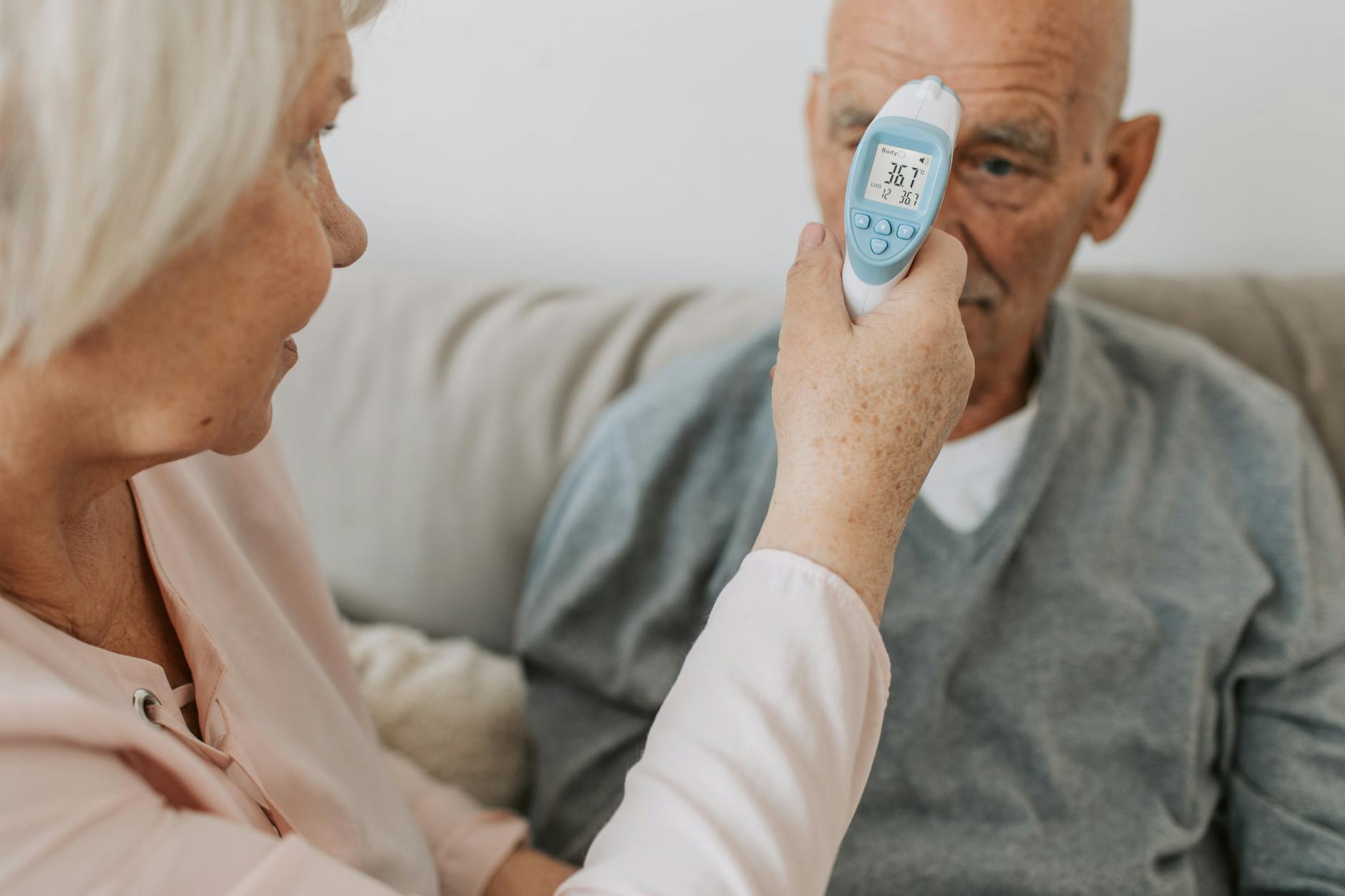
Even the best cushion cannot be a complete pain management strategy on its own. Clinical guidelines stress that regular repositioning is essential — ideally at least every two hours — to allow blood flow recovery in compressed tissues. For dementia patients who cannot self-report pain, caregivers should use validated assessment tools designed for non-verbal populations. The PACSLAC (Pain Assessment Checklist for Seniors with Limited Ability to Communicate) and PAINAD (Pain Assessment in Advanced Dementia) scales both provide structured observational frameworks for detecting pain through facial expressions, body language, vocalizations, and behavioral changes.
Without these tools, pain in a non-verbal dementia patient can go entirely unrecognized, regardless of how good the cushion is. Non-drug pain strategies should complement cushion use. Gentle massage, guided repositioning, and physical therapy can address musculoskeletal pain that sitting alone won’t resolve. A patient who grimaces or stiffens when transferred to their chair may have hip or lower back pain that needs direct intervention, not just better pressure distribution. The cushion handles the sustained interface pressure problem, but the broader pain picture in dementia requires layered approaches.
Specialized Dementia Seating and Where the Field Is Heading
Beyond the cushion itself, the chair it sits in matters. The Seating Matters Atlanta 2 and Sorrento 2 are currently the only dementia chairs in the world to receive Dementia Product Accreditation from the Dementia Services Development Centre at the University of Stirling. These chairs are designed with tilt-in-space positioning, lateral supports, and pressure-reducing surfaces built into their structure. For patients who spend most of their day seated, a purpose-built dementia chair with an appropriate cushion system represents the highest standard of care — though the cost and logistical requirements put them beyond reach for many home care situations.
The direction of the field is toward smarter, more responsive systems. Pressure-monitoring technology integrated into cushions, like the ROHO Smart Check, is an early step. Research into real-time pressure mapping and automated repositioning in powered seating continues. For now, the core principles remain straightforward: understand that your patient’s pain is real and possibly amplified by their disease, choose a cushion material that minimizes interface pressure, set it up correctly, monitor it consistently, and pair it with structured pain assessment and repositioning. The technology will improve, but the attentiveness behind it is what ultimately protects the patient.
Conclusion
For dementia patients with high pain sensitivity, the evidence consistently favors air-based cushions as the primary recommendation. ROHO air cell models and alternating pressure cushions produce the lowest interface pressures of any cushion type, directly addressing the core problem: sustained pressure on tissue in patients who cannot shift their own weight and whose neurological condition may be amplifying pain signals. Gel-foam hybrids serve as a practical, lower-cost alternative for patients with intact skin and lower risk profiles, while doughnut cushions and standard foam pads should be avoided entirely. The cushion decision cannot happen in isolation.
Proper inflation, regular repositioning, validated pain assessment using tools like PACSLAC or PAINAD, and non-drug pain strategies all form part of the system that keeps a dementia patient comfortable and safe. Start by evaluating your patient’s specific risk level — skin integrity, mobility, sitting duration, and observed pain behaviors — and match the cushion to that profile. For high-risk, high-sensitivity patients, invest in clinical-grade air technology. For everyone else, choose the best pressure-redistributing cushion your budget and care context can reliably maintain. The right cushion, correctly used, is one of the most impactful things a caregiver can do.
Frequently Asked Questions
Does dementia reduce a patient’s ability to feel pain?
No. There is no convincing evidence that brain deterioration in dementia leads to clinically significant reductions in pain intensity. What dementia reduces is the ability to communicate pain and take self-corrective actions like shifting weight. Some Alzheimer’s patients may actually experience heightened pain due to neuroinflammation driving hyperalgesia and allodynia.
Are ROHO cushions worth the high price for home care?
For patients at high risk of pressure ulcers or with documented pain sensitivity, yes. The ROHO Quadtro Select costs $417 to $594, but treating a pressure ulcer is far more expensive and causes significant suffering. For lower-risk patients, the ROHO MOSAIC at under $100 or a gel-foam hybrid at $35 to $45 may be sufficient.
How do I know if my dementia patient’s cushion is causing them pain?
Use a validated observational pain tool. The PAINAD (Pain Assessment in Advanced Dementia) scale scores facial expressions, negative vocalizations, body language, and consolability. The PACSLAC provides a broader checklist. Look for grimacing, guarding, agitation, or behavioral changes during and after sitting.
Can I just use a thick memory foam cushion instead of an air cushion?
Memory foam provides less pressure redistribution than air and will bottom out under sustained load. For short sitting periods and low-risk patients, a quality memory foam cushion with a gel layer can be adequate. For patients sitting more than a few hours daily, at high risk for skin breakdown, or with high pain sensitivity, air-based options are the stronger clinical choice.
How often should an air cushion be checked for proper inflation?
At least weekly, using the hand check method — slide your hand under the patient’s bony prominences while they’re seated. You should feel the prominences just barely hovering above the cushion base. If you can’t feel the base at all, the cushion is overinflated. If the prominences rest firmly on the base, it needs air.
Why are doughnut cushions bad for dementia patients?
Despite seeming logical, doughnut cushions concentrate pressure around the ring’s edge rather than distributing it. This restricts blood flow to surrounding tissue and can worsen pressure injury risk. The Wound Healing Society’s 2023 clinical guidelines explicitly recommend against their use.
You Might Also Like
- What’s the Best Chair Cushion for Dementia Patients With Swollen Legs?
- What’s the Best Chair Cushion for Dementia Patients With Reduced Awareness?
- What’s the Best Cushion for Dementia Patients With Spasticity?
For more, see CDC — Alzheimer’s and Dementia.