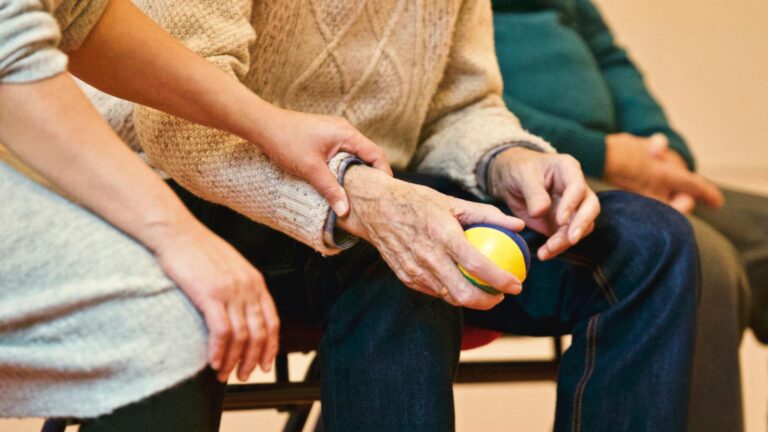
For Alzheimer’s patients who are sensitive to touch, the best cushion depends on what kind of sensitivity they experience and how far the disease has progressed, but the strongest evidence points toward weighted ball-filled cushions like the Protac SenSit Sensory Chair for early-to-middle stages, and gel-foam hybrids like the Ergo21 Travel Cushion for patients who need pressure relief without skin irritation. A caregiver dealing with a parent who flinches at rough textures or stiff seating, for instance, would likely see the most immediate benefit from a cushion that uses deep proprioceptive pressure — the kind of firm, even input that calms the nervous system rather than agitating it. The Protac SenSit, which uses 1.5-inch and 2-inch weighted plastic balls grouped in bags along trigger points in the neck, arms, and back, was designed specifically for people with dementia and related neurological conditions. Touch sensitivity in Alzheimer’s is more common and more clinically significant than most families realize. A 2023 study published in eBioMedicine found that reduced tactile sensitivity is associated with mild cognitive impairment, establishing touch decline as an early biomarker for dementia.
Separate research found that impaired touch sensation was associated with a 1.63-fold higher risk of dementia after adjustment for demographics and health conditions. A 2025 study in Biological Psychology goes further, highlighting the tactile sense as a uniquely sensitive early indicator of cognitive decline — distinct from hearing or vision loss. So when an Alzheimer’s patient reacts strongly to certain textures, pressures, or seating surfaces, it is not simply a preference. It is a neurological symptom that the right cushion can meaningfully address. This article covers the four main categories of cushions that work for touch-sensitive dementia patients — weighted proprioceptive cushions, gel-foam hybrids, sensory fidget cushions, and weighted lap pads — along with the research behind each, their limitations, how to match the right type to the right stage of disease, and practical guidance on waterproofing, clinical assessments, and what to avoid.
Table of Contents
- Why Are Alzheimer’s Patients So Sensitive to Touch, and How Does a Cushion Help?
- Weighted Ball-Filled Cushions and the Science of Deep Pressure for Dementia
- Gel-Foam Hybrids and Pressure Relief for Fragile, Touch-Sensitive Skin
- Choosing Between Sensory Fidget Cushions and Weighted Lap Pads
- Common Mistakes When Selecting Cushions for Dementia Patients
- How Tactile Sensitivity Changes Across the Stages of Alzheimer’s
- Where Dementia Cushion Research Is Heading
- Conclusion
- Frequently Asked Questions
Why Are Alzheimer’s Patients So Sensitive to Touch, and How Does a Cushion Help?
The brain processes touch through a network of sensory pathways that Alzheimer’s disease progressively damages. As neurons deteriorate, the signals from skin receptors — which normally tell the brain whether something is soft, rough, hot, cold, or pressing too hard — become distorted or amplified. Some patients lose sensitivity entirely and cannot feel developing pressure sores. Others experience a kind of sensory overload where ordinary contact feels uncomfortable or even painful. Both responses are neurological in origin, and both demand a different approach to seating. A cushion helps by controlling the type and intensity of sensory input the patient receives while seated. Deep pressure stimulation, for example, activates proprioceptors in the muscles and joints rather than the surface-level touch receptors in the skin.
Research shows this kind of input produces notable calming effects within five minutes, including decreased blood pressure, decreased heart rate, and increased feelings of calm. This is the principle behind weighted cushions and weighted lap pads. By contrast, a gel-foam hybrid cushion works by distributing body weight so evenly that no single point of skin bears enough pressure to trigger discomfort — a critical concern for patients who sit for extended periods and whose skin may be fragile or easily irritated. The distinction matters. A patient who is hypersensitive to surface textures needs a different solution than a patient who has lost the ability to sense where their body ends and the chair begins. The Protac SenSit addresses the latter — its weighted balls provide constant proprioceptive feedback that helps the brain locate the body in space. The Ergo21 Travel Cushion addresses the former — its Micro Stretch Fabric moves with the body to prevent skin friction and protects sensitive capillaries from being stretched and torn. Choosing the wrong type does not just fail to help; it can actively worsen agitation, skin breakdown, or postural instability.

Weighted Ball-Filled Cushions and the Science of Deep Pressure for Dementia
The Protac SenSit Sensory Chair represents the most specialized option currently available for dementia patients with sensory processing difficulties. Developed in Denmark and made from 100% flame-resistant Oxford polyester, it uses bags of weighted plastic balls positioned to rest against trigger points along the neck, arms, and back. The balls deliver continuous deep proprioceptive pressure — the same principle that makes weighted blankets calming, but applied to a seated position where the patient spends most of their waking hours. Specialist suppliers price the chair at approximately $559 to $612 AUD depending on the model. This type of cushion works best for patients in the early to middle stages of Alzheimer’s, when some active movement remains and the patient can still benefit from the sensory feedback the balls provide. The proprioceptive input helps the brain maintain awareness of the body’s position, which can reduce restlessness, rocking, and the kind of anxious fidgeting that often accompanies dementia-related sensory confusion.
A 2025 meta-analysis found that multisensory stimulation reduces neuropsychiatric symptoms and enhances cognitive function in older adults with dementia, lending broader support to the approach. However, this type of cushion has real limitations. As Alzheimer’s progresses, body awareness deficits become more severe — a cushion that was effective in early stages may become counterproductive as the disease advances. A patient in later stages who has lost significant motor control may not be able to shift their weight against the balls, which could create localized pressure points rather than relieving them. The balls also add weight to the chair, making it harder to move the patient or reposition them. For these reasons, no cushion substitutes for a clinical seating assessment. A professional evaluation is the only reliable way to match cushion type to disease stage and individual needs.
Gel-Foam Hybrids and Pressure Relief for Fragile, Touch-Sensitive Skin
For patients whose primary issue is skin-level tactile sensitivity — who react to rough textures, stiff surfaces, or the friction of shifting in a chair — gel-foam hybrid cushions offer the most direct relief. The ComfiLife Gel Enhanced Seat Cushion combines memory foam with a cooling gel layer and includes a coccyx cutout for tailbone relief and a non-slip bottom. It is a widely recommended option for patients who sit for extended periods and are at risk of pressure sores, which affect a disproportionate number of dementia patients because they often cannot reposition themselves or communicate discomfort. The Ergo21 Travel Cushion takes a different approach that is particularly relevant for touch-sensitive patients. Its Micro Stretch Fabric is engineered to move with the body rather than against it, which prevents the skin friction that causes irritation and, in fragile elderly skin, can actually tear sensitive capillaries. This is not a marketing claim about comfort — it is a functional design feature that addresses a specific medical risk.
For a patient who becomes agitated when seated on standard foam or vinyl surfaces, the difference between a fabric that grips and pulls at the skin and one that stretches with the body’s natural movements can be the difference between calm and distress. The limitation of gel-foam hybrids is that they provide passive pressure redistribution, not active sensory input. They solve the problem of discomfort but do not address the deeper proprioceptive deficits that drive much of the restlessness and agitation in Alzheimer’s patients. A patient who is uncomfortable because of skin sensitivity will benefit. A patient who is agitated because their brain cannot locate their body in the chair will not. In many cases, the best approach is to combine a gel-foam seat cushion for pressure relief with a weighted lap pad for calming proprioceptive input — addressing both the surface-level and the neurological dimensions of the problem.

Choosing Between Sensory Fidget Cushions and Weighted Lap Pads
Sensory fidget cushions and weighted lap pads serve overlapping but distinct purposes, and the choice between them depends largely on the patient’s stage of disease and their remaining hand function. Fidget cushions like the Bud Sensory Cushion — developed by the UK charity Designability and sold through the Alzheimer’s Society — are designed for tactile engagement. The Bud measures 300 by 300 millimeters and is made from attractive tactile fabrics with petal folds that allow caregivers to tuck in meaningful objects like photos or fabric swatches. It is ideal for later stages of dementia when verbal communication has declined and the patient needs gentle, non-threatening sensory input to stay connected to their environment. Weighted lap pads take a different approach. The AlzStore 100% Cotton Weighted Lap Pad delivers deep pressure touch stimulation across the thighs and lap, which may increase parasympathetic arousal — the body’s rest-and-digest response. The calming effect is measurable and fast.
Research indicates that deep pressure stimulation produces decreased blood pressure and heart rate within five minutes. A 2025 randomized controlled trial protocol published in JMIR Research Protocols is now studying weighted blankets for agitation in hospitalized dementia patients, indicating that this is an active and growing area of clinical research. The tradeoff is straightforward. Fidget cushions require some degree of intentional hand movement and curiosity — they work when the patient can still explore textures and manipulate objects, even at a basic level. Products like the ODOXIA Dementia Pillow, which includes buckles, zippers, and varied tactile elements, or the AlzStore Activity Pillow with its denim construction, Velcro, straps, and pockets, provide graded difficulty levels that can be matched to the patient’s remaining abilities. Weighted lap pads require nothing from the patient — they simply sit on the lap and deliver passive calming input. For a patient who is too far into the disease to engage with a fidget cushion, or who becomes frustrated by objects they can no longer manipulate, the lap pad is the better choice. For a patient who still has hand function and benefits from purposeful activity, the fidget cushion provides both calming input and cognitive stimulation.
Common Mistakes When Selecting Cushions for Dementia Patients
The most dangerous mistake caregivers make is assuming that any cushion marketed as “comfortable” will work for a dementia patient with sensory issues. Standard memory foam cushions, for example, retain body heat — and for a patient whose tactile processing is already compromised, the sensation of overheating against a foam surface can trigger agitation, attempts to stand, or skin breakdown. Cooling gel layers exist specifically to counteract this problem, which is why gel-foam hybrids are recommended over plain memory foam for extended sitting. A second common error is failing to account for incontinence. Waterproof or water-resistant covers with sealed seams are recommended for dementia patients’ cushions, and this is not optional. A cushion that absorbs moisture becomes a hygiene risk and a skin irritant within days.
Some specialized cushions come with removable, washable covers designed for incontinence management, but many general-purpose cushions do not. Before purchasing any cushion, check whether the cover is waterproof, whether it can be removed and machine washed, and whether replacement covers are available. A cushion that cannot survive regular laundering is not suitable for dementia care, regardless of how well it performs on other metrics. Perhaps the most consequential mistake is treating cushion selection as a one-time decision. Body awareness deficits in Alzheimer’s are progressive. A weighted ball-filled cushion that provides excellent proprioceptive feedback in the early stages can become a source of discomfort or even injury in later stages when the patient can no longer shift their weight. Caregivers should plan to reassess seating needs every few months, ideally with input from an occupational therapist or seating specialist, and should be prepared to transition between cushion types as the disease progresses.

How Tactile Sensitivity Changes Across the Stages of Alzheimer’s
In the early stages of Alzheimer’s, tactile sensitivity changes are often subtle — a patient may complain that certain fabrics feel “wrong” or may avoid sitting in chairs they previously found comfortable, without being able to articulate why. This is the stage where the 2025 Biological Psychology study is most relevant: tactile decline is emerging as a uniquely sensitive early indicator of cognitive decline, distinct from the hearing and vision loss that clinicians more commonly screen for. At this point, a cushion that provides gentle proprioceptive input, like the Protac SenSit, can help maintain body awareness and reduce the early anxiety that accompanies sensory confusion. By the middle and later stages, the picture changes substantially.
With 7.2 million Americans age 65 and older living with Alzheimer’s in 2025 — about 1 in 9 people in that age group — and over 10 million new dementia cases globally each year (one new case every 3.2 seconds), the sheer scale of this problem means that millions of families are navigating these transitions right now. In later stages, the patient may no longer be able to communicate discomfort at all. Caregivers must watch for behavioral cues — increased agitation when seated, attempts to push away from the chair, picking at the cushion surface, or changes in skin condition — and respond by adjusting the seating accordingly. The Bud Sensory Cushion, with its soft tactile fabrics and ability to hold familiar objects, was designed specifically for this stage, when calming sensory input must be delivered passively rather than sought out by the patient.
Where Dementia Cushion Research Is Heading
The field is moving toward more rigorous clinical evidence. The 2025 randomized controlled trial protocol studying weighted blankets for agitation in hospitalized dementia patients, published in JMIR Research Protocols, represents a shift from anecdotal caregiver reports to controlled research that can inform clinical guidelines. If weighted pressure interventions show statistically significant benefits in hospital settings, it will likely accelerate the development of purpose-built weighted seating systems for home and long-term care use.
The broader trajectory is also worth watching. Worldwide, at least 55 million people live with Alzheimer’s or other dementias, a number projected to reach 139 million by 2050. As that population grows, so does the market and the research incentive for non-pharmaceutical interventions like specialized seating. The 2025 meta-analysis finding that multisensory stimulation reduces neuropsychiatric symptoms and enhances cognitive function suggests that future cushion designs may integrate multiple sensory modalities — combining weighted pressure with temperature regulation, textured surfaces, and even auditory or olfactory elements — to provide more comprehensive sensory support as the disease progresses.
Conclusion
The best cushion for an Alzheimer’s patient sensitive to touch is not a single product but a category matched to the patient’s specific type of sensitivity and stage of disease. For proprioceptive deficits and restlessness in early-to-middle stages, weighted ball-filled cushions like the Protac SenSit deliver targeted deep pressure. For skin-level tactile sensitivity and pressure sore risk, gel-foam hybrids like the Ergo21 or ComfiLife cushions reduce friction and distribute weight. For calming agitation through passive deep pressure, weighted lap pads work within minutes.
And for patients in later stages who benefit from gentle tactile engagement, sensory cushions like the Bud provide safe, non-threatening stimulation. No cushion replaces a professional clinical seating assessment, and no single cushion will remain appropriate throughout the full course of the disease. Caregivers should work with occupational therapists to evaluate needs, plan for incontinence management from the start, and reassess every few months as the disease progresses. The research on tactile sensitivity and dementia is advancing rapidly, and the interventions available today are substantially more evidence-informed than what existed even five years ago. Start with the patient’s most pressing source of discomfort, choose the cushion category that addresses it, and adjust as needed.
Frequently Asked Questions
Can a regular memory foam cushion work for an Alzheimer’s patient with touch sensitivity?
Standard memory foam retains heat and does not address proprioceptive deficits, so it is generally not the best choice. Gel-foam hybrids that include a cooling layer and low-friction fabric are a significant improvement for touch-sensitive patients, and weighted options address the neurological dimension that plain foam cannot.
How quickly do weighted cushions and lap pads produce a calming effect?
Research shows that deep pressure stimulation produces measurable calming effects — decreased blood pressure, decreased heart rate, and increased calm — within five minutes of application.
Are sensory fidget cushions appropriate for all stages of dementia?
No. Fidget cushions with buckles, zippers, and manipulable elements require some remaining hand function and intentional movement. For patients in later stages who can no longer engage with objects, a weighted lap pad or a passive sensory cushion like the Bud is more appropriate.
Should cushions for dementia patients be waterproof?
Yes. Waterproof or water-resistant covers with sealed seams are recommended for dementia patients’ cushions due to incontinence risk. A cushion without a washable, waterproof cover will become a hygiene problem quickly and is not suitable for long-term dementia care.
How often should I reassess which cushion my family member needs?
Body awareness deficits in Alzheimer’s are progressive, so a cushion that works well in one stage may become ineffective or even counterproductive as the disease advances. Reassessing every few months, ideally with an occupational therapist, is recommended.
Is there clinical evidence that weighted pressure helps with dementia-related agitation?
The evidence is growing. A 2025 randomized controlled trial protocol published in JMIR Research Protocols is currently studying weighted blankets for agitation in hospitalized dementia patients. A 2025 meta-analysis also found that multisensory stimulation, which includes deep pressure, reduces neuropsychiatric symptoms and enhances cognitive function in older adults with dementia.