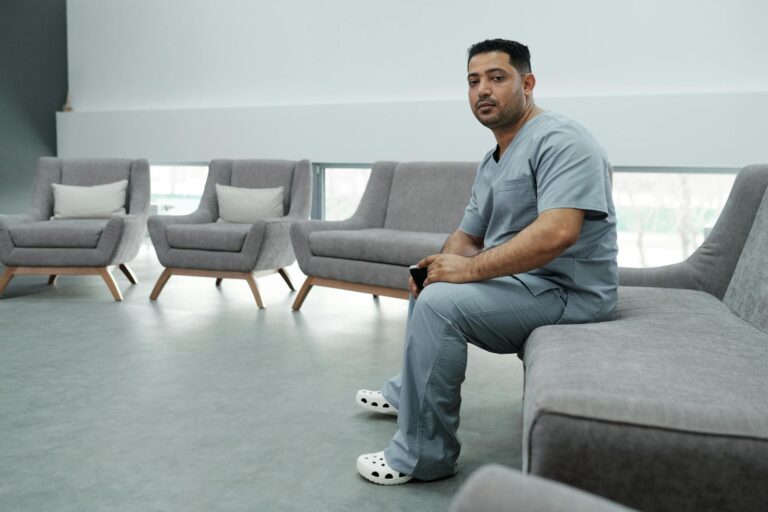
The best seating support for dementia patients during respite care is a clinically assessed, therapeutic chair that combines pressure redistribution, tilt-in-space functionality, and adjustable height to match the individual’s postural and cognitive needs. No single chair works for every patient, but the strongest evidence points toward products like the Seating Matters Atlanta 2 and Sorrento 2, which are the only chairs in the world to receive Dementia Product Accreditation from the Dementia Services Development Centre at the University of Stirling, scoring 95% and 93% respectively at the highest Class 1A rating. For patients who are more mobile but prone to agitation or wandering, Broda positioning wheelchairs with Comfort Tension Seating and Dynamic Rocking offer a different but equally important approach. The right answer depends on the stage of dementia, the patient’s physical condition, and the respite setting itself, which is why an occupational therapist assessment should be the starting point for any seating decision.
This matters more than most caregivers realize. Among tube-fed patients with advanced dementia, 66.5% had pressure ulcers at admission in one study, and the survival gap was staggering: median survival with pressure ulcers was just 96 days compared to 863 days without them. People with dementia, especially in later stages, often remain in one position for extended periods without moving, and they may not be aware they are sitting uncomfortably or have the presence of mind to shift their posture. During respite care, when a familiar caregiver is temporarily absent, the risk of prolonged poor positioning increases. This article covers the clinical case for proper seating, specific product comparisons and their tradeoffs, the key features respite facilities should prioritize, how to get an occupational therapy assessment, and the financial realities of accessing these solutions.
Table of Contents
- Why Does Seating Support Matter So Much for Dementia Patients in Respite Care?
- Clinical Features That Distinguish Therapeutic Seating from Standard Furniture
- Comparing the Leading Dementia Seating Products
- How to Get an Occupational Therapy Assessment for Seating
- Financial Realities and Funding for Dementia Seating in Respite Care
- What Respite Facilities Should Ask About Their Own Seating
- The Future of Dementia Seating and Respite Innovation
- Conclusion
- Frequently Asked Questions
Why Does Seating Support Matter So Much for Dementia Patients in Respite Care?
The connection between seating and health outcomes in dementia is far more consequential than it appears. Poor seating does not simply cause discomfort. It contributes to falls, pressure injuries, venous thrombosis, respiratory compromise, reduced food and drink intake, and social withdrawal. Proper therapeutic seating, by contrast, has been shown to reduce these risks while improving respiratory function, alertness, independent eating and drinking, and the ability to engage socially. An international study of 200 allied health professionals using therapeutic seating chairs reported significant reductions in falls, contractures, and staff supervision requirements, alongside measurable improvements in patient independence and alertness. In a respite care setting, where staff may be less familiar with an individual patient’s habits and positioning needs, these outcomes become especially critical. Consider a patient in moderate-stage dementia who attends an adult day program three times a week so their spouse can rest. At home, the spouse knows that their partner lists to the left after twenty minutes and needs repositioning.
At the respite facility, staff rotating through shifts may not catch that pattern, and the patient cannot articulate the discomfort. Without a chair that provides lateral support and pressure redistribution, that patient could develop a pressure injury in a matter of hours. Advanced dementia and spasticity are both significantly associated with pressure ulcer development, and the consequences of even a single ulcer can be life-altering. The caregiving context makes this even more urgent. In the United States, 11.5 million family caregivers provided an estimated 18.4 billion hours of unpaid dementia care in 2023, averaging roughly 31 hours per week per caregiver. Between 40% and 70% of those caregivers report clinical symptoms of depression, and 23% say caregiving has directly harmed their physical health. Yet 85% of caregivers never receive respite care, often because of cost or reluctance to leave their loved one with someone else. When caregivers do use respite services, they experience a 50% reduction in care-related stress. The quality of care during that respite window, including something as seemingly mundane as the chair their loved one sits in, directly affects whether caregivers feel confident enough to use those services again.

Clinical Features That Distinguish Therapeutic Seating from Standard Furniture
Not every supportive-looking chair is actually therapeutic, and the distinction matters clinically. Standard recliners or padded armchairs found in many care facilities may look comfortable, but they often work against a dementia patient’s needs. Overly soft seat surfaces cause patients to sink in, making sit-to-stand transfers difficult and increasing fall risk. Wing-back designs, while seemingly cozy, obstruct peripheral vision and can increase disorientation and agitation in someone already struggling with spatial awareness. Clinical guidelines recommend higher seat height, reduced posterior seat tilt, and firmer seat surfaces to facilitate safer transfers and better posture. The features that matter most in a therapeutic dementia chair include tilt-in-space functionality, which prevents the patient from sliding forward and reduces fall risk without forcing them into a reclined position that compromises breathing and swallowing. Pressure redistribution cushioning is essential for preventing the pressure injuries that carry such dire mortality implications.
Adjustable seat height allows the chair to be matched to the patient’s leg length for safe, supported standing. Lateral supports and headrests maintain postural stability for patients who have lost trunk control. A waterfall front edge reduces pressure behind the knees, improving circulation and comfort during extended sitting. And easy-clean, infection-control materials are non-negotiable in any facility where multiple patients use the same equipment. However, if the patient is in early-stage dementia and still relatively mobile, an elaborate tilt-in-space clinical chair may actually be counterproductive. Overly supportive seating can reduce a mobile patient’s motivation to stand and move independently, accelerating physical decline. The right seating should match the patient’s current functional level, not the worst-case scenario. This is precisely why the NICE guidelines (NG97) recommend that occupational therapy interventions include individualized environmental assessment, problem-solving strategies, and carer education, rather than a one-size-fits-all equipment prescription.
Comparing the Leading Dementia Seating Products
The market for dementia-specific seating has matured significantly in recent years, but a few products stand out for their clinical evidence and design credibility. The Seating Matters Atlanta 2 and Sorrento 2 earned their Dementia Product Accreditation from the DSDC at the University of Stirling through rigorous evaluation of their design against dementia-specific criteria, including color contrast, ease of use, and clinical effectiveness. These chairs are designed for patients who spend significant portions of the day seated and need comprehensive postural support, pressure management, and comfortable positioning that still allows engagement with their environment. Broda positioning wheelchairs take a different approach. Their Comfort Tension Seating technology uses a tensioned fabric system that molds to the user’s body rather than relying on foam cushioning that compresses over time. Select models offer up to 40 degrees of tilt-in-space and optional Dynamic Rocking, a gentle movement feature specifically designed to reduce anxiety in patients prone to wandering and restlessness.
The Broda Synthesis line adds up to 90 degrees of back recline and Trendelenburg positioning for patients with more complex medical needs. Critically, some Broda models are designed to eliminate the need for restraints, which is significant given the well-documented harms of physical restraint use in dementia care. For facilities or families working with tighter budgets, the Vancouver Queen Chair offers a dementia-friendly design at approximately £319 plus VAT (around $400 USD). It features a specially curved back that provides neck and head support without the wing-back design that obscures peripheral vision. It will not offer the tilt-in-space or pressure redistribution technology of the higher-end clinical chairs, but for patients in earlier stages who need a supportive day chair rather than a full clinical seating system, it represents a practical middle ground. The Lento Neuro Chair sits between these options, offering modular adaptive seating with infection control and pressure care upgrade options at variable pricing depending on specification.

How to Get an Occupational Therapy Assessment for Seating
An occupational therapist assessment is the recommended starting point for choosing dementia seating, and most families skip this step either because they do not know it exists or because they assume it is only available through hospital referrals. In reality, OT seating assessments can be requested through a patient’s primary care physician, through the respite care facility itself, or through direct referral to community occupational therapy services. The assessment evaluates the patient’s posture, trunk and head control, pressure injury risk, transfer ability, cognitive status, and the environment where the seating will be used. From this, the OT can recommend specific chair features, dimensions, and sometimes exact products. The tradeoff is time and access. NHS wait times for community OT assessments in the UK can stretch to months, and in the US, insurance coverage for outpatient OT seating evaluations varies widely. Medicare may cover the assessment if it is deemed medically necessary, but the recommended chair itself is often classified as durable medical equipment with its own separate coverage rules and limitations.
Some families find that the seating manufacturer’s own assessment services, such as those offered by Seating Matters or Broda through their clinical teams, are faster to access, though these obviously carry an inherent bias toward recommending that company’s products. A practical approach is to get the independent OT assessment for clinical specifications and then use manufacturer resources to find the closest product match within budget. The alternative, purchasing a chair without professional assessment, is common but risky. A chair that is the wrong seat depth can cause a patient to slide forward and fall. The wrong seat height can make transfers dangerous. Missing lateral supports can allow a patient with poor trunk control to lean until they are wedged painfully against an armrest. These problems are not always immediately obvious, especially to respite care staff who may be meeting the patient for the first time.
Financial Realities and Funding for Dementia Seating in Respite Care
Cost is the barrier that stops most conversations about therapeutic seating before they start. High-end clinical chairs with full tilt-in-space, pressure redistribution, and lateral support systems can cost several thousand dollars. For individual families already stretched thin by the broader costs of dementia care, this is often prohibitive. For respite care facilities, equipping a room with multiple appropriate chairs represents a significant capital investment. There are some funding pathways worth exploring.
Under the CMS GUIDE Model, eligible patients can receive up to $2,500 annually for respite services, and depending on interpretation and local implementation, some of this may be applicable to equipment that supports respite care delivery. The Alzheimer’s Association received a $25 million grant from the Administration for Community Living to establish a Center for Dementia Respite Innovation, a five-year initiative with a Letter of Intent deadline of March 2, 2026, that may open new funding streams for respite infrastructure, potentially including seating and equipment. State Medicaid waiver programs, Area Agencies on Aging, and some veterans’ benefits programs also occasionally fund durable medical equipment for dementia patients, though navigating these systems requires persistence. The warning here is straightforward: do not let perfect be the enemy of adequate. A $400 dementia-friendly chair with proper seat height and good back support is dramatically better than an unsuitable standard chair, even if it lacks tilt-in-space and advanced pressure redistribution. Families and facilities operating on limited budgets should prioritize the features that address the patient’s highest-risk clinical needs first, which an OT assessment can identify, rather than pursuing the most fully featured option available.

What Respite Facilities Should Ask About Their Own Seating
Families evaluating respite care options should ask direct questions about the seating available. Does the facility use standard furniture or clinically designed seating? Are chairs adjustable to individual patient dimensions? How frequently are seated patients repositioned, and is there a documented schedule? Can the facility accommodate a patient’s own prescribed seating if they bring it? These questions are not nitpicking.
They reflect the clinical reality that a person with dementia may not be aware they are positioned uncomfortably and cannot advocate for themselves during hours of sitting. A facility that has invested in accredited dementia seating or that routinely involves occupational therapists in seating decisions is signaling a level of care quality that extends well beyond chairs. Conversely, a facility that dismisses seating concerns or points to its standard recliners as sufficient may be worth scrutinizing more closely on other aspects of care as well.
The Future of Dementia Seating and Respite Innovation
The establishment of the Center for Dementia Respite Innovation, backed by $25 million in federal funding through the Alzheimer’s Association, signals growing recognition that respite care infrastructure, not just respite care availability, needs investment. Seating is one component of that infrastructure, alongside training, facility design, and technology. As the evidence base around therapeutic seating outcomes continues to build, with studies like the 200-professional international evaluation of clinical seating demonstrating measurable improvements in falls, contractures, and independence, the case for making proper seating a standard of respite care rather than a luxury add-on becomes harder to dismiss.
Emerging developments in pressure-mapping sensors, smart cushion technology, and real-time postural monitoring may eventually allow respite facilities to detect positioning problems before they cause harm, even when staff are attending to other patients. These technologies are not yet standard, but they point toward a future where the gap between what a familiar caregiver knows about their loved one’s positioning needs and what a respite facility can provide becomes much narrower. For now, the most important step remains the simplest: getting an individualized seating assessment and ensuring that whatever chair a dementia patient sits in during respite care is chosen with the same clinical seriousness as any other medical intervention.
Conclusion
Seating support for dementia patients during respite care is a clinical decision with measurable health consequences, not a matter of furniture preference. The evidence is clear that poor seating contributes to pressure injuries, falls, respiratory problems, and reduced quality of life, and that these risks intensify in respite settings where staff may lack the detailed knowledge a family caregiver has about individual positioning needs. The best approach starts with an occupational therapist assessment, prioritizes features like tilt-in-space, pressure redistribution, appropriate seat height, and lateral support, and considers accredited products like the Seating Matters Atlanta 2 and Sorrento 2 or the Broda positioning wheelchair line depending on the patient’s stage and needs.
For caregivers who are among the 85% not currently using respite care, knowing that a facility takes seating seriously can be part of what makes respite feel safe enough to try. And for the 11.5 million family dementia caregivers in the US averaging 31 hours a week of unpaid care, with depression rates between 40% and 70%, the ability to take a break without worrying about their loved one’s basic physical safety is not a luxury. It is a medical necessity for both the patient and the person caring for them.
Frequently Asked Questions
Can I bring my own chair to a respite care facility?
Many facilities will accommodate a patient’s own prescribed seating, especially if it has been recommended by an occupational therapist. Call ahead to confirm, as some facilities have restrictions based on infection control policies or space limitations. Having documentation from the OT explaining the clinical necessity of the specific chair can help.
How often should a dementia patient be repositioned while seated?
Clinical guidelines generally recommend repositioning at least every two hours, but patients at high risk for pressure injuries may need more frequent adjustments. Since people with dementia may not realize they are uncomfortable or remember to shift their weight, staff-initiated repositioning schedules are essential. A chair with good pressure redistribution extends the safe sitting time but does not eliminate the need for repositioning.
Does Medicare cover therapeutic seating for dementia patients?
Medicare may cover seating classified as durable medical equipment if it is deemed medically necessary and prescribed by a physician. Coverage varies depending on the specific item and the patient’s plan. The CMS GUIDE Model provides up to $2,500 annually per eligible patient for respite services, which may partially offset costs. Contact your local Medicare office or a benefits counselor for case-specific guidance.
What is tilt-in-space and why does it matter for dementia patients?
Tilt-in-space refers to a chair mechanism that tilts the entire seat and backrest as a unit, changing the patient’s orientation to gravity without changing the angle between their torso and thighs. This redistributes pressure across a larger body surface area, reduces the tendency to slide forward out of the chair, and decreases fall risk. For dementia patients who cannot reposition themselves, it is one of the most important features in a clinical chair.
Are wing-back chairs appropriate for dementia patients?
Generally, no. While wing-back chairs look supportive, they obstruct peripheral vision, which can increase disorientation, agitation, and anxiety in dementia patients. Dementia-friendly chair designs, like the Vancouver Queen Chair with its specially curved back, provide head and neck support without blocking the patient’s view of their surroundings.
What is the Dementia Services Development Centre accreditation and why does it matter?
The DSDC at the University of Stirling evaluates products against evidence-based criteria specific to dementia care, including usability, safety, and design appropriateness. Their Class 1A rating is the highest available. Currently, only the Seating Matters Atlanta 2 (scoring 95%) and Sorrento 2 (scoring 93%) have achieved this accreditation for seating, making it a meaningful differentiator when comparing products.