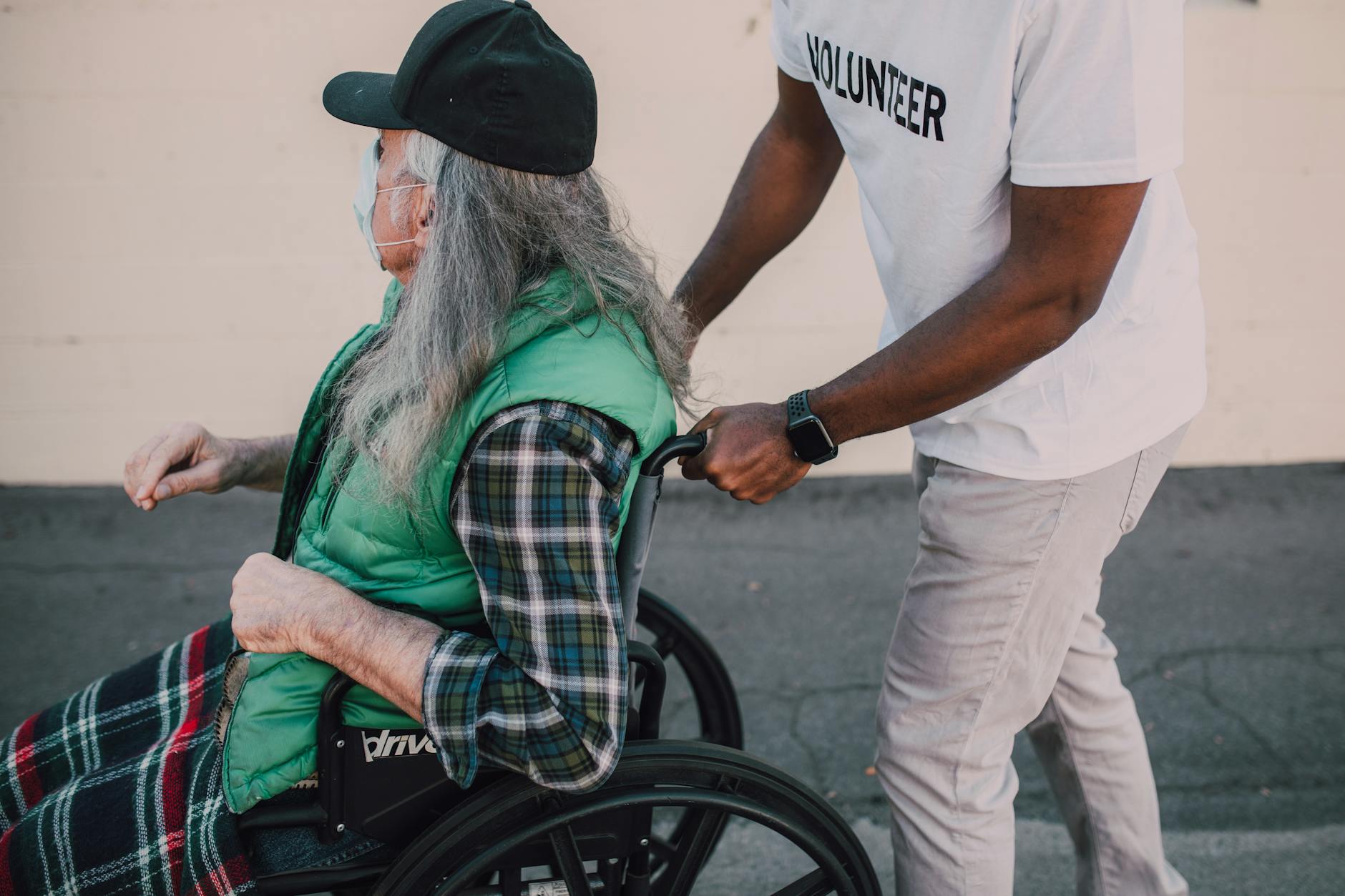
For dementia patients dealing with muscle weakness, a pressure-relieving memory foam cushion with lateral supports is generally the best starting point, and many occupational therapists recommend models that combine high-density viscoelastic foam with a contoured base and raised side bolsters. The reason is straightforward: someone with both cognitive decline and reduced muscle strength needs a cushion that does two jobs simultaneously — preventing pressure injuries from prolonged sitting and providing enough structural support to keep the person from sliding or leaning dangerously to one side. A cushion like the Roho Quadtro Select or a contoured gel-and-foam hybrid from manufacturers such as Comfort Company or Sunrise Medical can address both concerns, though the right choice depends heavily on the individual’s weight, the chair they use, and how much time they spend seated each day.
For a patient who sits in a wheelchair or recliner for six or more hours daily, which is common in mid-to-late stage dementia, the stakes of getting this wrong include skin breakdown, sacral pressure ulcers, and worsening postural instability. This article goes beyond a simple product recommendation to walk through why cushion selection for this population is more complicated than it first appears. We will cover how muscle weakness changes what a dementia patient needs from a seating surface, the key differences between foam, gel, and air-cell cushion technologies, how to assess whether a cushion is actually working, and the practical realities of maintenance and cleaning when a caregiver is already stretched thin. We also address common mistakes families make when purchasing cushions online without professional guidance and what role an occupational therapist or seating specialist should play in the process.
Table of Contents
- Why Do Dementia Patients With Muscle Weakness Need a Specialized Chair Cushion?
- Foam vs. Gel vs. Air-Cell Cushions — Which Technology Works Best for This Population?
- The Role of Postural Support in Preventing Falls and Skin Injuries
- How to Assess Whether a Cushion Is Actually Working
- Common Mistakes When Choosing Cushions for Dementia Patients
- Insurance Coverage and Working With a Seating Specialist
- Looking Ahead — Emerging Approaches to Seating for Dementia Care
- Conclusion
- Frequently Asked Questions
Why Do Dementia Patients With Muscle Weakness Need a Specialized Chair Cushion?
The intersection of dementia and muscle weakness creates a seating problem that a standard cushion simply cannot solve. Dementia on its own affects a person’s ability to recognize discomfort and shift their weight — something most of us do unconsciously dozens of times per hour. When you add muscle weakness, whether from general deconditioning, a neuromuscular condition, or the progression of the dementia itself, the person may lack both the awareness and the physical ability to reposition. This combination dramatically increases the risk of pressure injuries, particularly over bony prominences like the ischial tuberosities, the coccyx, and the greater trochanters. A standard foam seat pad from a home goods store offers minimal pressure redistribution and essentially no postural support. Specialized cushions address this through engineering that distributes body weight more evenly across the seating surface and reduces peak pressure at vulnerable points.
For comparison, a flat slab of standard polyurethane foam might allow interface pressures exceeding 60 mmHg under the sit bones, which is well above the capillary closing pressure threshold generally cited in wound care literature. A properly fitted pressure-relieving cushion can bring those readings below 30 to 40 mmHg in many cases, though results vary with the individual. The postural support component matters equally: without lateral bolsters or a contoured base, a patient with weak trunk muscles may gradually slide forward or lean to one side, increasing fall risk and creating shearing forces on the skin that accelerate tissue breakdown. It is worth noting that no cushion eliminates the need for regular repositioning. Even the most advanced seating surface is a risk-reduction tool, not a guarantee. Caregivers still need to assist with weight shifts, and for patients who sit for extended periods, scheduled standing or transfer activities remain part of responsible care. The cushion buys time and reduces harm, but it does not replace attentive human intervention.
Foam vs. Gel vs. Air-Cell Cushions — Which Technology Works Best for This Population?
The three dominant cushion technologies each have genuine strengths and real limitations when used for dementia patients with muscle weakness. Memory foam, or viscoelastic foam, is the most widely available and generally the least expensive. It conforms to the body’s shape under heat and pressure, distributing weight across a larger contact area. High-density memory foam cushions from companies like Tempur or Invacare are durable and require no setup or adjustment. However, foam does retain heat, which can be a problem for patients who are incontinent or who sit for long hours in warm environments, because moisture and elevated skin temperature both increase skin vulnerability. Foam also gradually loses its responsiveness over time, and a cushion that worked well six months ago may be bottoming out today without anyone noticing, especially if the patient cannot report discomfort. Gel cushions and gel-foam hybrids offer superior temperature regulation compared to pure foam and tend to distribute pressure very effectively, particularly for patients at moderate to high risk of skin breakdown. The gel layer flows under pressure to equalize forces across the sitting surface.
The tradeoff is weight: gel cushions are noticeably heavier, which matters if a caregiver needs to transfer the cushion between chairs or transport it. Some gel cushions also have a tendency to feel unstable to patients with poor trunk control, because the gel shifts under movement. For someone with both muscle weakness and dementia-related anxiety, this instability can be distressing, though a hybrid design with a foam base and gel top layer can mitigate this. Air-cell cushions, with the Roho line being the most well-known, offer arguably the best pressure redistribution available. Interconnected air cells conform dynamically to the body and allow air to flow between cells as the patient shifts even slightly. For high-risk patients, particularly those who have already developed early-stage pressure injuries, air cushions are often the clinical recommendation. However, they come with a significant caveat for dementia care: they require proper inflation, and if a caregiver over-inflates or under-inflates the cushion, the pressure-relieving properties are compromised. A patient with dementia cannot tell you the cushion feels wrong, and a busy caregiver may not check inflation levels regularly. If the care environment cannot support consistent maintenance, a foam or gel option that requires no adjustment may be the safer practical choice, even if it is theoretically less effective.
The Role of Postural Support in Preventing Falls and Skin Injuries
Pressure relief tends to dominate the conversation around cushion selection, but for dementia patients with muscle weakness, postural support is equally critical and sometimes overlooked. A person who gradually slides forward in their chair — a phenomenon clinicians call sacral sitting — is not just at risk of falling out of the chair. The sliding motion itself creates shearing forces between the skin and the seating surface, and shear is one of the primary mechanisms behind pressure ulcer development. A cushion that redistributes pressure beautifully but does nothing to prevent forward sliding is only solving half the problem. Contoured cushions with a pre-ischial ridge, which is a raised area at the front of the cushion, can help resist forward migration. Lateral bolsters, or raised edges along the sides, support a patient who tends to lean.
Some manufacturers offer cushions with both features integrated into a single surface. For example, the Comfort Company’s Acta-Embrace line combines a contoured foam base with adjustable lateral supports, allowing a seating specialist to customize the fit for a specific patient. This kind of individualization matters because postural needs vary widely: one patient may lean predominantly to the left due to a prior stroke, while another may slide forward because of weak hip flexors. A word of caution: overly aggressive postural supports can cross the line into restraint, which raises both ethical and regulatory concerns, particularly in care facility settings. A cushion that a patient physically cannot get out of is functionally a restraint, and most long-term care regulations in the United States and other countries restrict the use of restraints. The goal is to support the patient’s posture passively, not to lock them in place. Any cushion with significant postural components should be selected and positioned in consultation with a qualified therapist who understands both the clinical needs and the regulatory environment.
How to Assess Whether a Cushion Is Actually Working
One of the most practical challenges in dementia care is that the patient often cannot provide reliable feedback about their comfort or pain. A cognitively intact person can tell you their cushion feels too firm, that they are sliding, or that they have a sore spot developing. A person in the moderate to advanced stages of dementia may not be able to communicate any of these things, which means caregivers and clinicians need objective methods for evaluating cushion performance. Pressure mapping is the gold standard for objective assessment. A pressure mapping system uses a thin sensor mat placed between the patient and the cushion surface, and it displays a color-coded image of pressure distribution across the seating area in real time. This allows a clinician to see exactly where peak pressures are occurring and whether the cushion is adequately redistributing load. Many seating clinics and some home health agencies have access to pressure mapping equipment.
The limitation is access and cost: a pressure mapping evaluation is not always covered by insurance, and in rural or underserved areas, finding a provider with the equipment can be difficult. When pressure mapping is not available, regular skin checks become essential. A caregiver should inspect the skin over bony prominences at least once daily, looking for redness that does not blanch when pressed, which can indicate early tissue damage. If a patient develops persistent redness within weeks of starting a new cushion, the cushion is not doing its job, regardless of what the product specifications claim. The comparison between these two approaches is stark: pressure mapping can identify a problem before any skin damage occurs, while visual skin checks can only detect damage after it has begun. For high-risk patients, the upfront investment in a pressure mapping evaluation may prevent far more costly wound care down the line. Some clinicians recommend a baseline pressure mapping session when a new cushion is fitted, followed by a repeat evaluation after a few weeks once the cushion has broken in and the patient has settled into their typical sitting patterns.
Common Mistakes When Choosing Cushions for Dementia Patients
The most frequent mistake families make is purchasing a cushion based on online reviews or general comfort ratings without accounting for the specific clinical needs of their loved one. A cushion that earns five stars from office workers with back pain is designed for a fundamentally different use case than what a dementia patient with muscle weakness requires. Comfort for an active sitter who shifts position frequently is not the same as safety for a passive sitter who remains in one position for hours. This distinction is important and easy to miss when shopping on general retail websites. Another common error is selecting a cushion that is the wrong size for the chair. A cushion that is too narrow allows the patient to shift laterally off the support surface, while a cushion that is too deep can press against the backs of the knees and impede circulation.
The cushion should match the seat width and depth of the specific chair or wheelchair the patient uses, and this means measuring the chair, not guessing. For patients who use multiple seating surfaces throughout the day, such as a wheelchair and a recliner, separate cushions sized for each surface may be necessary. Using one cushion and moving it between mismatched chairs almost always results in a poor fit in at least one of them. A third and more subtle mistake involves neglecting the cushion cover. The cover matters clinically because it is the surface that actually contacts the patient, and a cover that is too tight can create a hammock effect that negates the pressure redistribution of the cushion underneath. Covers that are not fluid-resistant will absorb moisture from incontinence, creating a breeding ground for bacteria and accelerating skin breakdown. Most clinical-grade cushion manufacturers offer incontinence covers as accessories, and in most cases, these should be considered mandatory for this patient population rather than optional add-ons.
Insurance Coverage and Working With a Seating Specialist
In the United States, Medicare Part B may cover wheelchair seat cushions as durable medical equipment when a physician documents medical necessity, though coverage specifics and qualifying criteria can change and should be verified with the current guidelines at the time of purchase. Historically, obtaining coverage has required a physician’s prescription, a seating evaluation by a qualified provider, and documentation that the cushion is needed to prevent or treat a pressure injury or to address a postural deficit. The process can be cumbersome, and denials are not uncommon on the first attempt. Families should be prepared to appeal if necessary and to keep detailed records of the patient’s seating needs and any skin issues.
Working with a certified assistive technology professional or a seating-specialized occupational therapist is strongly recommended, even if the family plans to pay out of pocket. These professionals can assess the patient’s posture, skin integrity, muscle tone, and daily routine, and they have access to a wider range of clinical-grade products than what is typically available through retail channels. A common scenario: a family purchases a well-reviewed cushion online for around fifty to one hundred dollars, finds it inadequate within a few months, and then works with a seating specialist to obtain a clinically appropriate cushion that may cost several hundred dollars but is partially or fully covered by insurance. The specialist’s evaluation would have saved time, money, and potentially prevented a skin injury in the interim.
Looking Ahead — Emerging Approaches to Seating for Dementia Care
The seating industry is gradually incorporating sensor technology into cushion design, with some newer products featuring embedded pressure sensors that can alert caregivers through a connected app when a patient has been sitting in one position for too long or when pressure readings exceed a threshold. These smart cushion systems are still relatively new to the market and tend to be expensive, but they represent a meaningful step forward for dementia care, where the patient’s inability to self-report is a core challenge. As sensor technology becomes less expensive, it is reasonable to expect these features to become more widely available in mid-range cushion products.
Research into the relationship between seating, posture, and behavioral symptoms in dementia is also an area of growing interest. Some clinicians have observed that patients who are poorly seated — uncomfortable, sliding, or in pain they cannot articulate — exhibit increased agitation, restlessness, and behavioral disturbances that may be misattributed to the dementia itself rather than to a correctable physical cause. Improved seating assessment as a standard part of dementia care planning, rather than an afterthought, could potentially reduce unnecessary use of behavioral medications in some cases. This is an area where more rigorous research is needed, but the clinical logic is sound and aligns with the broader principle of addressing physical comfort as a first-line intervention for behavioral symptoms in dementia.
Conclusion
Choosing the best chair cushion for a dementia patient with muscle weakness requires balancing pressure relief, postural support, practical maintenance, and caregiver capacity. Memory foam cushions with contoured bases offer a solid starting point for many patients, gel-foam hybrids provide better temperature management at the cost of added weight, and air-cell cushions deliver superior pressure redistribution but demand consistent maintenance that not every care setting can provide. The right answer depends on the individual patient’s risk level, their primary seating surfaces, how many hours per day they sit, and what level of ongoing cushion management is realistic for their caregivers.
The most important takeaway is that cushion selection for this population should not be a casual retail purchase. A seating evaluation by a qualified professional — even a single session — can identify postural and pressure risks that are invisible to the untrained eye and can guide the selection of a cushion that genuinely matches the patient’s needs. For families navigating dementia care, this is one area where a small investment in professional guidance can prevent significant harm and improve the patient’s daily comfort in ways they may not be able to express but can certainly feel.
Frequently Asked Questions
Can I just use a regular memory foam seat cushion from a department store?
For a dementia patient with muscle weakness who sits for extended periods, a retail comfort cushion is generally insufficient. These products are designed for short-term comfort, not sustained pressure redistribution or postural support. They typically lack the density, contouring, and cover options needed for someone at risk of pressure injuries. They may be acceptable as a very short-term measure while a clinical cushion is being obtained, but they should not be considered a long-term solution.
How often should the cushion be replaced?
This depends on the cushion type and how heavily it is used. Foam cushions generally need replacement more frequently than gel or air-cell cushions because the foam compresses over time and loses its pressure-relieving properties. A simple test is to place your hand under the patient’s sit bones while they are seated on the cushion — if you can feel the seat surface beneath the cushion, the foam has bottomed out and the cushion needs to be replaced. Many clinicians recommend evaluating foam cushions at least every six to twelve months for heavy daily use.
Should I buy a cushion with a built-in pommel to prevent sliding?
A pommel, or raised center section between the thighs, can help reduce forward sliding for some patients. However, it can also make transfers more difficult and may cause skin irritation on the inner thighs if not properly sized. For dementia patients who require frequent assistance with transfers, a pommel can slow down the process and increase strain on the caregiver. Discuss this option with a seating specialist who can evaluate whether the anti-sliding benefit outweighs the transfer complications for your specific situation.
Does the type of chair matter as much as the cushion?
Yes, significantly. A well-chosen cushion placed on an inappropriate chair will underperform. The chair’s seat depth, width, back angle, and armrest height all affect how the patient sits on the cushion and whether the cushion’s postural features can function as designed. A recliner with a seat that is too deep will push the patient forward regardless of the cushion used, and a wheelchair with worn sling upholstery will create a hammocking effect under the cushion that undermines pressure distribution. The cushion and the chair should be evaluated as a system, not independently.
Are heated cushions safe for dementia patients?
Generally, heated cushions are not recommended for this population. Elevated skin temperature increases the risk of pressure injury development, and a patient with dementia may not recognize or communicate that a heating element is causing discomfort or burns. Impaired sensation, which can accompany both dementia and conditions that cause muscle weakness, further increases the burn risk. If warmth is desired for comfort, heated blankets over the lap are typically considered safer than a heated seating surface, though any heat source should be used with caution and supervision.