Best seating sits at the center of this dementia and brain health question.
The best seating option for an Alzheimer’s patient during travel breaks is a sturdy, supportive chair with a slight recline and armrests, positioned in a quiet corner away from crowds and loud noises. Whether you are stopping at a highway rest area, waiting at an airport gate, or pausing at a roadside park, the goal is the same: a seat that keeps your loved one physically stable, mentally calm, and easy to monitor. A family caregiver who pulls into a busy service plaza with a parent who has mid-stage Alzheimer’s, for example, will want to find a booth or bench with a back support rather than an open food court stool, because the enclosed feeling reduces visual overstimulation and the back support prevents the forward sliding that clinicians call sacral sitting. This matters more than many caregivers realize. An estimated 7.2 million Americans age 65 and older are living with Alzheimer’s in 2025, and nearly 12 million Americans provide unpaid care for people with Alzheimer’s or other dementias.
A UsAgainstAlzheimer’s survey found that nearly half of dementia caregivers reported their loved one had been afraid or overwhelmed by unfamiliar surroundings. Seating is not a minor detail on a trip. It is the anchor point for safety, dignity, and comfort during what can be the most disorienting moments of travel. This article covers the clinical reasoning behind seating choices, what to look for at rest stops and airports, how car seating and airplane seating each present different challenges, and the practical steps caregivers can take before leaving home. Every recommendation draws on published guidance from the Alzheimer’s Association, the Alzheimer’s Society UK, the Alzheimer’s Foundation of America, and clinical seating research from Permobil.
Table of Contents
- Why Does Seating Matter So Much for Alzheimer’s Patients During Travel Breaks?
- How to Choose Rest Stop Seating That Keeps Patients Calm and Secure
- Car Seating Adjustments That Make Travel Breaks Easier
- Airport and Airplane Seating Strategies for Alzheimer’s Patients
- Common Seating Mistakes Caregivers Make During Travel
- Portable Seating Aids Worth Considering
- Planning Ahead Changes Everything
- Conclusion
- Frequently Asked Questions
Why Does Seating Matter So Much for Alzheimer’s Patients During Travel Breaks?
seating is a safety issue before it is a comfort issue. Frontal lobe deterioration in dementia causes a loss of self-control and an inability to recognize dangerous situations. Patients often cannot safely get up from a seat unassisted, meaning the wrong chair at a rest stop can lead to a fall, a hip fracture, or a panicked attempt to stand that frightens the patient and everyone nearby. Clinical seating research shows that back support angle matters significantly. A seat that is too taut and upright can make the patient feel pushed out of the chair, while a seat that reclines too far promotes sacral sitting, where the person slides forward in a slouch that compresses the chest and abdomen and restricts breathing. The practical comparison is straightforward.
A flat wooden bench at a rest stop with no back support forces the caregiver to physically hold the patient upright or risk a fall. A cushioned booth with a back and sides provides lateral support, keeps the patient from leaning dangerously, and frees the caregiver to handle food, drinks, or a bathroom trip for themselves. In advanced dementia, patients may sleep up to 40 percent of the time, which means they can doze off and slump in any seat that does not provide adequate support along the back and sides. Caregivers who plan stops at locations with booth-style seating or who carry a portable wheelchair with lateral supports are solving a real clinical problem, not just seeking comfort. The difference between a good stop and a bad one often comes down to scouting. If you know your route, call ahead or check online reviews to identify rest stops with indoor seating that has booths, high-backed chairs, or accessible waiting areas rather than open rows of plastic chairs in a noisy corridor.

How to Choose Rest Stop Seating That Keeps Patients Calm and Secure
The Alzheimer’s Society UK advises that motorway service areas can be big and confusing and it is easy to get lost or separated. This means the seating you choose needs to serve two purposes at once: physical support for the patient and a manageable sightline for you. Pick a seat near a wall or in a corner rather than in the middle of a food court. Position yourself between the patient and the exit so that if they become confused and try to wander, you are already in the path. A corner booth in a fast-food restaurant inside a service area is often the best option available because it offers back support, side containment, a table to rest arms on, and a relatively enclosed space that reduces visual chaos. However, if your loved one is in a later stage of Alzheimer’s and uses a wheelchair, the situation changes.
Many rest stop dining areas have fixed seating that does not accommodate a wheelchair, which means you may need to find an open table in an accessible section instead. In that case, lock the wheelchair brakes, add a blanket roll or small pillow behind the lower back to prevent slouching, and consider a lap tray if the patient tends to lean forward. Clinical guidance from Permobil recommends adding lateral and extremity supports when dealing with involuntary movements and poor coordination, so even a rolled towel tucked alongside the hip can provide meaningful stability during a 20-minute break. One limitation worth noting: not all rest stops have indoor seating. On rural highways, the only option may be a picnic table or a car seat. In those situations, keeping the patient in the car with the door open, the engine off, and a companion seated next to them may actually be safer than transferring them to an unsupported outdoor bench. The Alzheimer’s Riverside Agency recommends limiting car trips to under two hours before stopping, but a brief stop where the patient stays in a reclined car seat with fresh air circulating can work if the alternative is an unsafe transfer.
Car Seating Adjustments That Make Travel Breaks Easier
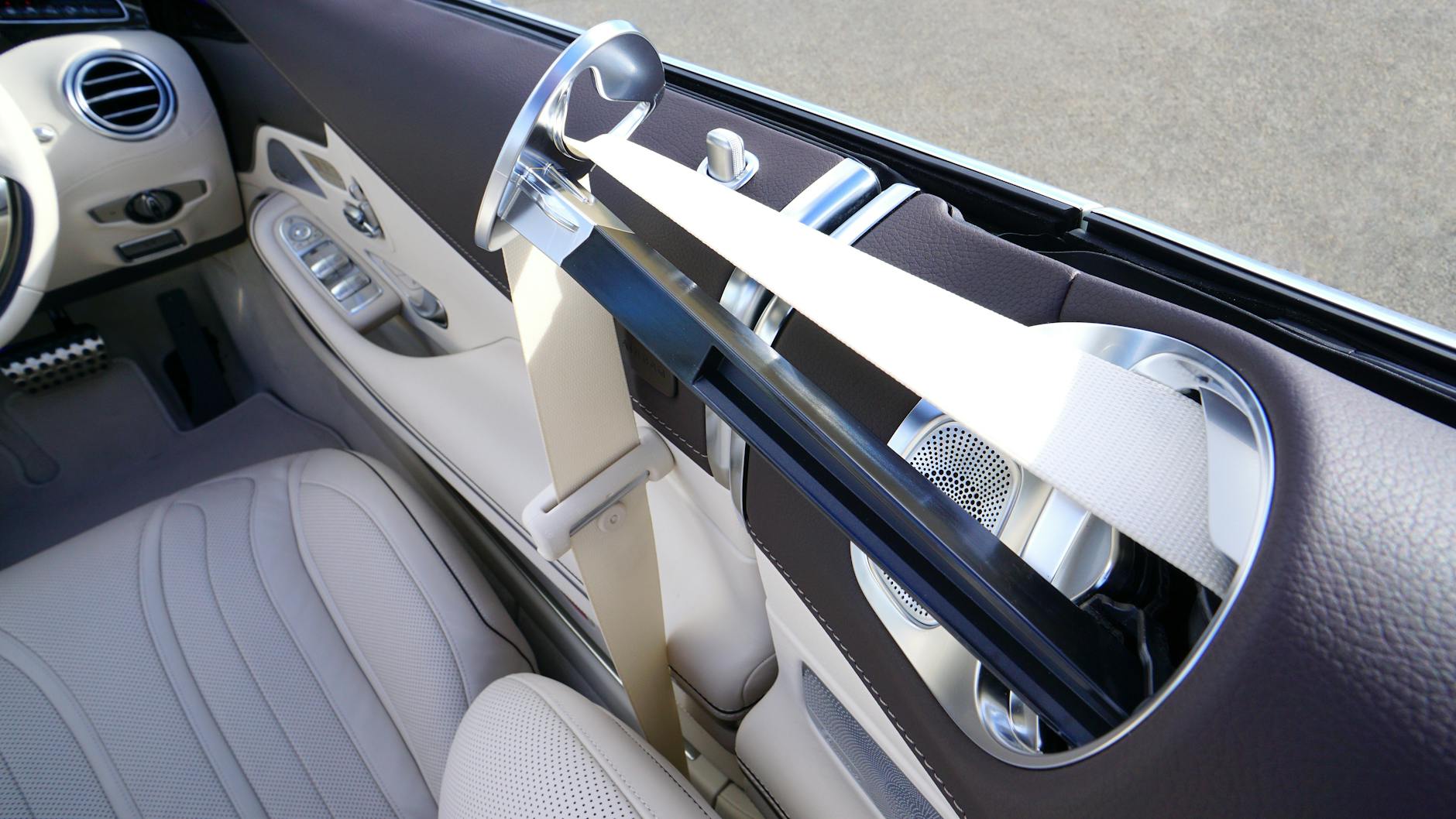
The car itself is often the most important seat of the trip, and how you set it up determines how well travel breaks go. The Alzheimer’s Society UK recommends using child safety locks on rear doors if there is concern the person may open doors while the vehicle is moving, and suggests covering the seatbelt buckle to make it less visible if the patient tends to unbuckle during travel. Having a companion sit with the patient in the back seat addresses both safety and comfort, because the companion can adjust the patient’s position, offer water, and provide reassurance without the driver needing to pull over. For car seating during breaks specifically, recline the passenger seat to a moderate angle rather than leaving it fully upright or laying it flat. Clinical research warns against fully reclined seating because excessive recline promotes sacral sitting and causes thoracic kyphosis, which constricts breathing. A moderate recline of roughly 10 to 15 degrees from upright keeps the hips positioned well and the chest open.
If you are using the back seat, place a small lumbar pillow behind the lower back and use a seatbelt pad to reduce pressure on the chest. Playing familiar background music or audiobooks during travel, as the Alzheimer’s Society UK suggests, also matters during breaks. When you stop and the car goes quiet, the sudden silence combined with an unfamiliar parking lot can trigger anxiety. Keeping the music playing softly during the break, even with the engine off and a portable speaker, provides continuity that helps the patient stay oriented and calm. A specific example: one caregiver reported that her mother, who had moderate Alzheimer’s, would become agitated every time the car stopped at a gas station until the family started leaving a playlist of 1960s standards playing on a phone speaker during fill-ups. The familiar music bridged the transition from moving to stopped.
Airport and Airplane Seating Strategies for Alzheimer’s Patients
Air travel introduces a different set of seating challenges because you cannot control the environment. The Alzheimer’s Foundation of America recommends requesting front-of-plane seating, which offers extra space and fewer distractions from other passengers boarding and moving through the aisle. For the seat itself, there are two competing strategies. The window seat approach, recommended by UsAgainstAlzheimer’s, involves settling the person in a window seat with the shade down and noise-canceling headphones playing familiar music. This minimizes visual distractions and creates a small, enclosed feeling that some patients find calming. The aisle seat approach works better if the person is likely to need to move around or use the restroom frequently. In that case, the caregiver should sit on the aisle side to monitor movement, and the family should request seats near the restroom. The tradeoff is real.
A window seat provides more containment and less stimulation, but it makes bathroom trips harder because the patient must climb over the caregiver or another passenger. An aisle seat makes movement easier but exposes the patient to every person walking past, every drink cart, and every overhead announcement. For patients who tend toward agitation and wandering, the window seat is usually the better choice. For patients who are physically restless but not easily startled by activity, the aisle may work. There is no universal answer, and knowing your loved one’s specific triggers matters more than any general rule. Before the trip, contact TSA Cares at (855) 787-2227 at least three days before travel. They will arrange to meet your party at security and provide assistance through the checkpoint, which eliminates one of the most stressful seating transitions of air travel: the moment when the patient must stand, remove shoes, and wait in a crowded line. Pre-boarding with the first group needing extra time gives you a chance to get the patient seated and settled before the cabin fills, and it is a good opportunity to give flight attendants a dementia information card so they know to approach your row calmly and with patience.
Common Seating Mistakes Caregivers Make During Travel
The most common mistake is assuming that any seat will do as long as the patient is sitting down. A wobbly plastic chair at a rest stop, a low-slung airport lounge seat that is difficult to stand up from, or a bar-height stool at a coffee shop inside a terminal can all create fall risks that would not exist with better planning. The second most common mistake is choosing a seat in a high-traffic area because it seemed convenient. Proximity to a restroom or a food counter matters, but not at the cost of placing the patient in the middle of a noisy crowd that triggers confusion or agitation. Another warning: do not leave the patient seated alone, even briefly. The Alzheimer’s Society UK advises giving the person a note or photo with the car model, color, and registration number in case of separation, which acknowledges that separation does happen despite precautions.
But the better practice is to never create the conditions for separation in the first place. If you need to use the restroom yourself, bring the patient with you or wait until a second companion can stay with them. The Alzheimer’s Foundation of America advises allowing extra time and avoiding the temptation to cram several activities into one day, and this applies to rest stops as well. Rushing through a break because you are behind schedule is when mistakes happen. One limitation of all this guidance is that it assumes the caregiver has some control over the environment. In practice, rest stops are often crowded, airports are chaotic, and the best-laid plans encounter closed restaurants, broken elevators, and unexpected delays. The most important thing a caregiver can carry is not a specific seat cushion or support device but the willingness to slow down, adapt, and choose safety over schedule.

Portable Seating Aids Worth Considering
For caregivers who travel frequently with an Alzheimer’s patient, a lightweight portable seat cushion with a non-slip bottom and a built-in lumbar wedge can transform a mediocre rest stop bench into a safer seating option. These cushions are inexpensive, weigh less than two pounds, and fit in a carry-on bag.
Some caregivers also carry a folding footrest, because keeping the patient’s feet flat on a surface rather than dangling reduces the urge to stand up and improves seated stability. A specific example: a caregiver traveling by car from the mid-Atlantic to Florida reported that adding a simple wedge cushion and a rolled towel for lateral hip support to rest stop seating reduced her husband’s agitation during breaks by roughly half, because he felt physically secure enough to relax instead of gripping the table edge.
Planning Ahead Changes Everything
The Alzheimer’s Association states that traveling with someone who has Alzheimer’s disease requires planning, flexibility, and realistic expectations. The AAFP adds that dementia should not prevent adults from enjoying travel and visiting family and friends, and that primary care physicians can advocate for their patients by providing trusted guidance. Both of these statements point to the same truth: travel is still possible, but it demands preparation that goes beyond booking hotels and packing bags.
Scouting rest stops, choosing flight seats strategically, adjusting car seating, and carrying portable support aids are all forms of planning that make the difference between a trip that works and one that ends early. Bring an identification bracelet or clothing tags with the patient’s full name and caregiver’s name, plus a list of medications, emergency contacts, and copies of legal documents. These preparations do not guarantee smooth travel, but they reduce the number of things that can go wrong and give caregivers the confidence to take trips that matter to the whole family.
Conclusion
The best seating for an Alzheimer’s patient during travel breaks is any seat that provides back support, lateral stability, a calm environment, and easy caregiver access. In a car, that means a moderately reclined seat with lumbar support and familiar music playing. At a rest stop, it means a booth or high-backed chair in a quiet corner. On an airplane, it means a window or aisle seat chosen based on the patient’s specific tendencies, with pre-boarding and TSA Cares assistance to smooth the transitions.
None of this requires expensive equipment or medical expertise. It requires forethought, a willingness to choose the patient’s comfort over convenience, and the understanding that seating is not a minor detail but a foundation for safety and calm. Nearly half of dementia caregivers report that their loved one has been afraid or overwhelmed by unfamiliar surroundings. The right seat in the right spot, chosen with intention, is one of the simplest ways to reduce that fear.
Frequently Asked Questions
How often should you stop for breaks when traveling with an Alzheimer’s patient?
The Alzheimer’s Riverside Agency recommends limiting car trips to under two hours before stopping for a break. The Alzheimer’s Foundation of America adds that caregivers should allow extra time and avoid cramming several activities into one day. Even if the patient seems comfortable, regular stops prevent the buildup of restlessness and confusion that can lead to agitation.
Should an Alzheimer’s patient sit in the front or back seat of a car?
It depends on the stage of the disease and the patient’s behavior. If the patient tends to grab the steering wheel, open doors, or unbuckle their seatbelt, the back seat with child safety locks engaged and a companion seated beside them is safer. If the patient is calm and in an earlier stage, the front passenger seat with a moderate recline can work well and allows the driver to monitor them directly.
What should you do if an Alzheimer’s patient becomes agitated at a rest stop?
Return to the car or another familiar, enclosed space as quickly as safety allows. Do not try to reason with the patient or explain where you are. Instead, use calm, short phrases, offer a familiar object or snack, and play music they recognize. The Alzheimer’s Society UK notes that service areas can be big and confusing, so removing the patient from the overwhelming environment is usually more effective than trying to calm them within it.
Is air travel safe for someone with Alzheimer’s?
The AAFP states that dementia should not prevent adults from enjoying travel and visiting family and friends. However, safety depends on the stage of the disease, the length of the flight, and the level of caregiver support. Contact TSA Cares at (855) 787-2227 at least three days before travel for checkpoint assistance, request pre-boarding, and inform flight attendants about the patient’s condition using a dementia information card.
What identification should an Alzheimer’s patient carry while traveling?
The Alzheimer’s Association recommends an identification bracelet or clothing tags with the patient’s full name and caregiver’s name, a list of current medications, emergency contact numbers, and copies of legal documents such as power of attorney and health care directives. The Alzheimer’s Society UK also suggests giving the person a note or photo with the car’s model, color, and registration number in case of separation at a rest stop.
You Might Also Like
- What’s the Best Seating Option for Alzheimer’s Patients Who Slide Forward?
- What’s the Best Seating Support for Alzheimer’s Patients at Home?
- What’s the Best Seating Support for Alzheimer’s Patients With Balance Issues?
For more, see National Institute on Aging.