Best cushion sits at the center of this dementia and brain health question.
For Alzheimer’s patients who spend extended periods sitting, a pressure-relieving memory foam cushion with a contoured design is generally the best option, though the ideal choice depends on the individual’s specific symptoms, mobility level, and stage of disease. A high-density memory foam cushion, typically between three and four inches thick, distributes body weight more evenly than standard seating and reduces the risk of pressure injuries, which are a serious and often underrecognized concern for people with dementia who may not shift their weight naturally or communicate discomfort.
For example, a patient in mid-stage Alzheimer’s who sits in a wheelchair or recliner for several hours each day may not recognize or articulate the pain of developing pressure sores, making a well-chosen cushion not just a comfort item but a genuine medical necessity. This article goes beyond a simple product recommendation to explore why cushion selection matters so much in dementia care, what types of cushions serve different needs, how to assess whether a cushion is actually working, and what caregivers should watch for as the disease progresses. We will also address the practical tradeoffs between different materials, the role of positioning in preventing secondary complications, and the often-overlooked issue of agitation that poorly designed seating can cause in Alzheimer’s patients.
Table of Contents
- Why Do Alzheimer’s Patients Need Specialized Cushions for Long Sitting Periods?
- Types of Cushions and Which Materials Work Best for Dementia Patients
- How Positioning and Cushion Shape Affect Comfort and Safety
- How to Choose the Right Cushion Based on Disease Stage and Mobility
- Common Mistakes Caregivers Make with Seating and Cushions
- The Role of Occupational Therapists in Cushion Selection
- Looking Ahead at Seating Technology for Dementia Care
- Conclusion
- Frequently Asked Questions
Why Do Alzheimer’s Patients Need Specialized Cushions for Long Sitting Periods?
People with Alzheimer’s disease face a unique combination of risk factors that make standard seating inadequate during prolonged sitting. As the disease progresses, patients gradually lose the instinctive habit of shifting their weight, crossing and uncrossing their legs, or standing up to stretch. A cognitively healthy person makes dozens of small postural adjustments per hour without thinking about it, but someone with moderate to advanced Alzheimer’s may sit in the same position for hours. This immobility concentrates pressure on the ischial tuberosities, the bony prominences at the base of the pelvis, and on the tailbone, creating the conditions for pressure ulcers to develop. These injuries can progress from reddened skin to open wounds remarkably quickly, sometimes within a single day of sustained pressure. Beyond pressure injury prevention, specialized cushions address behavioral and comfort issues that are particularly relevant in dementia care. An uncomfortable patient with Alzheimer’s may not say they are in pain. Instead, they may become agitated, restless, or aggressive, behaviors that caregivers and even clinicians sometimes attribute to the disease itself rather than to a fixable physical cause.
A well-designed cushion can reduce this kind of pain-driven agitation. By contrast, a flat, firm chair seat or a cheap foam pad that has compressed over time may actually worsen behavioral symptoms. One occupational therapist working in a memory care facility described replacing worn-out dining chair cushions and observing a noticeable reduction in mealtime agitation among residents, a simple intervention with meaningful results. The need for a specialized cushion also increases as patients become less mobile. In the early stages of Alzheimer’s, a person may still walk regularly and sit for shorter periods, making cushion selection less critical. But as the disease moves into the middle and later stages, sitting time increases dramatically, sometimes to ten or more hours per day, and the ability to reposition independently decreases. This progression means that cushion needs are not static. What works in the early stages may be wholly inadequate a year or two later.

Types of Cushions and Which Materials Work Best for Dementia Patients
The cushion market includes several broad categories, and each has distinct advantages and limitations for Alzheimer’s care. Memory foam, also called viscoelastic foam, is the most commonly recommended material because it conforms to the body’s shape and distributes pressure across a wider surface area. High-density memory foam cushions resist bottoming out longer than standard foam and tend to maintain their supportive properties over months of daily use. Gel cushions, which contain a layer of gel over foam or use gel-infused foam, add a cooling element and can further reduce peak pressure points. For patients who tend to run warm or who sit in environments without strong climate control, a gel-hybrid cushion can address both pressure and temperature concerns. However, if a patient is in the later stages of Alzheimer’s and is largely immobile, a static foam or gel cushion may not provide sufficient protection. In these cases, alternating pressure cushions, which use air cells that cyclically inflate and deflate to shift pressure from one area to another, may be more appropriate.
These powered cushions are typically used in clinical or skilled nursing settings and require a pump, making them less practical for home use in some cases. They also produce a subtle sensation of movement, which can be disorienting or distressing for some dementia patients who do not understand what is happening beneath them. Caregivers considering an alternating pressure cushion should introduce it gradually and observe the patient’s reaction closely. Air-filled cushions, such as those made from interconnected air cells that the user or caregiver manually inflates, represent a middle ground. They are lightweight, adjustable, and effective at pressure redistribution, but they require periodic checking and reinflation, which adds a maintenance burden. For a family caregiver already managing medication schedules, meals, and behavioral challenges, this extra step can be easy to forget. Roho-style air cell cushions have historically been well-regarded in the rehabilitation and wound care community, but they are not always the right fit for every Alzheimer’s patient, particularly those who pick at objects or might be confused by the unfamiliar texture.
How Positioning and Cushion Shape Affect Comfort and Safety
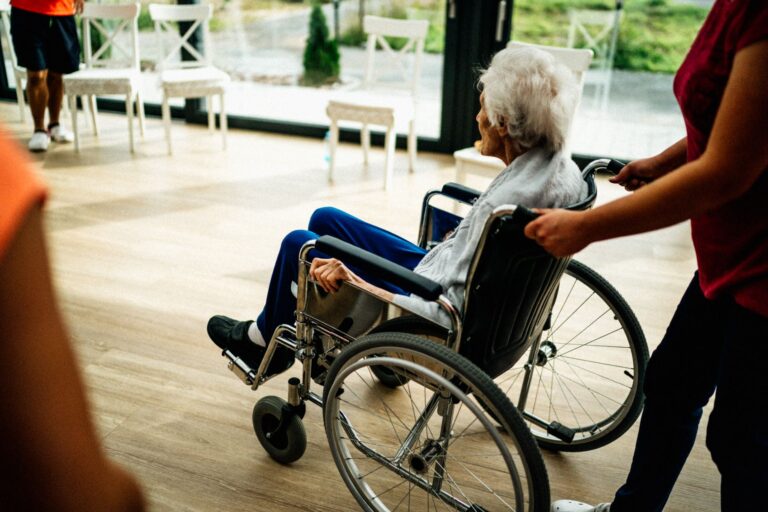
A cushion does not work in isolation. Its effectiveness depends heavily on how the patient is positioned in their chair, wheelchair, or recliner. A contoured cushion, one that features a slight dip in the center and raised edges around the thighs and back, helps keep the pelvis in a neutral, stable position. This is particularly important for Alzheimer’s patients who may slide forward in their seat over time, a phenomenon sometimes called sacral sitting, which concentrates enormous pressure on the tailbone and lower spine. Without proper contouring, even an expensive pressure-relieving cushion can fail to prevent injury if the patient slowly migrates into a poor sitting posture. Wedge-shaped cushions, which are higher in the back and lower in the front, can help patients who tend to slide forward by using gravity to keep the hips positioned against the chair back. But these cushions come with a tradeoff: they can increase pressure under the thighs if the angle is too steep, and some patients find them uncomfortable or confusing.
A cushion with a pommel, a small raised section between the legs, can also help prevent sliding but may interfere with transfers in and out of the chair, which is a practical concern for caregivers who assist with standing and repositioning multiple times a day. One geriatric physical therapist noted that the ideal cushion shape for a particular patient often requires trial and observation rather than a one-size-fits-all recommendation. What prevents sliding in one patient may create a new problem for another. The chair itself matters as well. A cushion placed on a hard, flat wheelchair seat performs differently than one placed on a padded recliner. Caregivers should ensure that the cushion sits flush against the seating surface without bunching, folding, or shifting. A cushion that moves around on a slippery seat can actually increase fall risk, particularly if the patient attempts to stand without assistance.

How to Choose the Right Cushion Based on Disease Stage and Mobility
Selecting a cushion for an Alzheimer’s patient is not a one-time decision. It should be reassessed as the disease progresses and as the patient’s mobility, weight, and sitting habits change. In the early stages, when the person is still relatively active and sits for moderate periods, a standard high-density memory foam cushion of three to four inches is generally sufficient. The priority at this stage is comfort and establishing good sitting habits, such as encouraging regular standing breaks. In the middle stages, when sitting time increases and the patient begins to lose awareness of discomfort, a gel-infused memory foam cushion or a layered cushion combining foam and gel becomes more appropriate. The added pressure distribution matters more now because the patient is less likely to reposition independently.
Caregivers should also begin setting reminders to prompt weight shifts or brief standing periods every one to two hours if possible. At this stage, a cushion with a washable, waterproof cover becomes important as well, since incontinence is common and moisture trapped against the skin dramatically accelerates pressure ulcer formation. In the late stages, when the patient may be fully dependent and seated or reclined for the majority of the day, the highest level of pressure redistribution is needed. This is when alternating pressure cushions or specialized clinical-grade foam systems may be warranted. The tradeoff is cost and complexity. A high-end alternating pressure cushion can cost several times more than a quality memory foam option, and it requires electricity and maintenance. Some families find that a combination approach, using a high-quality static cushion during the day with scheduled repositioning and reserving the alternating pressure system for overnight or when repositioning is not feasible, strikes the best balance between protection and practicality.
Common Mistakes Caregivers Make with Seating and Cushions
One of the most frequent errors is using a cushion that has long since lost its supportive properties. Foam degrades over time, and a memory foam cushion that felt supportive six months ago may have compressed to the point where the patient is essentially sitting on the hard surface beneath it. A simple test is to press your fist into the center of the cushion. If you can feel the chair seat through the cushion, it needs to be replaced. Many caregivers, understandably focused on the dozens of other demands of Alzheimer’s care, do not think to check the cushion’s condition regularly. Another common mistake is placing a folded towel or blanket on top of a cushion for extra padding.
While the intention is good, this added layer can actually bunch up, create uneven pressure points, and reduce the effectiveness of the cushion’s engineered surface. Similarly, some caregivers place incontinence pads directly on the cushion surface without realizing that certain pad materials reduce airflow and trap heat, both of which increase skin breakdown risk. If incontinence protection is needed, it is better to choose a cushion with an integrated waterproof, breathable cover rather than layering separate products. A less obvious but significant mistake involves ignoring the patient’s behavioral cues. As mentioned earlier, agitation, restlessness, leaning to one side, or repeatedly trying to stand may all be signs of sitting discomfort rather than disease-related behavioral symptoms. Before attributing these behaviors to Alzheimer’s progression, caregivers should systematically check for physical causes: is the cushion worn out, is the patient sitting crookedly, is there a pressure point or wrinkled clothing beneath them? Addressing these simple factors can sometimes resolve behavioral episodes that might otherwise lead to unnecessary medication adjustments.

The Role of Occupational Therapists in Cushion Selection
An occupational therapist with experience in seating and positioning can be an invaluable resource for families navigating cushion choices. These professionals can conduct a formal seating assessment, which evaluates the patient’s posture, pressure distribution, skin integrity, and functional needs. Based on the assessment, they can recommend specific cushion types, shapes, and materials tailored to the individual.
In the United States, a seating evaluation conducted by a qualified therapist may be covered by Medicare or private insurance, particularly if the patient uses a wheelchair, though coverage specifics vary and families should verify eligibility with their provider. For families who do not have easy access to an occupational therapist, consulting with the patient’s primary care physician or a wound care nurse can provide useful guidance. Many home health agencies also employ therapists who can make recommendations during routine home visits. The key point is that cushion selection for a person with Alzheimer’s does not need to be guesswork, and professional input can prevent costly trial and error.
Looking Ahead at Seating Technology for Dementia Care
The intersection of assistive technology and dementia care is an area of active development. Pressure-mapping systems, which use sensors embedded in a cushion or seat to display real-time pressure data on a screen or app, are becoming more accessible and affordable. These tools allow caregivers to see exactly where pressure is concentrated and to adjust positioning accordingly.
While historically limited to clinical settings, simpler versions of this technology are beginning to appear in products designed for home use, though widespread adoption remains limited as of recent reports. There is also growing interest in smart cushions that can alert caregivers when a patient has been sitting in one position for too long or when pressure levels in a particular area exceed safe thresholds. These innovations could be especially valuable for Alzheimer’s patients, who cannot advocate for their own comfort. As these technologies mature and become more affordable, they have the potential to significantly reduce the incidence of pressure injuries in dementia care, both at home and in institutional settings.
Conclusion
Choosing the best cushion for an Alzheimer’s patient during long sitting periods requires attention to the individual’s disease stage, mobility level, skin condition, and behavioral patterns. High-density memory foam cushions with contoured shapes are a strong starting point for most patients, while gel-infused options add cooling and additional pressure relief for those who sit for extended hours. As the disease progresses and immobility increases, caregivers should consider upgrading to more advanced pressure-redistribution systems, including alternating pressure cushions for patients at highest risk.
Equally important is monitoring cushion condition over time, maintaining proper positioning, and recognizing that behavioral changes may signal sitting discomfort. The right cushion is not a luxury but a fundamental component of Alzheimer’s care that protects skin, reduces pain-driven agitation, and preserves dignity. Caregivers should not hesitate to seek professional guidance from occupational therapists or wound care specialists, especially as the patient’s needs evolve. Regular reassessment, combined with attention to the practical details of positioning, cover materials, and cushion integrity, can make a meaningful difference in the daily comfort and medical outcomes of someone living with Alzheimer’s disease.
Frequently Asked Questions
How often should I replace a foam cushion used by an Alzheimer’s patient?
There is no universal replacement schedule, but most high-density memory foam cushions begin to lose their supportive properties after several months to a year of daily use. Check regularly by pressing firmly into the center. If you can feel the seat surface beneath, the cushion needs replacing. Patients who sit for longer periods each day will compress the foam faster.
Can a good cushion eliminate the need for repositioning?
No. Even the best cushion reduces pressure but does not eliminate it entirely. Regular repositioning, ideally prompting the patient to shift weight or briefly stand every one to two hours, remains an essential part of pressure injury prevention. A cushion and repositioning work together, and neither fully replaces the other.
Is a wheelchair cushion different from a regular seat cushion?
Yes. Wheelchair cushions are specifically designed for the dimensions and structural characteristics of wheelchair seats and are often engineered for higher levels of pressure redistribution because wheelchair users tend to sit for longer uninterrupted periods. A general-purpose seat cushion may not fit properly in a wheelchair and may not provide adequate protection for someone who uses one as their primary seating.
My family member with Alzheimer’s keeps pulling the cushion out from under themselves. What can I do?
This is a common issue, particularly in the middle stages of the disease when patients may fidget or not understand the cushion’s purpose. Non-slip cushion covers, cushions with straps that attach to the chair, or cushions with a low-profile design that feels less noticeable can help. Some caregivers find that cushions with fabric covers that match or blend with the chair upholstery attract less attention and are therefore disturbed less often.
Does Medicare cover specialized cushions for Alzheimer’s patients?
Medicare may cover certain pressure-relieving cushions, particularly for patients who use a wheelchair or who have a documented history of pressure ulcers. Coverage typically requires a physician’s order and may involve specific documentation requirements. Eligibility varies, so families should consult with their Medicare provider or a durable medical equipment supplier to understand what is covered in their situation.
You Might Also Like
- What’s the Best Seat Cushion for Alzheimer’s Patients With Kyphosis?
- What’s the Best Seat Cushion for Alzheimer’s Patients Who Stand Up Repeatedly?
- What’s the Best Cushion for Alzheimer’s Patients With Poor Trunk Control?
For more, see Alzheimer’s Association.