Best way sits at the center of this dementia and brain health question.
Understanding what’s the best way to prevent sliding out of chairs in dementia? is essential for anyone interested in dementia care and brain health. This comprehensive guide covers everything you need to know, from basic concepts to advanced strategies. By the end of this article, you’ll have the knowledge to make informed decisions and take effective action.
Table of Contents
- What’s the Best Way to Prevent Sliding Out of Chairs in Dementia?
- Why Do People With Dementia Slide Out of Chairs So Often?
- How Tilt-in-Space Wheelchairs and Raked Seating Prevent Forward Sliding
- Choosing the Right Cushion to Stop Sliding in a Wheelchair or Chair
- The Legal Line Between Positioning Devices and Restraints
- Restraint-Free Alternatives That Actually Work
- When to Request a Professional Seating Assessment
- How Families Can Advocate for Better Seating in Care Facilities
What’s the Best Way to Prevent Sliding Out of Chairs in Dementia?
The single most effective approach is proper seating — specifically, chairs and wheelchairs designed with a raked seat angle or tilt-in-space mechanism, paired with the right cushion for the individual. A chair with a gently tilted seat-to-back angle uses gravity to keep the pelvis seated deep in the chair, making it nearly impossible for a person to slide forward and off the edge. When combined with a professional seating assessment from an occupational therapist, this approach addresses the root cause of sliding rather than simply trying to hold someone in place after the fact. Consider a common scenario in nursing homes: a resident with mid-stage Alzheimer’s is placed in a standard wheelchair with a flat seat. Within minutes, she begins inching forward, her hips sliding toward the front edge of the seat.
A caregiver repositions her. Twenty minutes later, she’s sliding again. This cycle repeats dozens of times per day, consuming staff time and putting the resident at serious risk of falling. The real problem isn’t the resident’s behavior — it’s the chair. A flat seat offers nothing to counteract the natural tendency of a relaxed body to slide forward, and a person with dementia may not have the cognitive awareness to reposition themselves. This article covers the scale of falls among people with dementia, the evidence behind specific seating solutions, how cushion selection works in practice, the critical legal line between a positioning device and a restraint, and when to bring in professional help.

Why Do People With Dementia Slide Out of Chairs So Often?
Falls are devastatingly common among people with dementia. Research from Drexel University found that nearly 50 percent of older Americans with dementia fall each year, and broader estimates suggest 60 to 80 percent of people with dementia fall annually — two to three times the rate of cognitively healthy older adults. In nursing homes, the numbers are even more striking: residents with dementia experience an average of 4.05 falls per year, compared with 2.33 falls per year for residents without dementia. Across all U.S. long-term care facilities, approximately 2.6 million falls occur each year, at a rate of 1.5 falls per bed per year. Sliding out of a chair is one of the primary mechanisms behind these falls.
The reasons are both physical and cognitive. Dementia often impairs proprioception — the body’s sense of where it is in space — so a person may not realize they’ve shifted dangerously forward in their seat. Muscle weakness, poor trunk control, and restlessness all contribute. Unlike a cognitively healthy person who would instinctively push themselves back in a chair, someone with moderate to advanced dementia may lack the awareness or the motor planning to self-correct. The difference between a person with dementia and a cognitively intact older adult in this context is important. Both may slide forward, but the person with dementia is far less likely to catch themselves, call for help, or understand instructions to scoot back. That’s why passive solutions — seating that prevents sliding by design — are far more effective than relying on verbal reminders or supervision alone.
How Tilt-in-Space Wheelchairs and Raked Seating Prevent Forward Sliding
Tilt-in-space wheelchairs work by shifting the user’s center of gravity backward. Instead of trying to block the body from moving forward, they change the angle of the entire seat so that gravity gently pushes the pelvis into the backrest. Clinical research indicates that a tilt angle of 25 degrees or greater is effective for pressure relief at the ischial tuberosities (the “sit bones”), with repositioning recommended at least every 30 minutes. This angle also significantly reduces forward sliding. Raked seating operates on the same principle in a simpler form. A chair with a raked seat — where the seat pan is angled so the back edge is lower than the front — uses gravity to make it practically impossible for someone to slide forward and out.
This design doesn’t require any straps, belts, or attachments. It’s built into the chair itself, which makes it one of the least restrictive and most effective options available. However, there’s an important limitation. Studies have found that tilt-in-space wheelchairs are not always used effectively in practice, particularly for residents with dementia. Communication challenges make it difficult for staff to explain what’s happening or for the resident to cooperate with repositioning. If staff aren’t trained on proper tilt angles or forget to adjust the chair throughout the day, the benefit is lost. The equipment only works if it’s used correctly and consistently — something that requires ongoing staff education, not just a one-time purchase.
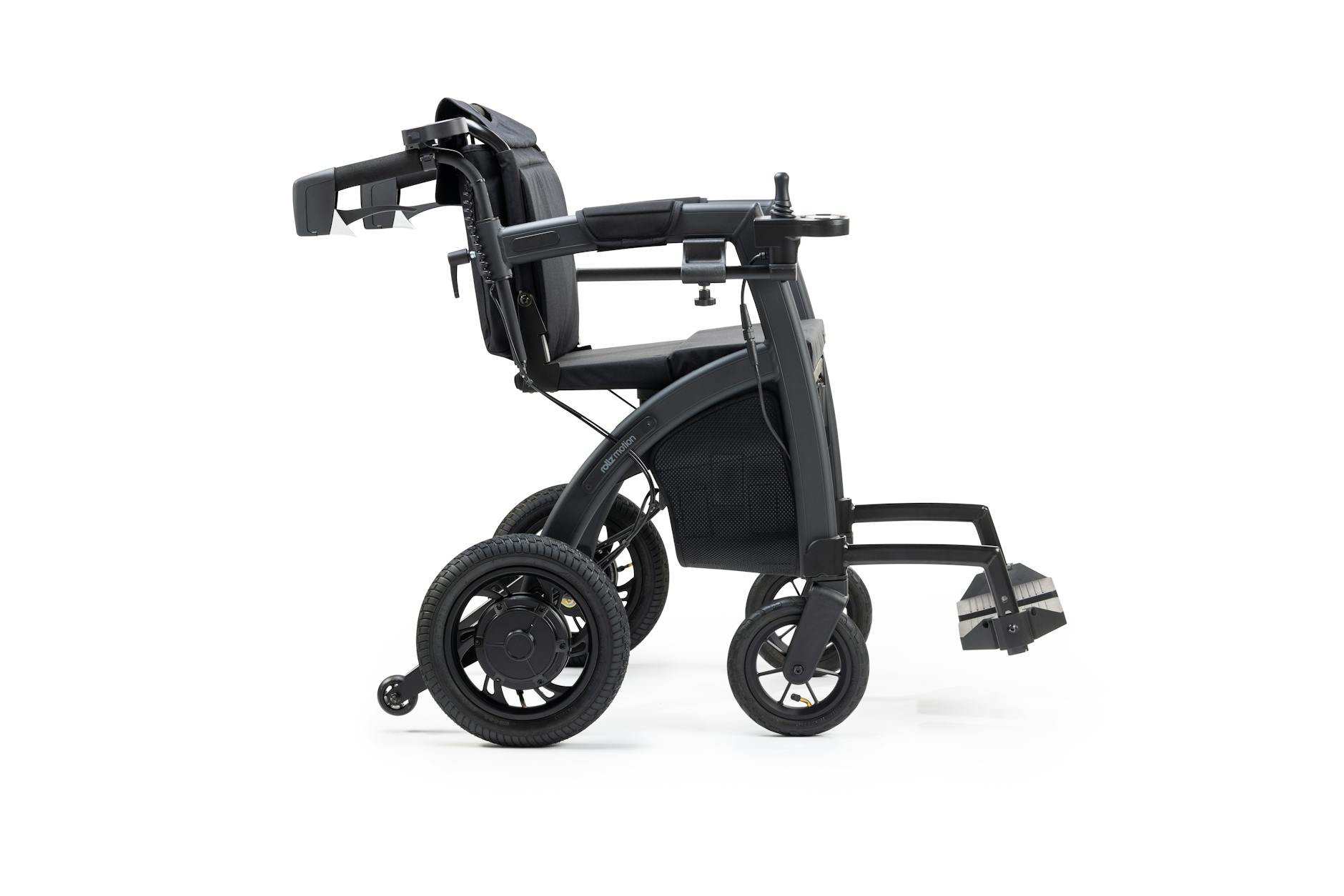
Choosing the Right Cushion to Stop Sliding in a Wheelchair or Chair
Specialized cushions can make a significant difference, especially when a new chair or wheelchair isn’t immediately available. The main types include anti-thrust cushions, which prevent forward slipping by angling the seating surface; wedge cushions, which keep the pelvis positioned deep in the seat; pommel cushions, which have a raised center section that prevents the legs from slipping forward or scissoring apart; and non-slip gel sheets, which are placed directly on the seat surface to add friction and prevent scooting. Each type addresses a slightly different problem. For someone who primarily slides forward, a wedge cushion or anti-thrust cushion is the first choice. For someone whose legs tend to spread apart or cross, creating instability, a pommel cushion is more appropriate.
Non-slip gel sheets are the simplest intervention and can be added to almost any existing chair, though they won’t help if the underlying seat angle is the core issue. The critical caveat with any cushion is fit. If a wheelchair seat is too deep for the user, they will slide down in the chair no matter what cushion is used, because their body is searching for back support it can’t reach. Proper positioning starts with a chair that fits: feet flat on the floor (or on footplates), knees at a 90-degree angle, sturdy armrests at the right height, and a seat depth that allows the back to rest fully against the backrest. Without this foundation, even the best cushion is working against a structural mismatch.
The Legal Line Between Positioning Devices and Restraints
This is where dementia seating gets legally and ethically serious. CMS federal regulations require nursing homes to maintain restraint-free environments except under specific, documented medical circumstances. Restraints can only be used after less restrictive alternatives have been tried and documented as ineffective. Violations can result in citations, fines, and liability.
The critical distinction is straightforward in theory but surprisingly tricky in practice: a wedge cushion that improves a resident’s posture is classified as a positioning device, but the same cushion becomes a restraint if the resident cannot independently remove it or get out of the chair. Lap belts, trays, deep tilt-in-space geri-chairs, and restrictive cushions all may constitute restraints when the resident cannot release themselves. For example, a lap tray that a cognitively intact person could easily lift off may function as a restraint for a person with advanced dementia who doesn’t understand how to remove it. Facilities that use any device bordering on restraint must document the specific medical symptom being treated, the alternative approaches that were tried first, ongoing monitoring of the resident while the device is in use, and a clear plan to reduce or remove the device over time. For families, this means asking pointed questions: “Can my mother remove this on her own? Has the facility documented why less restrictive options didn’t work?” A positioning device should make the person more comfortable and safe without trapping them.

Restraint-Free Alternatives That Actually Work
Expert organizations, including the California Advocates for Nursing Home Reform, recommend a range of restraint-free strategies that address sliding and falls without restricting movement. These include adapting chairs for individual comfort and safety, using pads and pillows for supportive positioning, providing physical therapy and restorative care to improve safe mobility, adjusting caregiver assignments so staff who know the resident best are providing direct care, and using low beds with floor padding to reduce injury risk if a fall does occur. The comparison between restraint-based and restraint-free approaches is stark. Restraints — including lap belts and restrictive seating — have been associated with increased agitation, pressure injuries, muscle atrophy, and paradoxically, more severe fall injuries when the person does manage to partially escape the device. Restraint-free alternatives focus on making the environment safer rather than immobilizing the person.
A resident in a well-fitted raked chair with a proper cushion is both safer and more comfortable than one strapped into a geri-chair with a lap belt. The tradeoff is that restraint-free approaches require more thoughtful planning, more individualized assessment, and often more staff time upfront. A lap belt is quick. Getting an occupational therapy evaluation, ordering the right chair, training staff on positioning — that takes coordination. But the outcomes are better on every measure, and the legal risk is dramatically lower.
When to Request a Professional Seating Assessment
An occupational therapist is the recommended professional for conducting thorough seating assessments. They can evaluate a person’s trunk control, pelvic stability, skin integrity, and cognitive status, then prescribe the specific combination of therapeutic cushions, back supports, and wheelchair modifications that fit that individual.
This isn’t a one-size-fits-all process — what works for one person with dementia may be completely wrong for another. For example, a person with Lewy body dementia who experiences significant fluctuations in alertness and muscle tone throughout the day may need a different setup than someone with Alzheimer’s who has consistent but gradually declining postural control. An OT can also train caregivers and family members on how to check positioning, when to reposition, and what warning signs to watch for — such as the person consistently leaning to one side, which could indicate pain, a vision issue, or a poorly fitted chair.
How Families Can Advocate for Better Seating in Care Facilities
If your loved one is in a nursing home or assisted living facility and repeatedly slides out of their chair, the first step is to request a formal seating evaluation. Facilities are required to provide individualized care, and that includes seating. Ask specifically whether an occupational therapist has assessed your family member’s positioning needs. Ask what cushion type is being used and why.
Ask whether the chair or wheelchair fits properly — seat depth, footplate height, armrest position. If the facility’s response is to add a lap belt or tray, ask whether your family member can remove it independently. If not, ask for documentation of the alternatives that were tried first and the medical justification for using a device that restricts movement. Families have every right to push for restraint-free solutions, and the regulatory framework is on their side. The goal is always a person who is safe, comfortable, and as free to move as their condition allows.
You Might Also Like
- What’s the Best Way to Improve Sitting Comfort for Dementia Patients?
- What’s the Best White Noise Machine for Dementia Sleep?
- What’s the Best Tablet Setup for Dementia-Friendly Use?
For more, see National Institute on Aging.