Best memory sits at the center of this dementia and brain health question.
Understanding what’s the best memory box for people with alzheimer’s disease? is essential for anyone interested in dementia care and brain health. This comprehensive guide covers everything you need to know, from basic concepts to advanced strategies. By the end of this article, you’ll have the knowledge to make informed decisions and take effective action.
Table of Contents
- What Types of Memory Boxes Help People with Alzheimer’s?
- Why Do Memory Boxes Work for Dementia Care?
- What Should You Put in an Alzheimer’s Memory Box?
- Where Can You Buy a Quality Memory Box?
- What Are Common Mistakes When Using Memory Boxes?
- How Do Memory Boxes Fit into Broader Dementia Care Costs?
- What Does Research Say About the Future of Reminiscence Therapy?
What Types of Memory Boxes Help People with Alzheimer’s?
Memory boxes generally fall into two categories, and understanding this distinction prevents purchasing the wrong type. Room identification boxes, also called shadow boxes, are wall-mounted display cases designed primarily for care facilities. These help residents locate their rooms independently—a significant challenge as Alzheimer’s progresses and spatial orientation deteriorates. Products like those from Alzstore come in furniture-grade materials with five woodgrain options and white, antimicrobial frames and fabrics, sound buttons that can play recorded messages, and optional keyed locks for security. The lead time for these specialized boxes runs five to six weeks from order. Personal memory boxes serve a different purpose: reminiscence therapy. These portable containers hold curated collections of meaningful objects that caregivers and family members use during visits or quiet moments.
The Alzheimer’s Society in the UK offers a memory box measuring 400mm by 300mm by 60mm (roughly 16 by 12 by 2.5 inches), shipped via Royal Mail for £3.99. However, many families prefer creating their own, allowing complete customization to the individual’s life history. A factory worker’s memory box would look entirely different from a teacher’s or a musician’s. The comparison between purchased and homemade boxes involves tradeoffs. Ready-made options provide structure and often include guidance on effective reminiscence therapy techniques. DIY boxes allow personalization but require more effort and thoughtful curation. Neither approach is inherently superior—the best choice depends on available time, budget, and how well family members know the person’s history and preferences.

Why Do Memory Boxes Work for Dementia Care?
The effectiveness of memory boxes connects to how Alzheimer’s disease affects the brain. Long-term memories, particularly those formed during emotionally significant moments, often remain accessible longer than recent memories. A memory box taps into these preserved memories through sensory triggers. Evidence from Boots Memory Boxes research suggests that sensory stimulation can improve mood, self-esteem, and overall wellbeing in people with dementia. Smell plays a particularly powerful role in memory retrieval. Brain areas responsible for memory and emotion connect directly to olfactory pathways, which explains why a whiff of a familiar perfume or baking bread can transport someone back decades.
Including sachets with pleasant, familiar aromas—pipe tobacco for someone whose father smoked a pipe, lavender for an avid gardener, or Old Spice for a man who wore it throughout his working life—can unlock memories that words and images cannot reach. However, memory boxes have limitations. They work best for people with mild to moderate Alzheimer’s disease. In advanced stages, the person may no longer recognize objects or photographs, and forcing engagement can cause frustration or agitation rather than comfort. Caregivers should follow the person’s lead—if they show distress or disinterest, the session should end. Memory boxes supplement care; they do not substitute for appropriate medical treatment or professional support.
What Should You Put in an Alzheimer’s Memory Box?
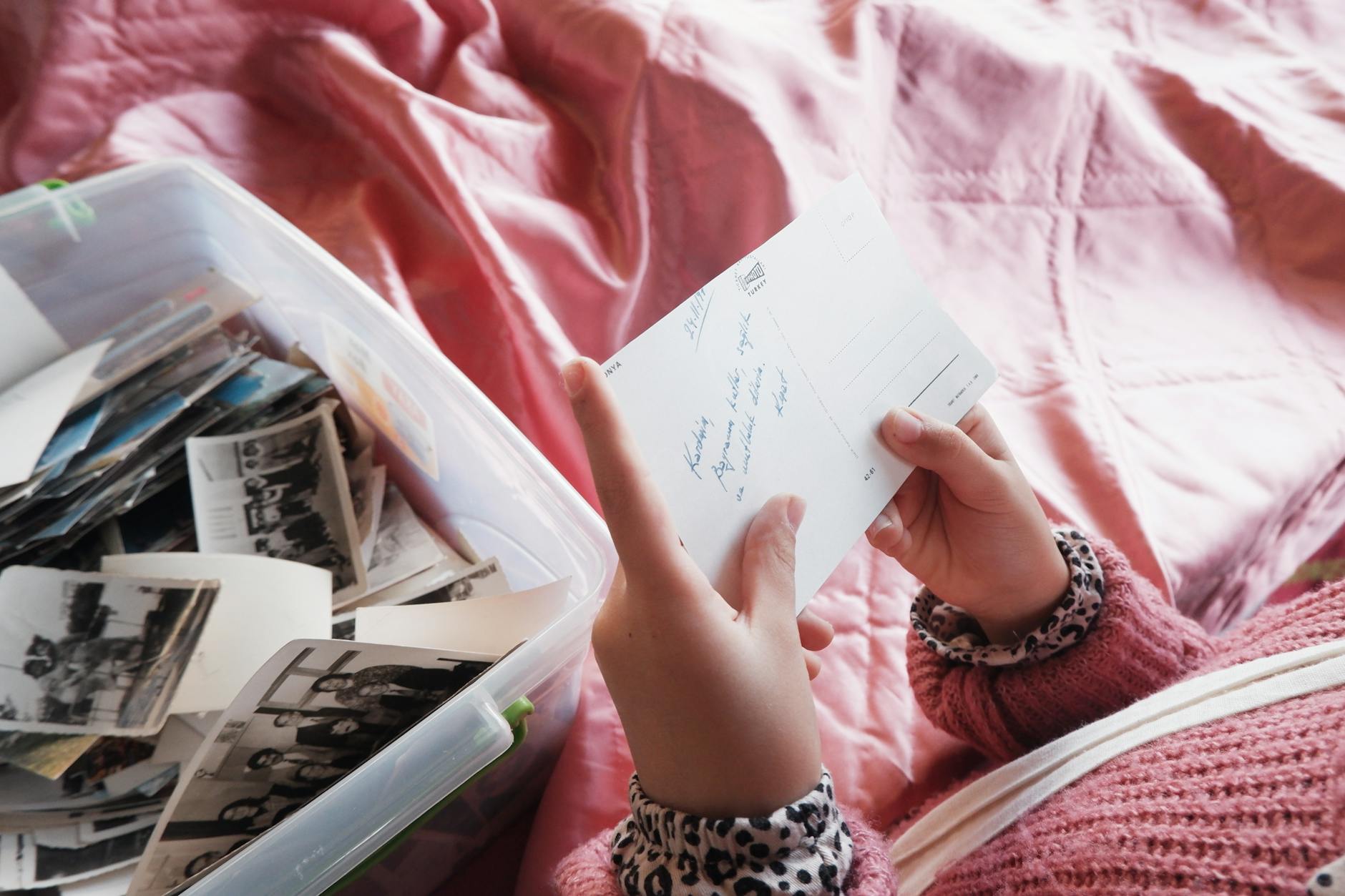
Content selection matters more than the container itself. The Good Care Group recommends a shoebox-sized box (12 inches by 9 inches) because it is easy to lift, stores multiple items without becoming overwhelming, and fits comfortably on a lap or small table during reminiscence sessions. Overly large boxes can feel chaotic and produce the opposite of the intended calming effect. Helping Hands Home Care suggests including items that engage multiple senses: family photos and wedding pictures for visual recognition, letters and postcards that can be read aloud, fabrics with different textures (velvet, wool, silk), brightly colored objects that attract attention, recordings of loved ones’ voices, scented sachets, and individually wrapped familiar snacks like butterscotch candies or shortbread cookies.
Each item should connect to the person’s actual life rather than generic “old-fashioned” items. A memory box for a former pilot should contain aviation memorabilia, not random vintage items from an antique shop. One practical example: a family created a memory box for their mother, a retired nurse, containing her nursing cap, a stethoscope, photographs from her hospital, a recording of her favorite big band music, lavender sachets (she grew it in her garden), and letters from former patients thanking her for care. During visits, these items generated more conversation and visible joy than any other activity.
Where Can You Buy a Quality Memory Box?
Several retailers specialize in dementia care products, though availability and shipping vary by location. In the United States, Alzstore offers memory boxes and memory cue boxes designed specifically for nursing homes and assisted living facilities. Their room identification boxes feature professional-grade construction with antimicrobial properties and customizable options. Dementia Friendly Design provides custom memory boxes with various upgrade options for those wanting tailored solutions. In the United Kingdom, the Alzheimer’s Society Shop sells a dedicated memory box with standard delivery at £3.99 via Royal Mail (two to five days).
Alz Products UK offers wooden keepsake memory boxes in beech and oak finishes for families preferring traditional aesthetics. These ready-made options range from basic containers to elaborate display cases. The tradeoff between purchased and homemade boxes involves cost, time, and personalization. A purchased box arrives ready to fill but may cost £20-50 or more. A repurposed shoebox costs nothing but lacks the finished appearance. Some families compromise by purchasing an attractive wooden box from a craft store and customizing it themselves with photographs decoupaged onto the lid or the person’s name engraved on a brass plate.
What Are Common Mistakes When Using Memory Boxes?
The most frequent error is treating memory box sessions like tests. Asking “Who is this?” while pointing at photographs can embarrass someone who cannot remember, increasing anxiety rather than reducing it. Better approaches include making statements (“This is your wedding day—what a beautiful dress”) that provide information without demanding recall. The goal is emotional connection, not memory assessment. Another mistake involves including items from painful periods. A memory box should evoke positive emotions.
Items connected to traumatic experiences, deceased spouses (if the person repeatedly grieves as though the death just occurred), or difficult life chapters can cause distress. Families should curate thoughtfully and observe reactions carefully, removing any items that consistently produce negative responses. Overstuffing the box creates confusion. Fifteen to twenty carefully chosen items work better than fifty random objects. Each item should have meaning and purpose. When everything competes for attention, nothing stands out, and the therapeutic benefit diminishes. Regular rotation—swapping some items seasonally or based on the person’s current interests—keeps sessions fresh without overwhelming.

How Do Memory Boxes Fit into Broader Dementia Care Costs?
Memory boxes represent a modest investment compared to overall dementia care expenses. The median cost of memory care in the United States reached $8,019 per month in January 2026, according to Senior Living. A Place for Mom reports national medians between $6,988 and $7,292 monthly for 2025.
Research from USC Schaeffer estimates the total lifetime cost of dementia care at $405,262 in 2025 dollars. Against this backdrop, a $30-50 memory box or free homemade alternative provides meaningful value. One care facility administrator noted that residents with personalized shadow boxes outside their rooms required fewer staff interventions for wayfinding confusion, suggesting potential labor savings alongside quality-of-life improvements. While memory boxes cannot reduce the fundamental costs of dementia care, they represent an affordable intervention that improves daily experience for both residents and caregivers.
What Does Research Say About the Future of Reminiscence Therapy?
The University of Suffolk research confirming positive impacts of memory boxes adds to growing evidence supporting non-pharmacological interventions in dementia care. As the population ages and dementia cases increase, interest in affordable, accessible therapies like reminiscence work continues growing. Future developments may include digital memory boxes—tablet applications containing photographs, videos, and music—though tactile engagement with physical objects offers benefits that screens cannot replicate.
For families beginning this journey, starting simple makes sense. A basic memory box assembled over a weekend can begin providing benefits immediately. Items can be added, removed, or replaced as the disease progresses and the person’s responses change. The goal remains constant: preserving connection, dignity, and moments of joy amid a difficult diagnosis.
- —
You Might Also Like
- What’s the Best Water Bottle for People with Alzheimer’s Disease?
- What’s the Best TV Remote for People with Alzheimer’s Disease?
- What’s the Best Music Player for People with Alzheimer’s Disease?
For more, see National Institute on Aging.