
Best indoor sits at the center of this dementia and brain health question.
Understanding what’s the best indoor mobility aid for dementia homes? is essential for anyone interested in dementia care and brain health. This comprehensive guide covers everything you need to know, from basic concepts to advanced strategies. By the end of this article, you’ll have the knowledge to make informed decisions and take effective action.
Table of Contents
- Which Indoor Mobility Aid Works Best for Someone With Dementia?
- Key Safety Features Every Dementia Home Needs Beyond the Walker
- When to Introduce Mobility Equipment: Earlier Is Better
- Comparing Costs: Budget Options vs. Premium Rollators
- The Hidden Risk: Why the Wrong Mobility Aid Increases Falls
- The Scale of the Challenge: Market and Caregiving Realities
- Looking Ahead: Better Tools and Assessment Methods
Which Indoor Mobility Aid Works Best for Someone With Dementia?
The answer depends heavily on the individual’s cognitive stage and physical capabilities, but the general principle holds: simpler is usually better. Standard walkers without wheels provide the most stability and require no operational decisions from the user—they simply lift and move. Two-wheeled walkers (wheels on the front legs only) offer a middle ground, gliding forward without the need to lift while still providing rear-leg friction that acts as a natural brake. rollators with four wheels and hand brakes, while popular among the general senior population, present specific challenges for people with dementia.
The Drive Medical Nitro Walker has been specifically noted as useful for patients with dementia, but this recommendation comes with an important caveat: the user must be able to consistently remember brake operation. Research indicates that mobility aid use in people with dementia increases falls three-fold, making proper selection and supervised training essential rather than optional. For comparison, a basic walker costing $30-$100 may actually outperform a $200 rollator in a dementia home if the person cannot reliably use the brakes. The Hugo Elite Rollator, which adjusts for users between 4’3″ and 6’2″, offers excellent physical adaptability but still requires cognitive engagement with its braking system. The right choice emerges from honest assessment of what the person can actually manage, not what seems most helpful in theory.

Key Safety Features Every Dementia Home Needs Beyond the Walker
Mobility aids work best as part of a comprehensive home safety system rather than standalone solutions. Grab bars should be installed in the shower, beside the bathtub, next to the toilet, and at any location where the person regularly transitions between sitting and standing. These fixed supports provide consistent, predictable assistance that doesn’t require remembering how to use them. Non-slip flooring throughout the home reduces fall risk regardless of which mobility aid is in use. However, if installing new flooring isn’t feasible, high-contrast visual design offers a practical alternative.
The Alzheimer’s Society recommends approaches like blue floors with white walls to reduce visual confusion—people with dementia often struggle to perceive depth and edges, making same-color transitions between floor and wall particularly hazardous. transfer aids such as turntables help people rotate from one position to another, which proves especially valuable when moving from a wheelchair to a bed or toilet. These devices fill gaps that walkers and rollators cannot address. A limitation worth noting: grab bars and transfer aids require professional installation to ensure they can bear weight safely. A poorly anchored grab bar that pulls from the wall during use creates a more dangerous situation than having no grab bar at all.
When to Introduce Mobility Equipment: Earlier Is Better
Equipment should be introduced as early as possible so users can adapt it into their daily routine while they still have the cognitive capacity to learn new habits. This recommendation from occupational therapy experts runs counter to many families’ instincts—there’s often resistance to bringing in “disability equipment” before it seems absolutely necessary. The problem with waiting is that dementia is progressive. A person who could have learned to use a rollator safely in the early stages may find the same device incomprehensible six months later.
Early introduction, even when the person can technically manage without the aid, builds muscle memory and habit that persists longer than conscious understanding. Think of it like learning to drive before you need to commute rather than the day you start a new job. One practical approach: start with grab bars, which feel less intrusive than walkers and provide immediate utility. As the person becomes comfortable using fixed supports, transitioning to a mobile aid feels more natural. Families who skip this progression often report that their loved one refuses to use the walker because it feels foreign and unnecessary—a reaction that might have been avoided with earlier, gentler introduction.
Comparing Costs: Budget Options vs. Premium Rollators
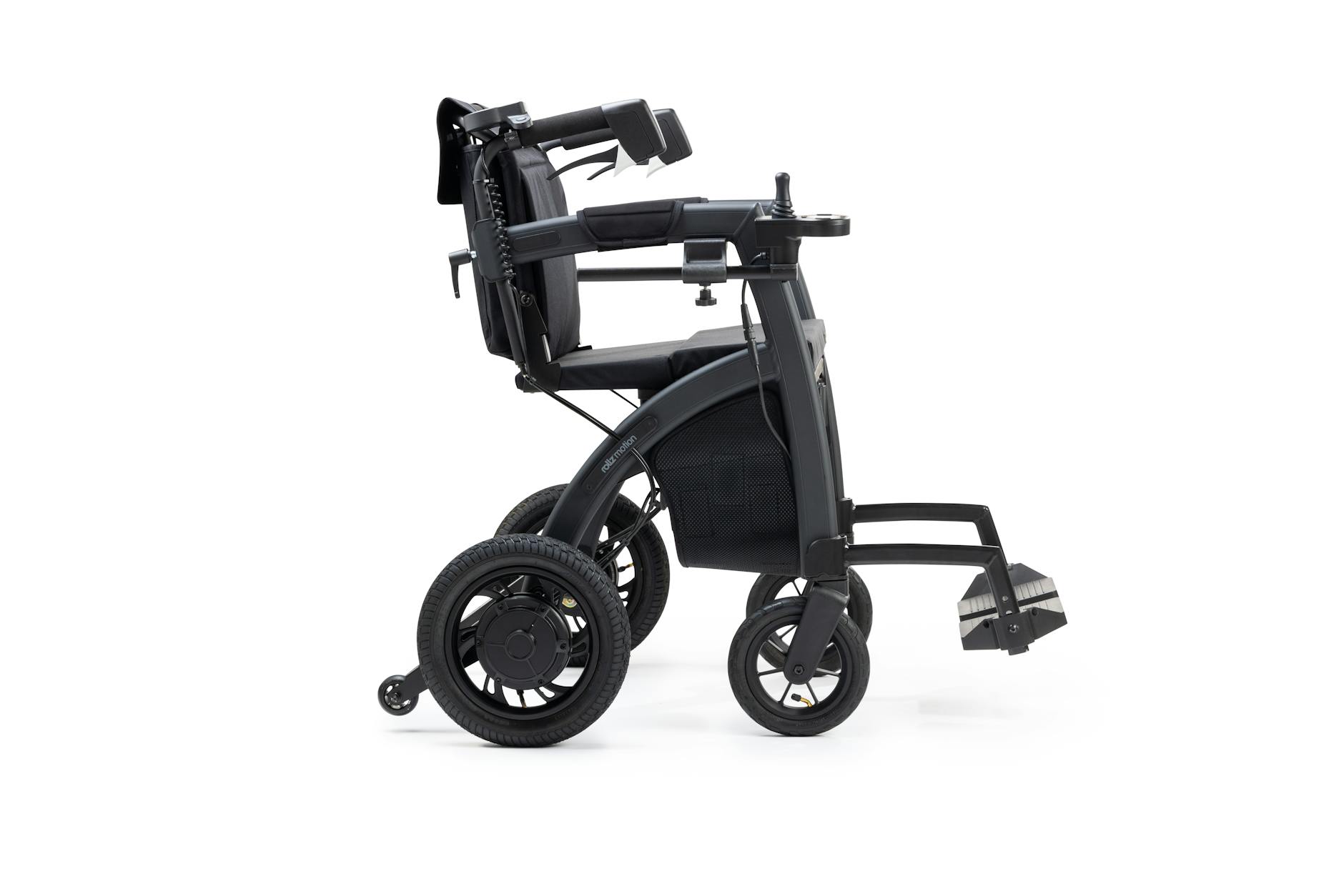
Basic walkers range from $30 to $100 and serve many dementia households adequately. These simple devices have few parts to break, no batteries or brakes to maintain, and fold flat for storage. For someone who primarily needs support moving between a bedroom, bathroom, and living room, a basic walker often provides the best value. Rollators with seats occupy the $80 to $300 range, with premium models from manufacturers like Drive Medical and Hugo Elite running $150 to $400 or more.
The NOVA Vibe 6 Rollator, which features 6-inch wheels ideal for indoor use, feather-touch hand brakes, and a lifetime warranty, represents the upper end of what most families need. The 6-inch wheel size matters specifically for indoor use—larger wheels (8 inches and up) handle outdoor terrain better but make tight indoor turns more difficult. Medicare and Medicaid reimburse medically necessary mobility aids, which can significantly offset costs. However, coverage typically requires a prescription and documentation of medical necessity. The administrative process takes time, so families facing urgent safety concerns sometimes purchase a basic walker out-of-pocket initially, then pursue reimbursement for a more suitable device once they understand exactly what their loved one needs.
The Hidden Risk: Why the Wrong Mobility Aid Increases Falls
The statistic bears repeating: mobility aid use in people with dementia increases falls three-fold. This doesn’t mean mobility aids are harmful—it means inappropriate aids, improper fitting, and insufficient training create serious hazards. A rollator that’s too tall forces the user to reach upward, shifting their center of gravity dangerously. A walker that’s too short causes hunching, which strains the back and reduces stability. Currently, no validated assessment tool exists specifically for mobility aid safety in dementia.
Researchers have developed the SUMAC (Safe Use of Mobility Aid Checklist) for evaluating four-wheeled walker use, but this tool hasn’t yet achieved widespread clinical adoption. The practical implication: families cannot rely on standardized screening to catch problems. Instead, ongoing observation of how the person actually uses their equipment matters more than any initial assessment. Warning signs that the current mobility aid isn’t working include: the person consistently forgets to use brakes, pushes the walker too far ahead and then lunges to catch up, uses furniture instead of the walker for support, or shows visible frustration when attempting to maneuver. Any of these patterns suggests the need for reevaluation—possibly switching to a simpler device, adjusting the current one, or adding environmental supports like grab bars to reduce reliance on the mobile aid.

The Scale of the Challenge: Market and Caregiving Realities
Approximately 24% of Americans aged 65 and older use a mobility device, with one-third using multiple devices for different situations. The senior mobility aid devices market in the United States reached $3.4 billion in 2024, growing from $3.2 billion the previous year, with projections suggesting 6.6% annual growth through 2034. These figures reflect both an aging population and increasing recognition that mobility support prevents costlier problems like fall-related hospitalizations.
For context on the broader caregiving landscape, unpaid dementia caregiving was valued at $413.5 billion in 2024. This staggering figure represents the economic value of family members’ time spent on care tasks—time that includes helping loved ones use mobility aids safely, adapting homes, and managing the consequences when equipment fails or is used incorrectly. Investment in appropriate mobility aids and home modifications represents a small fraction of this total but can significantly reduce the daily burden of hands-on physical assistance.
Looking Ahead: Better Tools and Assessment Methods
The development of assessment tools like SUMAC signals growing recognition that dementia requires specialized approaches to mobility safety. Future research may yield better screening instruments that help clinicians match specific aids to specific cognitive profiles. Until then, the practical approach remains: start simple, introduce early, observe continuously, and adjust as needed.
Technology integration in mobility aids continues to advance, with some newer devices incorporating GPS tracking and fall detection. Whether these features help or hinder people with dementia remains an open question—additional complexity may create additional confusion. For now, the best indoor mobility aid for a dementia home remains the one the person will actually use correctly, which usually means the simplest device that meets their physical needs.
You Might Also Like
- What’s the Best Sit-to-Stand Aid for Dementia Patients?
- What’s the Best Motion Sensor Light for Dementia Homes?
- What’s the Best Dressing Aid for Dementia Patients?
For more, see CDC — Alzheimer’s and Dementia.





