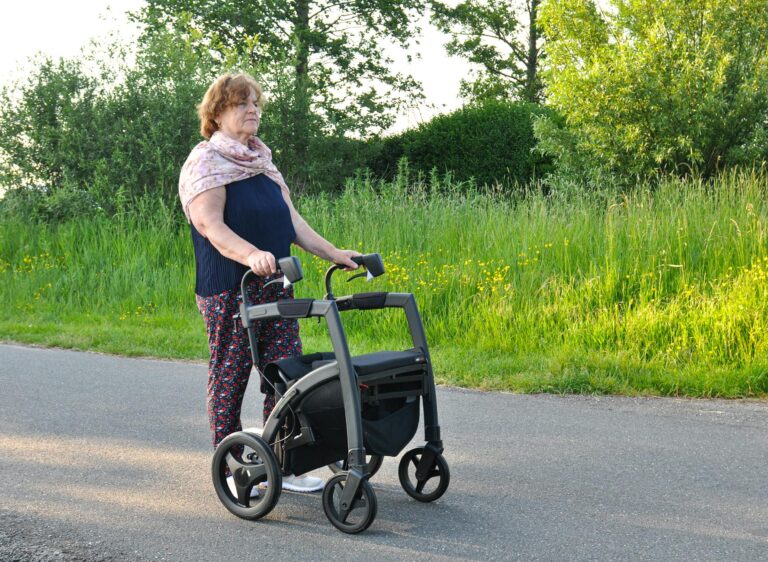
Living with Parkinson’s disease means confronting a future that refuses to reveal itself. For the nearly 12 million people worldwide navigating this diagnosis, uncertainty becomes a constant companion””not knowing when symptoms will progress, which abilities will fade, or what daily life will look like in five years. Yet within this ambiguity, patients consistently find that acknowledging the uncertainty, rather than fighting it, creates space for adaptation and even unexpected fulfillment. As Gregg Hummer, diagnosed in 2014, puts it plainly: “Parkinson’s can be scary and traumatic, but you can still live a fulfilled life.” Roxana Zapata was 39 when she received her Young Onset Parkinson’s diagnosis. “You don’t know what’s in your future, whether you’re going to have a future, what’s going to happen,” she recalls.
She spent two weeks curled in a fetal position, overwhelmed by questions no one could answer. Her experience mirrors what countless patients describe””a period of profound disorientation followed by a gradual, often nonlinear process of rebuilding meaning and routine. This article explores how Parkinson’s patients navigate uncertainty through their own words and experiences. We examine the grieving process that follows diagnosis, the strategies people use to find balance, the role of community and shared stories, and what current research reveals about the growing population facing this disease. The statistics are sobering””projections suggest 25 million people globally will have Parkinson’s by 2050″”but within those numbers are individual lives being lived with intention and resilience.
Table of Contents
- How Do Parkinson’s Patients Describe the Moment of Diagnosis?
- The Grieving Process Behind Parkinson’s Uncertainty
- Why Shared Stories Help Parkinson’s Patients Feel Less Alone
- Practical Approaches to Living with Parkinson’s Uncertainty
- When Standard Coping Strategies Fall Short
- Young Onset Parkinson’s and Its Unique Challenges
- What Rising Parkinson’s Numbers Mean for Patients and Families
- Conclusion
How Do Parkinson’s Patients Describe the Moment of Diagnosis?
The moment a neurologist confirms Parkinson’s disease often divides a patient’s life into before and after. Professor Allan Cole, diagnosed at 48, describes how just sixteen words from his doctor permanently altered his trajectory. Dr. Jonny Acheson, an NHS Emergency Medicine Consultant who spent his career treating patients, calls his own diagnosis “a seismic event” that challenged both his professional identity and his personal sense of self. For someone who understood disease intellectually, experiencing it firsthand required an entirely different kind of knowledge. Alison received her diagnosis at age 50 and found it devastating. She describes the prospect of looking ahead as “very scary” and has learned to focus on staying balanced rather than projecting into an unknowable future.
This shift from future-orientation to present-focus appears repeatedly in patient narratives. The uncertainty doesn’t disappear, but the relationship to it changes. However, not everyone processes diagnosis the same way. Some patients report a strange relief””finally having a name for symptoms they’d been experiencing for years. Others cycle between acceptance and denial for months or even years. The initial response doesn’t necessarily predict long-term adjustment. Research suggests that patients who eventually adapt well often experienced significant early distress, while those who seem fine initially sometimes struggle later when symptoms progress.
The Grieving Process Behind Parkinson’s Uncertainty
Teresa Jackson articulates what many patients feel but struggle to name: “You really go through a grieving process because you compare what you thought your life was going to look like to what you’re actually left with.” This grief isn’t for something that has died but for futures that will never materialize””the retirement plans, the physical activities, the assumption of predictable aging. The grieving process in Parkinson’s differs from bereavement in important ways. There’s no single loss to process; instead, patients face ongoing, accumulating losses that arrive unpredictably. A hand that trembles more than it did last month. A voice that softens.
Balance that wavers. Each change triggers its own small grief while simultaneously resurrecting fears about what comes next. Mental health professionals who work with Parkinson’s patients note that this grief often goes unrecognized. Family members may encourage positivity or focus on available treatments, inadvertently signaling that the patient’s sadness is unwelcome. Yet suppressing grief typically prolongs it. Patients who allow themselves to mourn””who name their losses and sit with the discomfort””often move through this phase more completely than those who try to skip it.
Why Shared Stories Help Parkinson’s Patients Feel Less Alone
Professor Cole, reflecting on his years living with the disease, advocates strongly for the power of personal narrative. Sharing stories, he argues, “helps us feel less alone and more hopeful.” This isn’t mere sentimentality. Research on chronic illness consistently shows that narrative connection””hearing how others have navigated similar challenges””provides both practical information and emotional scaffolding. The Michael J. Fox Foundation’s PD Wise initiative collects and shares personal stories specifically because patients requested them.
People newly diagnosed often want to know: What does daily life actually look like? How did others tell their families? What helped during the worst periods? Statistics can’t answer these questions, but another patient’s account can. There’s a limitation here worth noting. Not all stories are equally helpful, and some can inadvertently harm. Narratives that emphasize exceptional outcomes””the marathon runner who barely slowed down, the executive who worked another decade””can make patients with more aggressive disease progression feel like failures. The most useful stories tend to acknowledge difficulty while demonstrating that meaning remains possible, without implying that attitude alone determines outcomes.

Practical Approaches to Living with Parkinson’s Uncertainty
Patients who describe managing uncertainty well often mention similar strategies, though they arrive at them through different paths. Alison’s approach of focusing on balance rather than the future represents one common method: narrowing the temporal horizon. Instead of asking “What will I be like in ten years?” patients learn to ask “What can I do today?” Exercise emerges repeatedly as both physically and psychologically beneficial. Many patients describe it as the one area where they feel some agency””unable to control disease progression but able to influence their fitness, strength, and mobility in the present. The tradeoff is that exercise requires energy that Parkinson’s often depletes, forcing patients to weigh the investment against other activities they value.
Planning presents a genuine dilemma. Some patients find that creating detailed plans for various scenarios reduces anxiety””knowing what resources exist, what modifications their home might need, what legal and financial arrangements should be in place. Others find that extensive planning increases their focus on decline and prefer to address challenges as they arise. Neither approach is universally correct. The key seems to be matching strategy to temperament rather than following generic advice.
When Standard Coping Strategies Fall Short
Not everyone finds peace with uncertainty, and suggesting otherwise does patients a disservice. Depression affects roughly 40 percent of Parkinson’s patients””partly due to the disease’s effects on brain chemistry and partly as a psychological response to chronic illness. Anxiety disorders are similarly common. These aren’t failures of attitude; they’re medical conditions that often require treatment. The “stay positive” messaging that pervades chronic illness communities can inadvertently burden patients who are struggling.
When positivity becomes an expectation rather than an aspiration, patients may feel ashamed of their fear, grief, or anger. Dr. Acheson’s description of his diagnosis as seismic acknowledges a truth that relentlessly upbeat narratives sometimes obscure: Parkinson’s is devastating, and pretending otherwise requires energy better spent elsewhere. Caregivers face their own uncertainty, often with fewer support resources. The spouse who doesn’t know whether they’ll eventually become a full-time caregiver, the adult child trying to plan their own life while a parent’s needs increase””these people navigate ambiguity without the patient’s direct knowledge of their own body. Support groups specifically for caregivers address this gap, though they remain less common than patient-focused programs.

Young Onset Parkinson’s and Its Unique Challenges
Roxana Zapata’s diagnosis at 39 placed her in a category that defies many assumptions about the disease. Young Onset Parkinson’s, typically defined as diagnosis before age 50, affects a significant minority of patients and creates distinct challenges. These individuals often have dependent children, ongoing careers, and decades of life ahead””all of which complicate planning and increase the stakes of uncertainty.
Younger patients frequently describe feeling isolated from older patients whose concerns differ markedly. Worrying about explaining tremors to a five-year-old differs from worrying about tremors in retirement. Career implications loom large: disclosure decisions, workplace accommodations, long-term disability planning. The disease’s slow progression, generally a blessing, can create extended periods of ambiguity where patients look healthy while experiencing invisible symptoms.
What Rising Parkinson’s Numbers Mean for Patients and Families
Current projections paint a concerning picture. The global Parkinson’s population is expected to reach 25.2 million by 2050″”a 112 percent increase from 2021’s 11.77 million. In the United States alone, nearly 90,000 people receive new diagnoses annually, a figure 50 percent higher than previous estimates suggested. The economic burden already approaches $61.5 billion per year. These numbers reflect primarily demographic shifts rather than increasing disease rates.
Population aging accounts for 89 percent of projected growth. The 80-and-older group will see the greatest case increase””196 percent by 2050. This means healthcare systems, already strained, will face dramatically higher demand for neurologists, movement disorder specialists, physical therapists, and caregivers. For individual patients and families, these statistics underscore the importance of advocacy. More patients mean more potential research participants, more voices demanding better treatments, and more political pressure for research funding. The uncertainty that defines individual experience with Parkinson’s exists alongside growing certainty that this disease will affect millions more families in coming decades.
Conclusion
Living with Parkinson’s means accepting that some questions have no answers while continuing to build a life anyway. The patients whose stories appear throughout this article””Roxana, Alison, Teresa, Allan, Jonny, Gregg””each found their own accommodation with uncertainty. None eliminated it. None stopped fearing the future entirely.
But each discovered that uncertainty, while uncomfortable, doesn’t preclude meaning, connection, or even joy. For those newly diagnosed or supporting someone who is, the path forward involves both pragmatic steps and internal work. Medical care, exercise, legal and financial planning, and support networks all matter. So does allowing grief its space, resisting pressure to perform positivity, and connecting with others who understand what the experience actually feels like. The uncertainty remains, but it need not remain alone.