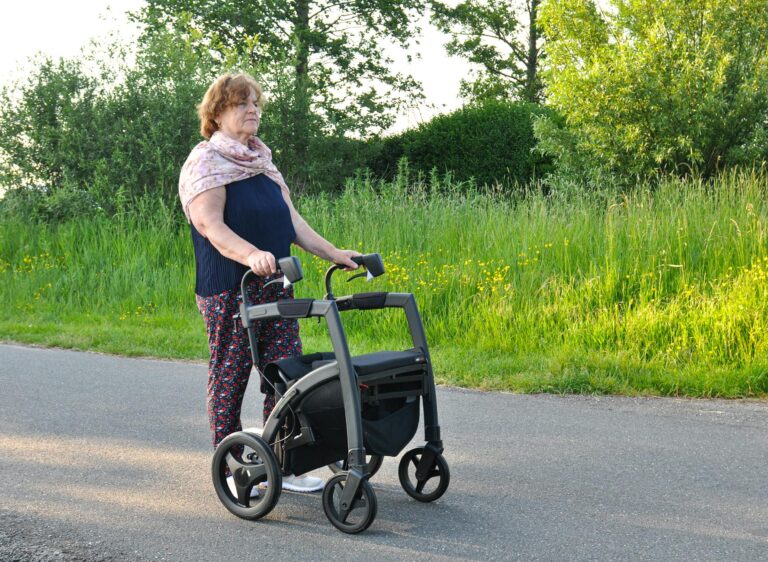
Parkinson’s disease transforms once-automatic tasks like grocery shopping, banking, or picking up prescriptions into exhausting challenges that require careful planning and significant physical effort. The combination of motor symptom fluctuations, fatigue, and progressive gait abnormalities means that a simple trip to the store can become unpredictable””some days manageable, other days nearly impossible. For the nearly 90,000 people diagnosed with Parkinson’s in the United States each year, learning to adapt daily routines becomes essential to maintaining independence. Consider a retired teacher who used to complete all her weekly errands in a single Saturday morning.
After her Parkinson’s diagnosis, she found that the tremor in her hands made signing receipts difficult, her shuffling gait slowed her pace through store aisles, and the “off periods” when her medication wore off left her frozen in place at unpredictable moments. What once took three hours now requires multiple shorter trips spread across several days. This article examines why routine errands become difficult for people with Parkinson’s, how motor fluctuations create unpredictability in daily planning, what adaptive strategies and technologies can help, and how caregivers can support independence while managing realistic expectations. Understanding these challenges is the first step toward developing practical solutions.
Table of Contents
- Why Do Motor Symptoms Make Simple Errands So Challenging?
- How Do “Off Periods” Create Unpredictability in Daily Planning?
- The Hidden Burden of Fatigue on Everyday Tasks
- Adaptive Strategies That Preserve Independence
- When Driving Is No Longer Safe
- Assistive Technology Offers New Possibilities
- Looking Ahead: Research, Community, and Hope
- Conclusion
Why Do Motor Symptoms Make Simple Errands So Challenging?
parkinson‘s disease affects both basic activities of daily living””like dressing and mobility””and instrumental activities such as cooking, driving, and using a phone. These instrumental activities are precisely what routine errands demand: navigating parking lots, walking through stores, handling money, carrying bags, and operating a vehicle. When any of these abilities becomes unreliable, the entire errand becomes a source of anxiety rather than a routine task. The progressive nature of the disease means that gait and postural abnormalities emerge over time, leading individuals to curtail their mobility in basic daily tasks, professional responsibilities, and household chores. A person might initially notice that walking through a crowded supermarket feels more tiring than it used to.
Later, they may find themselves gripping shopping carts for stability or avoiding stores with slippery floors. Eventually, some errands may require accompaniment or become impossible without assistance. The physical demands of errands extend beyond walking. Reaching for items on high shelves, bending to retrieve products from lower shelves, standing in checkout lines, and loading groceries into a car all require coordination, balance, and stamina that Parkinson’s progressively compromises. For comparison, a healthy adult might expend minimal mental energy on these tasks, while someone with Parkinson’s must consciously plan each movement.

How Do “Off Periods” Create Unpredictability in Daily Planning?
one of the most frustrating aspects of living with Parkinson’s is the phenomenon of motor symptom fluctuations””periods when medications are working well (“on time”) alternating with periods when symptoms return or worsen (“off time”). Research published in Nature Scientific Reports confirms that these fluctuations significantly impact daily activities, making it difficult to predict when someone will feel capable of completing errands. A person might feel confident leaving the house during an “on” period, only to experience medication wearing off while standing in a checkout line. Suddenly, their feet feel glued to the floor, their hands shake too much to handle a credit card, or their voice becomes too soft to communicate with a cashier.
This unpredictability creates a psychological burden that often exceeds the physical challenges””the constant uncertainty about whether today will be a “good day” or a “bad day” for errands. However, if someone can identify patterns in their medication cycles, they may be able to schedule errands during predictable “on” windows. This requires careful tracking of when medications are taken, how long they remain effective, and when symptoms typically return. Not everyone experiences predictable fluctuations, though, and as the disease progresses, these patterns often become less reliable.
The Hidden Burden of Fatigue on Everyday Tasks
Beyond visible motor symptoms, fatigue profoundly affects the ability to complete routine errands. Parkinson’s-related fatigue differs from ordinary tiredness””it’s a deep, persistent exhaustion that doesn’t improve with rest and can strike without warning. Caregivers and healthcare providers recommend scheduling fewer activities and breaking up tasks and errands into shorter time periods to accommodate this reality. A practical example: rather than attempting to visit the pharmacy, grocery store, and bank in one outing, someone with Parkinson’s might need to spread these errands across three separate days.
Each trip can be shorter, with built-in rest periods, and timed for when energy levels are typically highest. For many people, this means morning errands rather than afternoon ones. This approach requires a fundamental shift in expectations. Family members accustomed to efficiency may feel frustrated by the slower pace, and the person with Parkinson’s may grieve the loss of their former capability. Acknowledging fatigue as a legitimate symptom””not laziness or lack of effort””helps everyone adjust to new realities.

Adaptive Strategies That Preserve Independence
Several practical approaches can help people with Parkinson’s continue managing their own errands longer. Online shopping and delivery services eliminate many physical challenges, though they also reduce opportunities for social interaction and physical activity that errands provide. Curbside pickup offers a middle ground””the person can still leave the house and interact with store employees without navigating aisles. For in-person errands, using motorized shopping carts, shopping during off-peak hours when stores are less crowded, and choosing stores with wider aisles and accessible layouts all reduce difficulty.
Some people find that carrying a card explaining their condition helps when tremor or slowness at checkout causes impatient reactions from others. Planning routes through stores in advance reduces backtracking and conserves energy. The tradeoff with many adaptive strategies is that they require advance planning, which itself consumes mental energy. A spontaneous errand””realizing you need milk and quickly running to the store””becomes impossible when every outing requires consideration of medication timing, energy levels, store accessibility, and backup plans if symptoms worsen. Accepting this loss of spontaneity is often emotionally difficult.
When Driving Is No Longer Safe
Perhaps no aspect of errand independence is more fraught than the question of driving. Parkinson’s affects reaction time, visual processing, and the physical ability to operate vehicle controls. The disease doesn’t automatically disqualify someone from driving, but it does require honest ongoing assessment of capabilities. Warning signs that driving may be becoming unsafe include difficulty turning the steering wheel due to rigidity, delayed reactions to traffic signals or other cars, episodes of freezing while operating the vehicle, or getting lost on familiar routes. Family members often notice problems before the person with Parkinson’s acknowledges them, which can create conflict.
However, premature loss of driving privileges can devastate independence and mood. A formal driving evaluation by an occupational therapist specializing in driver rehabilitation provides objective assessment. Some people with Parkinson’s can continue driving safely for years with adaptive equipment like spinner knobs on steering wheels or left-foot accelerators. Others may need to limit driving to familiar routes during daylight hours. The key is ongoing evaluation rather than a single decision point.

Assistive Technology Offers New Possibilities
Technology development has produced tools specifically designed for Parkinson’s challenges. The Liftware spoon, funded by the National Institute of Neurological Disorders and Stroke, uses sensors to detect and counter tremor, reducing disruption by 70 percent to make eating easier.
While eating out isn’t technically an errand, the ability to confidently dine in public””at a food court during shopping or a restaurant after appointments””extends the social aspects of errand-running. Similar sensor technology is being adapted for other applications, including writing aids and tools for handling small objects. Voice-to-text technology helps when handwriting becomes illegible, making it possible to maintain shopping lists or communicate needs to store employees.
Looking Ahead: Research, Community, and Hope
The global Parkinson’s community faces sobering projections””an estimated 25.2 million people will have the disease by 2050, representing a 112 percent increase from 2021 when 11.77 million people were affected worldwide. The economic burden in the United States alone is estimated at nearly $61.5 billion per year in 2025. These numbers underscore the urgency of both research into treatments and development of better support systems for daily living.
Events like the 2026 World Parkinson Congress, scheduled for May 24-27 in Phoenix, Arizona, bring together researchers, clinicians, and people living with Parkinson’s to share advances in care and coping strategies. This will be the first North American World Parkinson Congress in ten years, serving the more than 10 million people globally living with the condition. Such gatherings remind participants that they’re not facing these daily challenges alone.
Conclusion
Routine errands become difficult with Parkinson’s disease due to a combination of motor symptoms, medication fluctuations, fatigue, and progressive physical limitations. What once required no conscious thought””walking through a store, handling payment, carrying purchases””now demands planning, adaptation, and acceptance of changed capabilities. The unpredictability of “off periods” adds a psychological burden that can make people reluctant to attempt errands at all.
Maintaining errand independence as long as possible requires a combination of practical strategies, assistive technology, honest assessment of limitations, and support from caregivers who understand the need for flexibility. Breaking tasks into smaller segments, timing outings with medication effectiveness, using delivery services for some needs while preserving in-person errands for others, and accepting help when needed all contribute to quality of life. The goal isn’t to do things the way they were done before Parkinson’s, but to find new ways that work now.