Parkinson’s disease fundamentally alters how a person perceives and moves through the physical world around them. For many living with this condition, spaces that once felt familiar and easy to navigate become unpredictable challenges””doorways seem narrower, distances become harder to judge, and the body no longer responds to spatial cues the way it once did. This shift in spatial awareness affects everything from walking down a trail to reaching for a coffee cup, transforming routine movements into conscious calculations. One person with Parkinson’s describes how their ability to navigate around obstacles, like avoiding a tree while walking on a trail, has been significantly affected by the disease.
What was once automatic now requires deliberate attention. Research published in Neuro-Ophthalmology confirms this experience is common: while patients can typically describe their own body image and judge distances between nearby objects, they report significant changes in perceiving the world around them. This article explores how Parkinson’s reshapes spatial relationships, the science behind these changes, and what individuals and families can do to adapt. Beyond the physical challenges, this spatial disconnection ripples outward into relationships and daily life. Understanding these changes is the first step toward finding strategies that help people with Parkinson’s maintain their independence and connection to the spaces and people that matter most.
Table of Contents
- What Happens to Spatial Awareness in Parkinson’s Disease?
- The Science Behind Visuospatial Deficits in Parkinson’s
- When Familiar Spaces Become Foreign
- Life-Space Mobility and Its Ripple Effects
- Managing Spatial Challenges Through Awareness and Adaptation
- The Emerging Research Frontier
- Looking Forward: Space, Independence, and Connection
- Conclusion
What Happens to Spatial Awareness in Parkinson’s Disease?
Spatial awareness involves recognizing objects around you and controlling your body movements in relation to those objects. For someone without Parkinson’s, this process happens automatically””you walk through a crowded room without consciously calculating the distance between yourself and the furniture. For someone with Parkinson’s, this automatic processing becomes impaired, turning familiar environments into obstacle courses that demand constant mental effort. Research shows that Parkinson’s patients specifically report problems judging distance and motion in the street, difficulties reaching for objects, and challenges moving through narrow spaces within the home.
A doorway that presents no problem for most people may require someone with Parkinson’s to pause, assess, and carefully plan their path through it. This isn’t a failure of effort or attention””it reflects underlying changes in how the brain processes visual and spatial information. Studies on mental rotation tasks, where participants must mentally visualize rotating three-dimensional objects, reveal that people with Parkinson’s show different reaction time patterns compared to controls and make significantly more errors. These findings point to a visuospatial deficit that affects perception of extra-personal space””the space beyond arm’s reach that we navigate through constantly. However, these difficulties aren’t uniform; some individuals experience more pronounced spatial challenges than others, depending on factors like disease progression and which brain regions are most affected.
- —

The Science Behind Visuospatial Deficits in Parkinson’s
The visuospatial difficulties in Parkinson’s disease stem from changes in the brain’s dopamine system, which affects not only movement but also perception and cognitive processing. The basal ganglia, heavily impacted by Parkinson’s, play a crucial role in integrating sensory information with motor planning. When this system malfunctions, the seamless coordination between what you see and how you move breaks down. Perception studies reveal an interesting paradox: people with Parkinson’s can often describe their own body image accurately and judge distances between nearby objects, yet they struggle with perceiving and navigating the broader world around them.
This suggests the deficit is specific to processing extra-personal space rather than a general cognitive decline. The brain’s ability to create an accurate mental map of the surrounding environment becomes compromised, even when close-up perception remains relatively intact. One important limitation to note: medication effectiveness varies significantly in addressing spatial symptoms. While dopamine replacement therapies help with many motor symptoms, they don’t always improve visuospatial processing to the same degree. If someone with Parkinson’s notices spatial difficulties persisting or worsening despite medication, this is worth discussing with their neurologist, as it may require additional strategies beyond pharmacological treatment.
- —
When Familiar Spaces Become Foreign
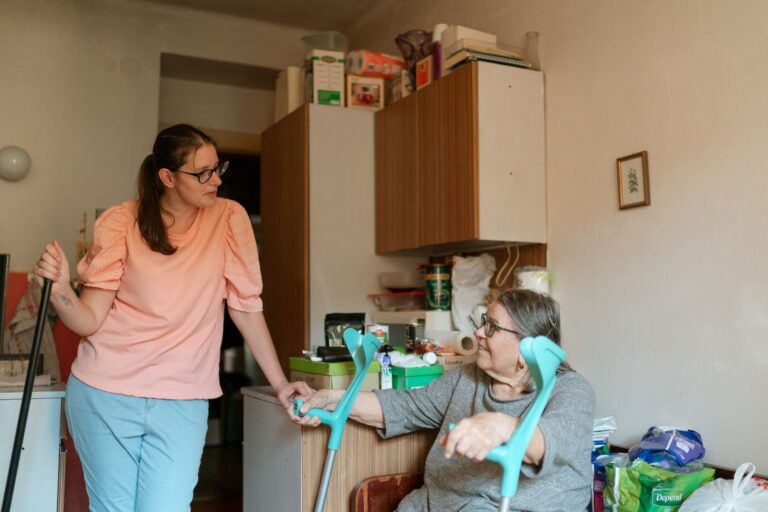
Home, the space where we typically feel most comfortable and competent, can become surprisingly challenging for someone with Parkinson’s. Narrow hallways, cluttered rooms, and stairs present daily navigation puzzles. What makes this particularly difficult is the emotional weight of struggling in a space that should feel safe and familiar. Consider the experience of reaching for a glass on a kitchen counter””a movement performed thousands of times over a lifetime. With Parkinson’s, the brain may misjudge the distance, causing the hand to fall short or overshoot.
Multiply this by dozens of small spatial misjudgments throughout the day, and the cumulative effect becomes exhausting. Some people describe feeling like strangers in their own homes, where muscle memory no longer serves them reliably. Environmental modifications can help significantly. Removing unnecessary furniture, improving lighting, and creating clear pathways reduces the cognitive load of navigation. Contrasting colors on stairs and doorframes can help the brain process spatial boundaries more easily. However, the effectiveness of these changes depends on the individual””what helps one person may not help another, and strategies often need adjustment as the disease progresses.
- —

Life-Space Mobility and Its Ripple Effects
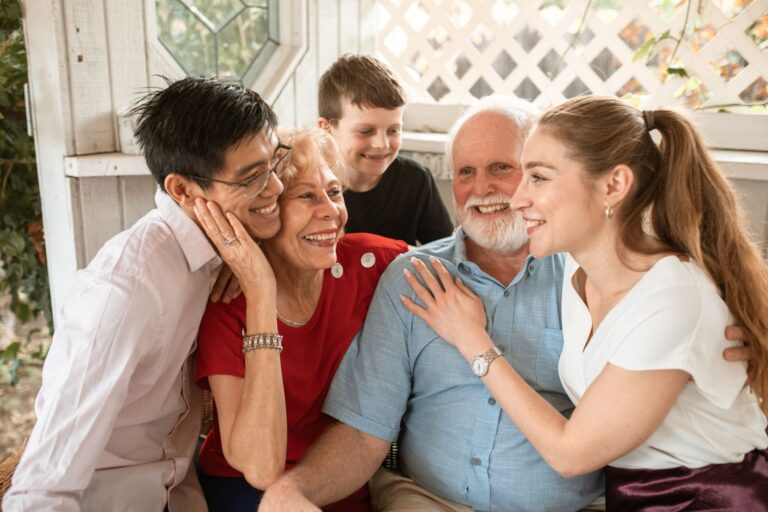
Life-space mobility refers to purposeful movement through one’s environment, encompassing everything from moving around the home to traveling in the community. For people with Parkinson’s, this captures a broad spectrum of physical and social mobility challenges that extend far beyond the clinical measurements of gait and balance. The impact on relationships can be profound. One study participant shared a particularly poignant example: “I used to be able to run and jog, and kick a football and soccer ball with my grandsons. I don’t see them very much. They live ten minutes from here, but they want to play, and I can’t””so I don’t.
And so we’re drifting apart.” This illustrates how spatial limitations translate directly into social isolation. The physical inability to engage in shared activities creates emotional distance that can be as painful as the physical symptoms. The tradeoff many people face is between safety and independence. Restricting movement to avoid falls preserves physical safety but accelerates social withdrawal. Maintaining an active social life may increase fall risk but supports emotional well-being. There’s no universally correct answer””the balance depends on individual priorities, support systems, and disease stage. What matters is making these tradeoffs consciously rather than letting fear dictate increasingly narrow life-spaces.
- —
Managing Spatial Challenges Through Awareness and Adaptation
The encouraging news is that people with Parkinson’s report spatial awareness difficulties can potentially be managed and improved through personal effort and awareness. This isn’t about willpower overcoming neurological changes””it’s about developing compensatory strategies that work with the brain’s remaining capabilities. Conscious attention can partially substitute for automatic processing. When approaching a narrow doorway, deliberately pausing to assess the space rather than attempting to walk through automatically can reduce collisions and falls. Some people use mental rehearsal, visualizing a movement path before executing it.
Others find that external cues””like lines on the floor or rhythmic auditory signals””help bypass the faulty internal spatial processing. Physical therapy focused on spatial awareness and movement planning shows promise, though results vary. Occupational therapists can assess home environments and recommend specific modifications tailored to an individual’s particular challenges. The limitation here is access””not everyone has ready access to specialists familiar with Parkinson’s-specific spatial issues, and insurance coverage for these services varies widely. For those without access to specialized care, general principles of reducing clutter, improving lighting, and practicing deliberate movement still apply.
- —
The Emerging Research Frontier
A 2024 perspective review published in npj Microgravity examined the risk of Parkinson’s disease in the context of space exploration. While this might seem like esoteric research, it reflects growing interest in understanding how extreme environmental conditions interact with neurological function. The review examines how spaceflight conditions””including altered gravity and radiation exposure””might relate to Parkinson’s disease development or progression.
This research matters beyond astronaut health because it may reveal new insights about the environmental and physiological factors that influence Parkinson’s. Understanding how the brain adapts to radically different spatial environments could eventually inform rehabilitation approaches on Earth. For now, this remains speculative, but it represents an expanding frontier in Parkinson’s research.
- —
Looking Forward: Space, Independence, and Connection
The relationship between Parkinson’s disease and spatial awareness will likely receive increasing research attention as the population ages and Parkinson’s prevalence grows. Emerging technologies, from virtual reality rehabilitation to smart home sensors that adapt to movement patterns, offer potential future tools for maintaining spatial function and safety. Perhaps more important than technological solutions is the growing recognition that spatial challenges in Parkinson’s are real, measurable, and valid.
For years, many people with Parkinson’s struggled to articulate why familiar spaces felt different, sometimes doubting their own perceptions. Research now validates these experiences and points toward strategies for adaptation. This understanding helps individuals advocate for their needs and helps families and caregivers provide more appropriate support.
- —
Conclusion
Parkinson’s disease changes a person’s relationship with space in ways that are profound yet often invisible to others. From the visuospatial processing deficits that make reaching for objects unpredictable, to the life-space mobility restrictions that can strain family relationships, these challenges touch nearly every aspect of daily living. The science confirms what people with Parkinson’s have long experienced: the world genuinely looks and feels different when the brain’s spatial processing systems are affected.
Understanding these changes opens the door to meaningful adaptation. Environmental modifications, conscious movement strategies, physical and occupational therapy, and maintaining social connections despite mobility challenges all contribute to quality of life. While Parkinson’s cannot currently be cured, the spatial difficulties it causes can be managed””not perfectly, but meaningfully. For individuals and families navigating this territory, knowledge about spatial awareness changes is the foundation for building effective strategies and maintaining connection to the spaces and people that matter most.
You Might Also Like
- How Parkinson’s Disease Gradually Changed One Person’s Independence
- How Parkinson’s Disease Changed One Family’s Daily Routine
- Living With Parkinson’s Disease After a Series of Serious Injuries
For more, see Alzheimer’s Association — caregiving.