Serious injuries sits at the center of this dementia and brain health question.
Living with Parkinson’s disease after experiencing serious injuries requires a fundamentally different approach than managing PD alone. The connection between traumatic brain injuries and Parkinson’s is now well-established: research from the San Francisco VA Medical Center studying nearly 326,000 veterans found that even a mild concussion increases Parkinson’s risk by 56 percent. For those who have already developed the disease following injuries, the challenge becomes twofold””managing progressive neurological symptoms while preventing the falls and additional head trauma that could accelerate decline. Consider a former construction worker who sustained multiple concussions over his career and was diagnosed with Parkinson’s at 58.
His treatment plan looks nothing like that of someone with no injury history; it must account for existing brain damage, heightened fall risk, and the compounding effects of repeated trauma. The stakes are considerable. People with advanced Parkinson’s already face increased fall risk due to balance problems and neurogenic orthostatic hypotension, and falls represent one of the major causes of emergency room visits and hospitalizations for PD patients. When someone enters this cycle with a history of serious injuries, the potential for a dangerous feedback loop””where Parkinson’s symptoms lead to falls that cause further brain injury that worsens Parkinson’s symptoms””becomes a central concern that shapes every aspect of care. This article examines how prior injuries influence Parkinson’s progression, the specific risks injury survivors face, treatment considerations, emerging research on rehabilitation timing, and practical strategies for breaking the injury-disease cycle.
Table of Contents
- How Do Serious Injuries Increase Parkinson’s Disease Risk?
- The Dangerous Cycle: Why Fall Prevention Becomes Critical
- Current Treatment Landscape and Economic Realities
- The Critical Window: Why Early Rehabilitation Matters
- Navigating Treatment When Standard Protocols Do Not Apply
- Clinical Trials and Future Directions
- Living Well Despite Complex Circumstances
- Conclusion
How Do Serious Injuries Increase Parkinson’s Disease Risk?
The relationship between traumatic brain injury and Parkinson’s disease has moved from correlation to established medical fact. A comprehensive study using medical records from over 52,000 individuals with TBI and more than 113,000 controls found that brain injury was associated with a 44 percent increased risk of developing Parkinson’s during the subsequent five to seven years. The severity and timing of injuries matter significantly: a past traumatic brain injury with loss of consciousness lasting longer than an hour was associated with 3.5 times the normal risk of developing PD. Age at injury plays a critical role that many patients and families overlook.
Research shows that for every five years earlier the first head injury with loss of consciousness occurred, the odds of Parkinson’s disease increased by 1.37 times. This finding has profound implications for athletes, military personnel, and workers in high-risk occupations who sustain injuries early in life. A football player who experiences his first serious concussion at 18 faces substantially higher long-term risk than someone who has their first head injury at 40. The mechanism involves chronic neuroinflammation and damage to dopamine-producing neurons in the substantia nigra, the brain region most affected by Parkinson’s. Repeated head injuries from contact sports””boxing, football, hockey””can cause accumulated brain damage leading to a distinct condition termed “post-traumatic parkinsonism.” This variant shares many symptoms with idiopathic Parkinson’s but may respond differently to standard treatments, making accurate diagnosis essential.

The Dangerous Cycle: Why Fall Prevention Becomes Critical
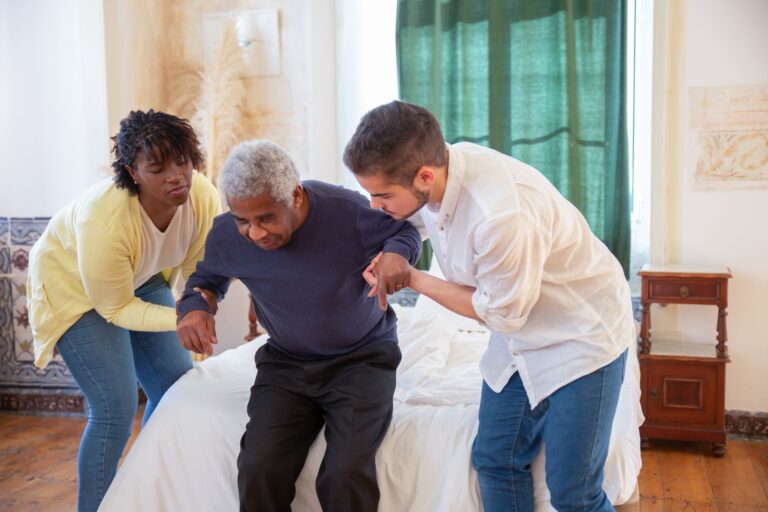
For someone already living with Parkinson’s after prior injuries, preventing additional trauma takes on urgency that cannot be overstated. falls are not merely inconvenient setbacks””they can cause life-threatening injuries such as traumatic brain injury and fractures, which are linked to increased mortality risk in PD patients. The disease itself creates the conditions for falls through balance impairment, freezing of gait, and sudden blood pressure drops when standing. However, if a patient’s injury history includes orthopedic damage alongside head trauma, the picture becomes more complicated. A person with a prior hip fracture and multiple concussions faces compounded mobility challenges that standard Parkinson’s fall-prevention protocols may not adequately address.
Physical therapy must account for both the neurological deficits from Parkinson’s and any lasting musculoskeletal limitations from previous injuries. Generic balance exercises designed for typical PD patients may be inappropriate or even dangerous. The psychological dimension deserves attention as well. Many injury survivors develop reasonable fear of falling that, paradoxically, can increase fall risk through overly cautious movement patterns and reduced physical activity. Distinguishing between appropriate caution and counterproductive fear requires careful clinical assessment and often benefits from working with physical therapists experienced in both trauma rehabilitation and movement disorders.
Current Treatment Landscape and Economic Realities
Managing Parkinson’s after serious injuries typically requires more intensive””and more expensive””care than standard PD treatment. The combined direct and indirect cost of Parkinson’s disease reached $52 billion per year in 2020 and is estimated at nearly $61.5 billion in 2025. For individuals with complex injury histories, costs often exceed averages substantially. Medications alone average $2,500 per year, while therapeutic surgery such as deep brain stimulation can cost up to $100,000 per person. Consider the treatment differences between a straightforward PD case and one complicated by prior injuries. The uncomplicated patient might progress through standard medication protocols with periodic adjustments.
The injury survivor may require specialized neuroimaging to distinguish between Parkinson’s pathology and structural damage from trauma, consultations with multiple specialists, customized physical therapy, and potentially modified surgical approaches if their injury history affects the brain regions targeted by DBS. Insurance coverage for these additional services varies widely, creating disparities in care quality based on financial resources. The scope of the problem is substantial and growing. Currently, 1.1 million people in the United States live with Parkinson’s disease, with nearly 90,000 new diagnoses annually””a 50 percent increase from previously estimated figures of 60,000. Globally, more than 10 million people have Parkinson’s, and according to a March 2025 BMJ study, cases are expected to reach 25 million worldwide by 2050, representing a 112 percent increase from 2021. Men are 1.5 times more likely to develop Parkinson’s than women, though injury patterns in high-risk occupations and sports may partly explain this disparity.

The Critical Window: Why Early Rehabilitation Matters
Emerging research is reshaping understanding of how rehabilitation timing affects long-term outcomes for brain injury survivors. A December 2025 study published in ScienceDirect found that patients who initiated rehabilitation within one week of moderate-to-severe TBI had a significantly lower risk of developing Parkinson’s disease compared to those who began rehabilitation eight days to six months later. This finding suggests a critical intervention window that, if missed, may have lasting neurological consequences. The practical tradeoff involves medical stability versus early intervention.
Patients with severe injuries often cannot safely participate in active rehabilitation during the first week post-injury. However, the research suggests that even limited early intervention””passive range of motion, cognitive stimulation, or simply being out of bed””may provide protective benefits. Families and care teams should discuss rehabilitation timing explicitly, understanding that delayed recovery from the acute injury must be weighed against potential long-term neurological risks. For those already living with Parkinson’s who sustain new injuries, the same principle likely applies, though specific research on this population is limited. Advocating for early rehabilitation services, even in modified form, may help prevent acceleration of existing symptoms.
Navigating Treatment When Standard Protocols Do Not Apply
Standard Parkinson’s treatment protocols assume a typical disease presentation, but injury survivors may not fit these assumptions. Post-traumatic parkinsonism, for example, may involve different brain regions than idiopathic Parkinson’s, potentially affecting response to levodopa and other dopaminergic medications. Some patients with injury-related parkinsonism respond well to standard medications; others experience minimal benefit or unusual side effects. A significant limitation in current practice is the lack of established guidelines specifically for injury-related Parkinson’s.
Most neurologists base treatment on clinical experience and extrapolation from general PD research rather than evidence specific to this population. Patients should be aware that finding an effective treatment regimen may require more trial and adjustment than typical, and that outcomes may differ from what they read in general Parkinson’s literature. Deep brain stimulation presents particular considerations for those with prior brain injuries. Structural damage from trauma may affect electrode placement options or the predictability of therapeutic effects. Some patients with injury histories are poor DBS candidates, while others may benefit substantially””but the decision-making process requires specialized expertise that not all movement disorder centers possess.
Clinical Trials and Future Directions
Several promising clinical trials are advancing toward completion in 2026, offering potential new options for Parkinson’s patients including those with injury histories. The LUMA trial is a Phase 2 study testing BIIB122, an LRRK2 inhibitor designed to slow early-stage PD progression, with 650 participants across 113 sites and expected completion in March 2026. The ACTIVATE study is investigating BIA 28-6156, a therapy targeting the GCase enzyme, with results expected by mid-2026.
Research funding continues to expand. The Michael J. Fox Foundation awarded $67 million in grants during August and September for Parkinson’s research, signaling sustained investment in finding better treatments. For injury survivors specifically, the growing understanding of neuroinflammation as a shared mechanism between TBI and Parkinson’s opens possibilities for interventions that could address both conditions simultaneously.
Living Well Despite Complex Circumstances
Quality of life for Parkinson’s patients with injury histories depends heavily on building a care team that understands the intersection of these conditions. This typically means finding a movement disorder specialist familiar with post-traumatic parkinsonism, physical therapists who can address both neurological and orthopedic challenges, and mental health support for managing the psychological burden of dual diagnoses.
Practical home modifications deserve attention beyond standard Parkinson’s recommendations. Someone with prior injuries may need more extensive adaptations””not just removing throw rugs and adding grab bars, but potentially restructuring living spaces to minimize fall risk given their specific physical limitations. Occupational therapy assessments that account for both conditions prove more valuable than generic home safety checklists.
Conclusion
Living with Parkinson’s disease after serious injuries represents a distinct clinical challenge that requires tailored approaches rather than standard protocols. The established connection between traumatic brain injury and Parkinson’s risk””with increases ranging from 44 to 56 percent for single injuries and up to 3.5 times for severe trauma””means that injury survivors entering this diagnosis do so with different neurological histories than typical patients. Their care must account for potential differences in disease mechanism, heightened fall risk, possible variations in treatment response, and the need to prevent further injuries that could accelerate decline.
The path forward involves active engagement with emerging research, careful attention to rehabilitation timing based on new evidence about early intervention benefits, and assembling care teams with expertise in both movement disorders and trauma rehabilitation. With nearly 90,000 new Parkinson’s diagnoses annually in the United States and cases projected to reach 25 million globally by 2050, the population living at this intersection of injury and neurodegenerative disease will only grow. Understanding these complexities now positions patients, families, and clinicians to navigate them more effectively.
You Might Also Like
- Living With Parkinson’s After Years of Serious Injuries
- Michael J. Fox Opens Up About Life After Multiple Broken Bones With Parkinson’s Disease
- How Parkinson’s Disease Can Lead to Life Altering Injuries
For more, see NIH MedlinePlus — cognitive testing.