Michael J. Fox stands as perhaps the most visible public figure living with Parkinson’s disease, and his candid discussions about falls, fractures, and the realities of aging with this condition have brought unprecedented attention to challenges that millions face privately. The beloved actor, diagnosed at age 29 in 1991, has spoken openly about breaking his arm, his cheekbone, his hand, and sustaining other injuries from falls””experiences that underscore the brutal intersection of Parkinson’s disease, balance impairment, and the natural fragility that comes with getting older. His willingness to discuss these struggles publicly has helped destigmatize the disease while educating caregivers and patients alike about the serious risks that accompany motor dysfunction.
Fox’s experience illustrates a harsh truth that neurologists have long recognized: Parkinson’s disease dramatically increases fall risk, and those falls become increasingly dangerous as patients age. In interviews, Fox has described the unpredictability of his symptoms, noting that he can be walking confidently one moment and on the ground the next. His fractures have required surgeries and lengthy recoveries, complications that become more serious with each passing year. For the estimated one million Americans living with Parkinson’s disease, his story serves as both a warning and a form of solidarity. This article examines why Parkinson’s patients face such elevated fall risks, how aging compounds these dangers, what Fox and other patients have learned about prevention, and what families and caregivers should understand about protecting loved ones while maintaining their dignity and independence.
Table of Contents
- Why Do Parkinson’s Patients Like Michael J. Fox Experience So Many Falls?
- The Compounding Danger: How Aging Intensifies Fracture Risk in Parkinson’s Disease
- What Michael J. Fox’s Public Journey Reveals About Living with Progressive Symptoms
- Practical Strategies for Reducing Fall Risk in Parkinson’s Patients
- Common Complications and What Families Often Underestimate
- The Role of Caregivers in Fall Prevention and Recovery
- Looking Forward: Research and Evolving Understanding
- Conclusion
Why Do Parkinson’s Patients Like Michael J. Fox Experience So Many Falls?
parkinson‘s disease attacks the very systems that keep humans upright and moving safely. The loss of dopamine-producing neurons in the brain impairs motor control in multiple ways: it slows movement initiation, creates rigidity in muscles, causes tremors that affect balance, and””perhaps most dangerously””disrupts the automatic postural reflexes that healthy people take for granted. When a person without Parkinson’s stumbles, their body automatically adjusts to catch itself. For someone with the disease, that adjustment comes too slowly or not at all. The phenomenon of “freezing” presents particular hazards. Patients describe their feet feeling glued to the floor, often occurring when transitioning through doorways, turning, or navigating tight spaces.
When freezing occurs mid-stride, momentum continues while the feet do not, creating a recipe for forward falls. Fox has described this sensation in interviews, explaining how his body can betray him without warning despite his best efforts to remain vigilant. Medication timing adds another layer of complexity. Levodopa and other Parkinson’s medications work in cycles, meaning patients may have “on” periods where symptoms are well-controlled and “off” periods where motor function deteriorates significantly. Falls often cluster during these off periods or during unpredictable fluctuations between states. However, it would be a mistake to assume that being in an “on” state means safety””dyskinesias, the involuntary movements sometimes caused by medication, can themselves contribute to balance problems and falls.

The Compounding Danger: How Aging Intensifies Fracture Risk in Parkinson’s Disease
When Michael J. Fox breaks a bone in his sixties, the consequences are far more serious than they would have been when he was first diagnosed at twenty-nine. Aging brings a constellation of changes that transform falls from painful inconveniences into potentially life-altering events. Bone density naturally decreases with age, and research has suggested that Parkinson’s patients may experience accelerated bone loss compared to their peers””possibly due to reduced physical activity, vitamin D deficiency from decreased sun exposure, or effects of the disease itself. The healing process slows dramatically with age. A fracture that might have healed in six weeks for a younger person can take months for an older adult, and immobilization during that recovery period creates its own cascade of problems.
Muscle wasting occurs rapidly, pneumonia risk increases, blood clot danger rises, and the deconditioning that occurs during bed rest or reduced mobility can permanently reduce a Parkinson’s patient’s functional capacity. Some patients never return to their pre-fracture baseline. Hip fractures deserve special mention for their devastating impact on this population. Studies have historically shown that Parkinson’s patients who suffer hip fractures face higher mortality rates and worse functional outcomes than other older adults with the same injury. The combination of impaired mobility, medication management challenges during hospitalization, and the cognitive changes that sometimes accompany Parkinson’s creates a particularly difficult recovery scenario. Families should understand that preventing that first hip fracture may be one of the most important health interventions possible.
What Michael J. Fox’s Public Journey Reveals About Living with Progressive Symptoms
Fox’s decision to remain in the public eye throughout his disease progression has provided an unusually detailed longitudinal case study of Parkinson’s realities. In his books and interviews, he has chronicled the transition from mild symptoms that could be hidden during filming to the significant disability that eventually forced his retirement from regular acting. His candor about falls and fractures has helped normalize these experiences for other patients who might otherwise feel isolated in their struggles. One particularly valuable aspect of Fox’s public advocacy has been his discussion of the psychological dimensions of falling. He has spoken about the fear that develops after repeated falls, the way anticipatory anxiety can itself increase fall risk by causing patients to walk tentatively and unnaturally.
This “fear of falling” cycle represents a significant quality-of-life issue that extends beyond physical injury. Patients may begin avoiding activities, withdrawing from social situations, and becoming increasingly sedentary””all of which accelerate functional decline. Fox has also been forthright about the limitations of current treatments and the false hope that sometimes accompanies research announcements. Through The Michael J. Fox Foundation for Parkinson’s Research, which has become one of the largest private funders of Parkinson’s research in the world, he has channeled his visibility toward advancing science while remaining realistic about timelines and challenges. His foundation’s focus includes fall prevention research and efforts to understand the aging-Parkinson’s intersection more thoroughly.

Practical Strategies for Reducing Fall Risk in Parkinson’s Patients
Home modification represents one of the most immediately actionable approaches to fall prevention, though the specific interventions depend heavily on individual circumstances and disease stage. Removing loose rugs, installing grab bars in bathrooms, improving lighting in hallways and stairwells, and reducing clutter in walking paths can reduce environmental hazards. However, families should recognize that no amount of home modification eliminates fall risk entirely””the goal is risk reduction, not elimination. Physical therapy specifically designed for Parkinson’s patients has shown benefits for balance and gait in clinical studies. Programs like LSVT BIG, which focuses on amplitude training to counteract the small movements characteristic of Parkinson’s, may help some patients maintain better motor control. Exercise programs incorporating balance training, strength work, and flexibility have been associated with reduced fall rates in various studies, though consistency and appropriate intensity matter significantly.
The tradeoff is that exercise itself carries some fall risk, meaning patients must find the right balance between activity’s benefits and its inherent dangers. Assistive devices present another set of considerations. Canes and walkers can provide stability, but they must be properly fitted and patients must be trained in their correct use. A walker that is too high or too low, or a cane used on the wrong side, may actually increase fall risk. Some patients resist assistive devices due to pride or denial of disease progression, creating difficult conversations for families and care teams. The timing of introducing these aids involves weighing independence against safety””waiting too long increases injury risk, while introducing them too early may accelerate psychological adjustment difficulties.
Common Complications and What Families Often Underestimate
Medication management during recovery from falls or fractures frequently creates problems that families do not anticipate. Hospital environments disrupt the precise timing that Parkinson’s medications require, and patients may receive their levodopa late or miss doses entirely due to institutional meal schedules, surgical procedures, or simple communication failures. This can trigger severe symptom exacerbations, including rigidity so significant that it affects breathing, or confusion that may be mistaken for dementia. Families should understand that serving as advocates for medication timing during hospitalizations may be critically important. The cognitive aspects of Parkinson’s disease interact with fall risk in ways that are not always obvious. While Parkinson’s is primarily understood as a movement disorder, a substantial percentage of patients eventually develop cognitive impairment or dementia.
These changes affect judgment, attention, and the ability to recognize hazardous situations. A patient with intact cognition might avoid walking on an icy sidewalk, while a patient with cognitive decline might not register the danger. This creates a progressive challenge as the disease advances””patients who need more environmental protection may have less capacity to cooperate with safety measures. Financial concerns also merit attention. Extended care following serious fractures, home modifications, physical therapy, and assistive equipment can create significant expenses. Insurance coverage varies widely, and families often find themselves surprised by out-of-pocket costs. The compounding of medical expenses as patients age with Parkinson’s disease represents a planning challenge that many families address too late.
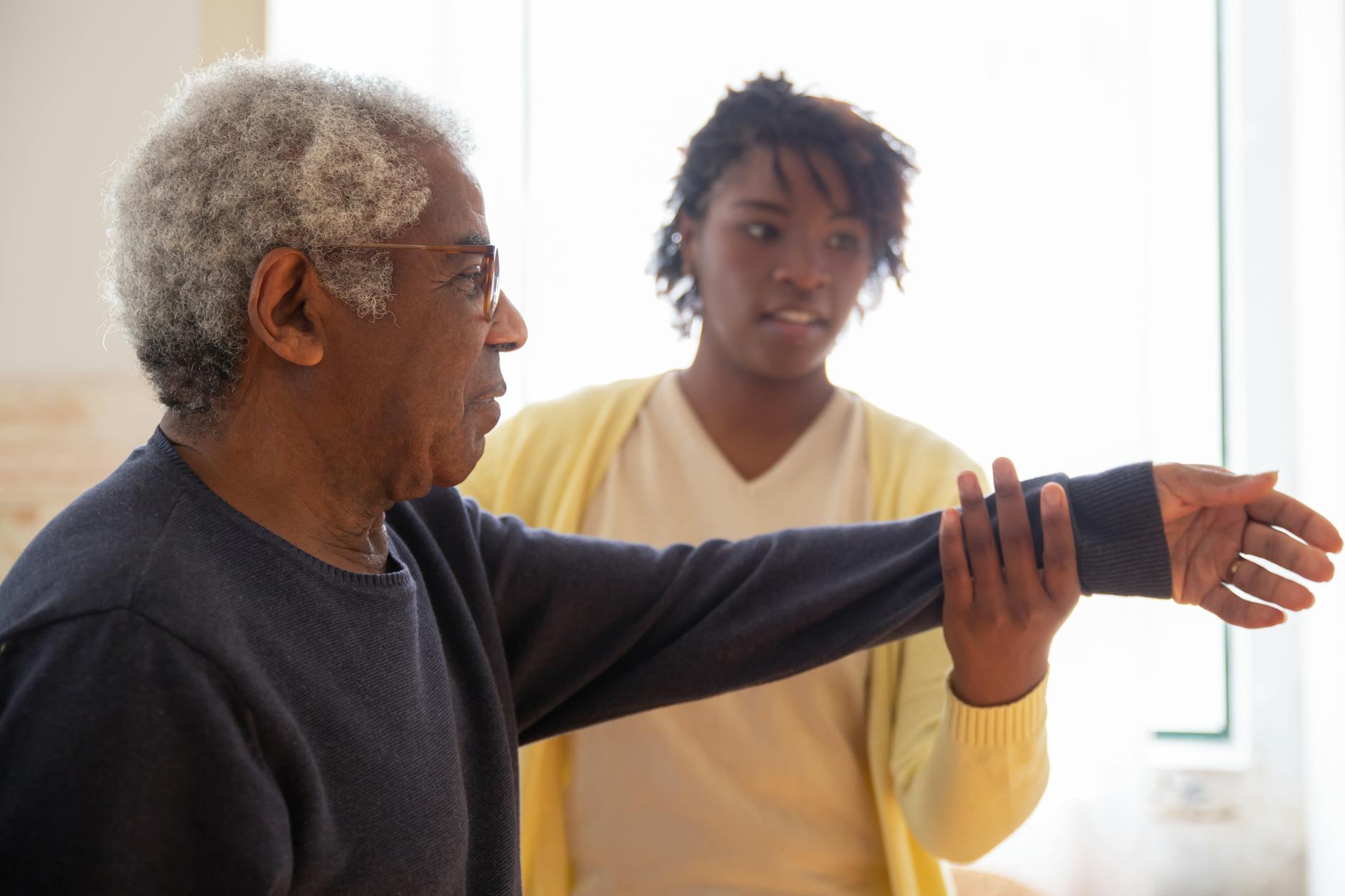
The Role of Caregivers in Fall Prevention and Recovery
Caregivers””whether family members or paid professionals””occupy a crucial and often exhausting position in managing fall risks. They must balance vigilance with respect for patient autonomy, provide assistance without creating dependence, and maintain their own physical and emotional health while attending to someone else’s needs. The physical demands of helping a Parkinson’s patient who has fallen, or preventing falls through hands-on assistance, can cause caregiver injuries that create secondary crises.
Michael J. Fox has spoken publicly about his wife Tracy Pollan’s role in his care, acknowledging the strain that his condition places on their relationship while expressing gratitude for her support. His visibility has helped draw attention to caregiver needs, though the resources available to most families fall far short of what families with significant financial means can access. Respite care, caregiver training programs, and support groups represent valuable resources, but their availability and quality vary dramatically by location.
Looking Forward: Research and Evolving Understanding
The intersection of Parkinson’s disease, aging, and fall risk remains an active area of research, with investigations exploring everything from wearable sensors that might predict falls before they occur to rehabilitation approaches that could restore some automatic balance responses. Deep brain stimulation, while primarily used for tremor and motor fluctuations, has been studied for its effects on gait and balance with mixed results. The Michael J.
Fox Foundation continues to fund research in this area, recognizing that preventing falls may be as important as addressing core symptoms. As the population ages and Parkinson’s prevalence potentially increases, the healthcare system will need to develop better approaches to this challenge. Fox’s advocacy has helped ensure that falls and fractures receive attention alongside the more commonly discussed symptoms of tremor and slowness. His personal experiences, shared with remarkable openness over decades, have provided both data and motivation for addressing these quality-of-life issues that profoundly affect patients and families.
Conclusion
Michael J. Fox’s willingness to discuss his falls, fractures, and the realities of aging with Parkinson’s disease has served both the patient community and the broader public. His experiences illustrate the interconnected challenges that make this disease so difficult to manage: motor symptoms that cause falls, aging bodies that break more easily and heal more slowly, medications that must be precisely timed, and psychological factors that can create vicious cycles of fear and declining function. Families facing these challenges should understand that they are confronting one of the most demanding aspects of Parkinson’s care.
Prevention requires a multifaceted approach including home modifications, physical therapy, appropriate assistive devices, medication optimization, and realistic planning for progressive decline. Caregivers need support and resources to sustain their efforts over the years or decades that Parkinson’s care may require. While current treatments cannot stop disease progression, thoughtful management can reduce fall risk and improve outcomes when falls do occur. The goal is maintaining safety, dignity, and quality of life as long as possible””a goal that Fox’s example demonstrates remains achievable even in the face of significant disability.