Michael J. Fox’s decades-long battle with Parkinson’s disease offers perhaps the most visible and instructive example of how this neurological condition progresses, particularly regarding the devastating risk of falls that eventually accompanies it. The beloved actor, diagnosed at just 29 years old in 1991, has spoken candidly about breaking his arm, cheekbone, and hand in separate fall incidents””injuries that became increasingly common as his disease advanced into its later stages. His story illustrates a critical truth that every Parkinson’s patient and caregiver must understand: falls are not merely inconvenient side effects but represent one of the most dangerous and life-altering complications of this disease.
Fox’s openness about his struggles has helped destigmatize Parkinson’s while simultaneously educating millions about what the disease actually entails beyond the visible tremors. In 2018, he underwent spinal surgery unrelated to Parkinson’s, and during his recovery, he fell and shattered his arm””an incident he later described as a turning point that briefly sent him into depression. His experience demonstrates that even with the best medical care, financial resources, and support systems available, Parkinson’s patients face an uphill battle against gravity itself. This article examines why falls become such a significant concern for Parkinson’s patients, what the disease does to the brain and body to create this vulnerability, and what practical steps patients and caregivers can take to reduce risk while maintaining quality of life. We will also explore the broader implications of Fox’s advocacy work and how his foundation has shaped research priorities in the field.
Table of Contents
- Why Do Public Figures with Parkinson’s Disease Experience Severe Falls?
- The Neurological Mechanisms Behind Parkinson’s-Related Falls
- How Michael J. Fox’s Foundation Has Changed Parkinson’s Research
- Practical Fall Prevention Strategies for Parkinson’s Patients
- When Falls Signal Disease Progression and Treatment Limitations
- The Psychological Impact of Falls on Parkinson’s Patients
- How to Prepare
- How to Apply This
- Expert Tips
- Conclusion
- Frequently Asked Questions
Why Do Public Figures with Parkinson’s Disease Experience Severe Falls?
Parkinson’s disease systematically attacks the brain‘s ability to coordinate movement, and this deterioration makes falls almost inevitable as the condition progresses. The disease destroys dopamine-producing neurons in the substantia nigra, a region deep in the brain responsible for smooth, coordinated movement. without adequate dopamine, the brain struggles to send proper signals to muscles, resulting in the characteristic shuffling gait, freezing episodes, and balance problems that plague Parkinson’s patients. The statistics are sobering: research published in the Journal of Neurology indicates that approximately 60 to 70 percent of Parkinson’s patients will experience at least one fall per year, and many will fall repeatedly.
Compare this to the general elderly population, where roughly 30 percent experience annual falls. The doubled risk reflects the specific motor impairments Parkinson’s creates””not just tremor, but rigidity, bradykinesia (slowness of movement), and postural instability that worsens over time. Public figures like Fox, former Attorney General Janet Reno, and boxer Muhammad Ali have all demonstrated how falls become increasingly common in later disease stages. Ali, who was diagnosed with Parkinson’s syndrome in 1984, experienced numerous falls in his final years, including incidents that were captured by media cameras. These high-profile cases put a human face on the statistics and revealed that neither fame nor fortune provides protection against the disease’s relentless progression.

The Neurological Mechanisms Behind Parkinson’s-Related Falls
understanding why Parkinson’s causes falls requires examining what happens at the cellular level in the brain. The basal ganglia, a group of structures that includes the substantia nigra, acts as the brain’s movement coordination center. When dopamine-producing cells die””a process that occurs gradually over years””the basal ganglia can no longer properly regulate movement initiation, speed, and fluidity. The result is a cascade of motor problems that each contribute to fall risk. Postural reflexes become impaired, meaning patients cannot automatically correct their balance when they begin to tip.
Gait changes include shorter steps, reduced arm swing, and forward-leaning posture that shifts the center of gravity dangerously forward. Freezing of gait””sudden, temporary inability to move the feet””often strikes at thresholds like doorways or when patients need to turn, creating prime opportunities for falls. However, falls in Parkinson’s are not solely a motor problem. Cognitive changes, particularly in attention and executive function, compound the physical impairments. Research from the University of Sydney found that Parkinson’s patients who fell frequently showed significantly worse performance on tests of attention compared to non-fallers with similar motor symptoms. This suggests that the brain’s reduced ability to multitask””walking while thinking about something else, for instance””plays a substantial role in fall risk.
How Michael J. Fox’s Foundation Has Changed Parkinson’s Research
The michael J. Fox Foundation, established in 2000, has become the largest nonprofit funder of Parkinson’s research in the world, having invested over $2 billion in scientific initiatives. Fox channeled his personal struggle into advocacy that has materially accelerated the search for better treatments and, ultimately, a cure. His foundation’s approach differs from traditional research funding in its aggressive, venture-capital-style investment strategy that emphasizes speed and practical outcomes.
One of the foundation’s signature achievements is the Parkinson’s Progression Markers Initiative, a longitudinal study that has followed thousands of patients and at-risk individuals to identify biological markers that could enable earlier diagnosis and more targeted treatments. This data resource has been made freely available to researchers worldwide, an unusual move that has dramatically accelerated the pace of discovery. Before this initiative, researchers often worked in silos with small datasets; now they can access comprehensive information on disease progression that would have been impossible for any single institution to compile. Fox himself has participated in clinical trials and has been open about both successes and disappointments in treatment. He has discussed how levodopa, the gold-standard medication, becomes less effective over time and produces its own motor complications called dyskinesias””the writhing movements visible in many of his public appearances. His willingness to appear on camera during difficult moments has provided invaluable education about what Parkinson’s actually looks like across its stages.

Practical Fall Prevention Strategies for Parkinson’s Patients
Reducing fall risk in Parkinson’s requires a multifaceted approach that addresses both the disease’s motor symptoms and the environmental hazards that become dangerous when those symptoms are present. Physical therapy, particularly programs that emphasize balance training and gait rehabilitation, forms the cornerstone of fall prevention. Studies comparing different exercise modalities have found that tai chi produces superior balance outcomes compared to resistance training or stretching alone, reducing fall rates by approximately 67 percent in one randomized trial. Home modifications represent another critical intervention, though they require careful consideration of the tradeoffs involved. Removing throw rugs, installing grab bars in bathrooms, and improving lighting all reduce environmental hazards.
However, patients and families must weigh these changes against maintaining a sense of normalcy and independence. A home that looks like a medical facility can contribute to depression and a diminished sense of self, so modifications should be made thoughtfully and with patient input. Medication management plays a complex role in fall prevention. While Parkinson’s medications improve mobility and could theoretically reduce falls by treating the underlying symptoms, they can also cause orthostatic hypotension (a sudden drop in blood pressure upon standing) and dyskinesias, both of which increase fall risk. The timing of medications matters enormously””many patients are most vulnerable during “off” periods when their medication is wearing off. Working with a movement disorder specialist to optimize medication timing can help minimize these vulnerable windows.
When Falls Signal Disease Progression and Treatment Limitations
Falls that become more frequent despite optimal treatment often indicate that Parkinson’s has advanced to a stage where current medications have reduced effectiveness. This pattern signals not a failure of the patient or caregivers but rather the limitations of existing therapies. Levodopa, while transformative when first introduced in the 1960s, treats symptoms rather than slowing disease progression, and its benefits diminish as more dopamine-producing neurons die. The distinction between treatable falls and falls that reflect disease progression has important implications for decision-making. When falls occur primarily during medication “off” periods, adjusting medication regimens may help.
When falls occur even during “on” periods when medications are working optimally, the problem likely reflects advancing disease that current drugs cannot adequately address. In these cases, pursuing ever-higher medication doses often produces diminishing returns while increasing side effects. Deep brain stimulation surgery offers an option for some patients whose motor symptoms respond well to medication but who experience severe motor fluctuations. However, this intervention is not appropriate for everyone, and it does not halt disease progression. Patients who have significant cognitive impairment or falls caused by postural instability rather than medication fluctuations typically do not benefit as much from the procedure. Careful patient selection, performed by experienced movement disorder teams, determines whether the surgery’s risks are justified by potential benefits.

The Psychological Impact of Falls on Parkinson’s Patients
Beyond physical injury, falls exact a profound psychological toll that can accelerate decline. Michael J. Fox has spoken about how his 2018 fall and subsequent broken arm triggered a depressive episode that required significant effort to overcome.
Fear of falling, which develops after one or more fall experiences, creates a vicious cycle: patients restrict their activity to avoid falls, leading to deconditioning, social isolation, and ultimately greater fall risk when they do move. Research from the Netherlands found that fear of falling affected quality of life more strongly than actual falls in many Parkinson’s patients. This counterintuitive finding suggests that addressing psychological responses to falls deserves as much attention as physical prevention strategies. Cognitive behavioral therapy adapted for fall-related anxiety has shown promise in small studies, helping patients develop realistic assessments of their risk while maintaining appropriate activity levels.
How to Prepare
- Obtain a thorough evaluation from a movement disorder specialist who can assess current disease stage, identify specific motor problems contributing to falls, and optimize medication regimens. General neurologists may lack specialized training in Parkinson’s management.
- Request a referral for physical therapy assessment specifically focused on balance and gait. Therapists should use standardized tests like the Timed Up and Go test and Berg Balance Scale to establish baseline function and identify specific deficits.
- Conduct a home safety evaluation, ideally with an occupational therapist who understands Parkinson’s-specific hazards. Document problem areas with photographs to reference when making modifications.
- Create a fall diary for two to four weeks before beginning interventions, recording when falls or near-falls occur, what the patient was doing, medication timing, and environmental factors. This information helps identify patterns that can guide intervention priorities.
- Assemble a care team that includes the patient, family caregivers, neurologist, physical therapist, and primary care physician. Clear communication between team members prevents conflicting advice and ensures coordinated care.
How to Apply This
- Structure medication timing around high-risk activities. Schedule physical therapy, exercise, and activities requiring the most mobility during peak medication effectiveness, typically one to two hours after taking levodopa. Avoid challenging activities during known “off” periods.
- Implement the “pause and plan” technique. Before any transition””standing from sitting, turning around, entering a new room””patients should consciously pause, assess balance, and plan the movement sequence. This deliberate approach compensates for impaired automatic movement.
- Use verbal or visual cues to overcome freezing. When freezing occurs, patients can try counting steps aloud, stepping over imaginary lines on the floor, or using a laser pointer that projects a line to step over. Different strategies work for different individuals, so experimentation is necessary.
- Establish daily exercise routines that include balance challenges appropriate to current ability. Even patients with advanced disease can perform seated exercises that maintain strength and flexibility. Consistency matters more than intensity.
Expert Tips
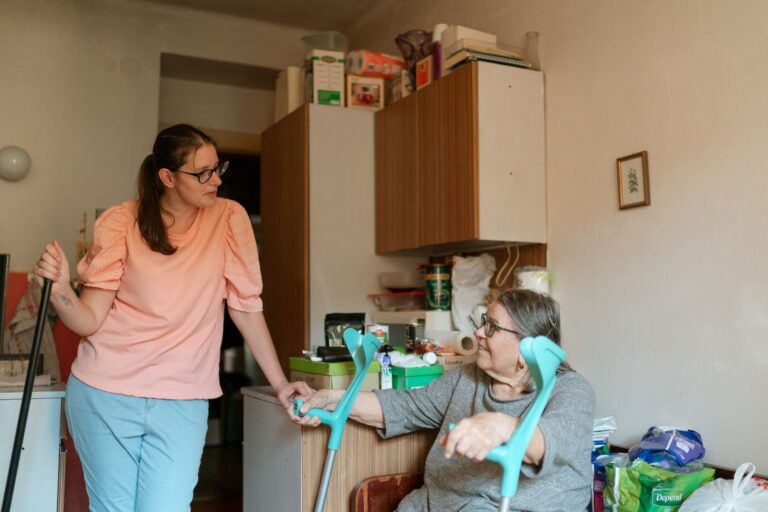
- Do not rely solely on assistive devices. While canes and walkers provide stability, they can actually increase fall risk if patients lack the cognitive resources to manage the device while walking. Proper training from a physical therapist is essential before using any mobility aid.
- Monitor blood pressure changes with position. Ask the doctor to check for orthostatic hypotension by measuring blood pressure lying down, sitting, and standing. A significant drop upon standing indicates a treatable cause of falls.
- Address vision and hearing problems promptly. Sensory impairments compound motor problems and significantly increase fall risk. Annual eye exams and hearing tests should be non-negotiable for Parkinson’s patients.
- Do not exercise alone during high-risk periods. While maintaining independence is important, exercising or walking during medication “off” times without supervision is dangerous. Family members or professional caregivers should be present during vulnerable windows.
- Consider the dual-task problem in daily activities. Avoid carrying items, talking on the phone, or engaging in other attention-demanding tasks while walking. Stop walking to perform any secondary task, then resume movement with full attention.
Conclusion
Michael J. Fox’s public journey with Parkinson’s disease has illuminated both the devastating reality of the condition and the possibility of living meaningfully despite its challenges. His severe falls, openly discussed and never hidden from public view, have educated millions about what Parkinson’s actually does to the body and brain. The falls are not failures of will or carelessness””they represent the inexorable progression of a disease that attacks the very systems responsible for keeping us upright and moving safely through the world.
For patients and caregivers navigating Parkinson’s, understanding fall risk is not about accepting inevitable injury but about taking informed, proactive steps to minimize danger while maintaining quality of life. Medical optimization, physical therapy, home modifications, and psychological support all play roles in this effort. While no strategy eliminates falls entirely, particularly as the disease advances, the combination of vigilance, preparation, and appropriate intervention can extend the period of safe mobility and reduce the severity of falls that do occur. The research funded by Fox’s foundation continues to work toward better treatments and, ultimately, a cure””but in the meantime, practical fall prevention remains one of the most important interventions available.
Frequently Asked Questions
How long does it typically take to see results?
Results vary depending on individual circumstances, but most people begin to see meaningful progress within 4-8 weeks of consistent effort. Patience and persistence are key factors in achieving lasting outcomes.
Is this approach suitable for beginners?
Yes, this approach works well for beginners when implemented gradually. Starting with the fundamentals and building up over time leads to better long-term results than trying to do everything at once.
What are the most common mistakes to avoid?
The most common mistakes include rushing the process, skipping foundational steps, and failing to track progress. Taking a methodical approach and learning from both successes and setbacks leads to better outcomes.
How can I measure my progress effectively?
Set specific, measurable goals at the outset and track relevant metrics regularly. Keep a journal or log to document your journey, and periodically review your progress against your initial objectives.
When should I seek professional help?
Consider consulting a professional if you encounter persistent challenges, need specialized expertise, or want to accelerate your progress. Professional guidance can provide valuable insights and help you avoid costly mistakes.
What resources do you recommend for further learning?
Look for reputable sources in the field, including industry publications, expert blogs, and educational courses. Joining communities of practitioners can also provide valuable peer support and knowledge sharing.
You Might Also Like
- Why Some People Progress From MCI to Alzheimer’s Disease
- Why Some People Progress From MCI to Alzheimer’s Disease
- Why Protein Clearance Fails in Alzheimer’s Disease
For more, see NIH MedlinePlus — dementia.