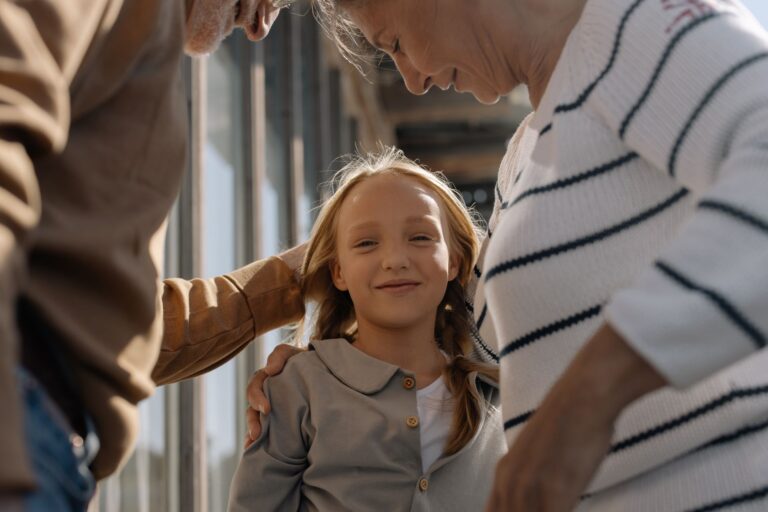
Ever found yourself calling your kid by the dog’s name? Don’t worry, you’re not losing it! Mixing up family members’ names is actually super common and totally normal[1].
Here’s the deal: our brains organize information in networks, kind of like a messy filing cabinet[1]. When we’re trying to grab a name quickly, sometimes we accidentally pull out the wrong one from the same mental folder. That’s why you’re more likely to swap names of people (or pets!) who are in the same category in your mind[1].
It turns out this name mix-up thing is a family-wide epidemic. About half of college students say they’ve been called the wrong name by someone they know well. And guess what? In 95% of those cases, it was a family member doing the name-swapping[1].
But it’s not just parents and grandparents getting names wrong. Even young people do it. The study found that 38% of students admitted to accidentally calling someone by the wrong name, usually a family member[1].
Interestingly, we’re actually better at remembering someone’s job than their name[1]. So if you can recall that your neighbor is a dentist but blank on their name, you’re in good company.
As we get older, we might mix up names more often. That’s because our brains lose a bit of the mental agility that used to keep those verbal slip-ups in check[1].
So next time you cycle through the entire family roster before landing on the right name, just remember: it’s not a sign of how much you care. It’s just your brain’s filing system doing its best to keep up with the conversation. And hey, at least you know you’re part of the family – even if they sometimes call you by the dog’s name!
Why Family members Matters for Families
Understanding family members helps families ask sharper questions at the next memory clinic visit and make calmer decisions at home. Dementia care decisions often hinge on small details that doctors do not have time to explain in a 15-minute appointment. This section adds the practical context most families never hear.
Most family members questions come up after a worrying moment at home: a missed bill, a wrong turn on a familiar drive, a name that does not come back, or a doctor’s report that uses words no one explained. None of those moments alone diagnoses dementia, but together they often signal that a real conversation is overdue.
What Doctors Wish Families Knew About Family members
Memory specialists routinely report that families come in late. Average time from first family-noticed change to diagnosis is roughly 3 years in the United States. That delay matters because today’s most effective steps — vascular risk control, sleep apnea treatment, depression treatment, medication review, and exercise — work best when started early.
Doctors also wish families knew that no single test diagnoses dementia. The diagnosis is built from cognitive testing, history, labs, imaging, and observation over time. A score on a test is one data point, not a verdict.
Common Questions Families Ask About Family members
When should we see a specialist about family members?
When concerns about memory, judgment, language, or behavior have lasted more than a few months and are affecting daily life. Primary care is the right first stop. They will rule out reversible causes and refer to a neurologist or memory clinic if needed.
What should we bring to the first appointment?
A written timeline of symptoms, a complete medication list (including over-the-counter and supplements), a list of medical conditions, and a family member who has observed the changes.
What can we do at home today?
Manage blood pressure, treat sleep apnea, exercise most days, eat a Mediterranean-style diet, stay socially engaged, address hearing loss, and review medications with a pharmacist for cognitively risky drugs.
When to Call the Doctor
Sudden cognitive change, falls, new confusion, fever with confusion, sudden weakness or speech change, or rapid worsening of dementia symptoms over days warrant immediate medical attention. Slow gradual change can be discussed at the next scheduled visit.
For more authoritative guidance on family members and related dementia topics, the National Institute on Aging and the Alzheimer’s Association are reliable starting points.