A person with dementia often cannot work a zipper because the brain can no longer plan, sequence, and guide the small hand movements in the right order. The hands may still move while fine control fails, so the pin misses the slider or the pull stalls. Dementia means ongoing loss of memory, thinking, and daily function from brain disease. A zipper looks simple, but it demands pinch grip, exact alignment, and ordered pulling.
Medical information disclaimer: This article is for general educational purposes only and does not provide medical advice, diagnosis, or treatment. Always consult a physician or other qualified health professional about symptoms, medications, tests, or treatment decisions.
Table of Contents
- What makes a zipper so hard?
- Why does the sequence fall apart?
- Why do clothes get used the wrong way?
- What makes dressing easier now?
- Does zipper trouble alone mean dementia?
What makes a zipper so hard?
A zipper needs a firm pinch, precise pin-to-slider alignment, and a steady pull in sequence. The Alzheimer's Association explains in its dressing tip sheet that loss of fine-motor coordination makes this fail even when the person understands the task.
Measured motor tests support that account. A 2024 study reported by Neurodegenerative Diseases found slower psychomotor speed, weaker dominant-hand grip, and poorer dexterity and feeding-task performance in people with amnestic mild cognitive impairment and Alzheimer's disease than in cognitively normal adults.
Why does the sequence fall apart?
Apraxia means inability to perform a learned purposeful movement without muscle or sensory loss. The University of Nottingham training resource describes in its dementia hospital guide examples such as difficulty dressing or moving a cup to the mouth.
The same Nottingham resource links dressing failure to loss of executive function. Executive function means planning, starting, and maintaining a multi-step activity. Alzheimer's of Central Alabama adds that apraxia disrupts automatic actions such as unbuttoning a shirt, brushing hair, or turning a faucet because the brain can no longer coordinate the steps.
Why do clothes get used the wrong way?
Agnosia means failure to recognize common objects and people. The University of Nottingham training resource lists chairs, food, and toilets as examples.
That recognition loss carries into the closet. A jacket back can look like the front, a fastener can look unfamiliar, and a zipper pull can be held without knowing its use. The result is garments put on backward, fasteners ignored, or zippers tugged from the wrong end.
What makes dressing easier now?
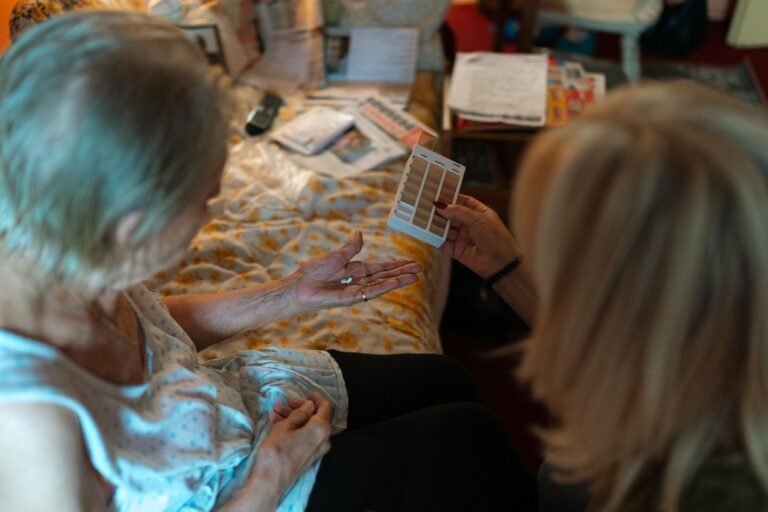
Reduce small-motor demand and choice load. The Dementia Society of Ottawa and Renfrew County recommends in its dressing tips for apraxia laying clothes out in wearing order, simplifying choices, and changing the fastener.
- Lay out clothes in the order they go on.
- Offer one or two simple choices, not a full closet.
- Replace zippers with Velcro, magnetic closures, front fasteners, or elastic waistbands.
- Choose loose, stretchy tops and pull-on pants for fewer small parts.
Does zipper trouble alone mean dementia?
No. Dressing, eating, and grooming problems usually worsen as dementia progresses, especially by the middle stage.
The Alzheimer's Association notes on its middle-stage caregiving page that ability varies by person, stage, and other conditions. Arthritis, stroke, or Parkinson effects can also impair grip and coordination. Swap the zipper for an elastic waist, magnetic shirt, or front-closing Velcro garment and watch whether dressing becomes calmer and safer.