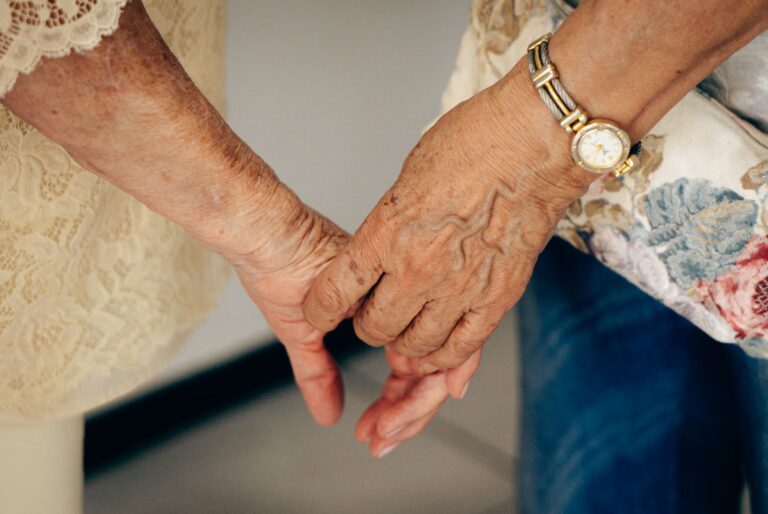
Caregivers should watch for shrinking speech, weaker understanding, new thinking and behavior changes, and later movement or swallowing problems. Aphasia means loss of speaking, understanding, reading, and writing from brain disease. Primary progressive aphasia often starts with word-finding trouble and can progress to loss of all verbal and written communication. In dementia such as Alzheimer's disease or frontotemporal dementia, language decline can accompany cognitive and behavioral changes as disease reaches language areas.
Medical information disclaimer: This article is for general educational purposes only and does not provide medical advice, diagnosis, or treatment. Always consult a physician or other qualified health professional about symptoms, medications, tests, or treatment decisions.
Table of Contents
- How does worsening language look?
- What changes beyond speech matter?
- Which behavior and movement signs need attention?
- How can caregivers respond day to day?
How does worsening language look?
The pattern depends on variant. According to Mayo Clinic, semantic disease impairs single-word meaning and object naming, logopenic disease impairs following long sentences with pauses and repetition difficulty, and nonfluent-agrammatic disease causes omitted function words and disordered grammar in its symptom guide. A person may pause often, repeat phrases, or lose track in long sentences.
Another person may drop small words like is, and, or the, so speech sounds broken. Later speech can become severely restricted. Some people lose usable speech and writing almost completely.
What changes beyond speech matter?
Watch thinking, mood, and daily function. Caregivers should watch for changed thinking, apathy or disinterest, personality change, loss of self-care ability, and need for more supervision. Apathy may look like less interest in meals, visits, or hobbies.
Personality change may show as less warmth, patience, or social tact. Loss of self-care may appear in bathing, dressing, cooking, or handling money. More supervision is needed when safety, hygiene, or household tasks start to fail.
Which behavior and movement signs need attention?
Many people later develop behavioral, social, or motor complications of other frontotemporal disorders. Monitor eating behavior, judgment, empathy, movement, balance, and falls, not only speech. Eating changes may include overeating, sweet cravings, or rushed meals.
Judgment and empathy changes may include impulsive choices or reduced concern for others. In nonfluent-agrammatic disease, motor signs can resemble corticobasal syndrome or other frontotemporal movement disorders. According to the Association for Frontotemporal Degeneration, speech may become severely restricted or mute, with later difficulty swallowing and motor signs in its variant description.
How can caregivers respond day to day?
Use short, calm communication. The National Institute on Aging recommends short one-sentence answers, one-step directions, slow repeats, simple choices, face-to-face quiet setting, visual cues, generous response time, and speech therapy in its management guidance.
There is no cure, and decline moves gradually over years. According to Cleveland Clinic, timing varies by person and variant, so stage lists show typical order rather than exact prognosis in its disease overview.
- Give one short sentence or one step at a time.
- Ask simple choices, such as tea or water.
- Sit face to face in a quiet place, repeat slowly, and allow extra time.
- Use gestures, pictures, labels, and written keywords.
- Request speech therapy to manage language symptoms.