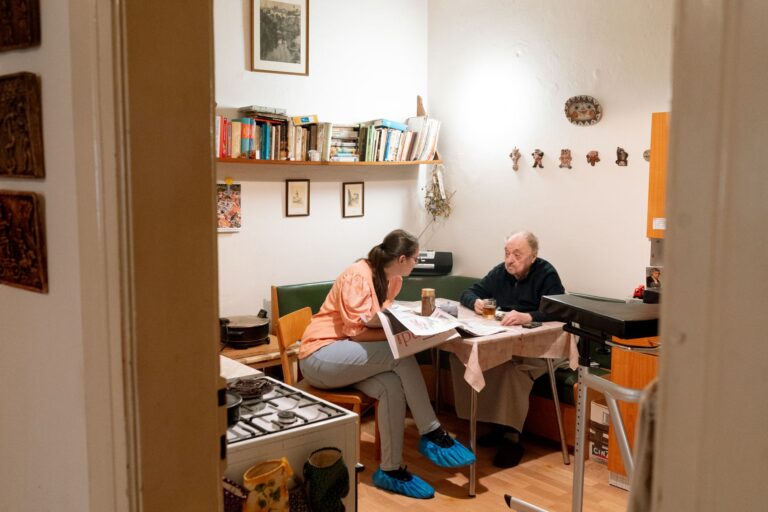
Fantasy novels help reduce agitation in memory care residents when a trusted person reads a preferred, ability-matched passage aloud one-to-one. Agitation means restless, vocal, or aggressive behavior often tied to boredom, loneliness, pain, or confusion.
Memory care means residential care for people with Alzheimer's or related dementia. In that setting, the story works as social contact, focused attention, and pleasant distraction. Fantasy is useful only when the resident enjoys it and can follow it.
Medical information disclaimer: This article is for general educational purposes only and does not provide medical advice, diagnosis, or treatment. Always consult a physician or other qualified health professional about symptoms, medications, tests, or treatment decisions.
Table of Contents
- Why does reading aloud reduce restlessness?
- What does the evidence show for stories and agitation?
- Which fantasy material fits memory care best?
- How do you run a calm ten-minute session?
Why does reading aloud reduce restlessness?
Reading gives the brain one clear voice, one face, and one plot to follow. That focus can replace pacing, calling out, or picking at objects. A calm voice also signals safety and company. Individual attention matters as much as plot.
Sitting close, making eye contact, pausing, and responding to comments turn listening into company. That social contact directly counters loneliness and boredom. Unmet needs still drive many behaviors. Hunger, pain, thirst, noise, fatigue, or a full bladder can keep agitation high during any activity. Check those triggers first, then offer the story as comfort and engagement.
What does the evidence show for stories and agitation?
The U.S. National Library of Medicine / PubMed Central describes one-to-one book reading with late-stage dementia residents that produced very high engagement and appeared to lower agitation, loneliness, and depression. Students read aloud and interacted with each resident as a partner.
Berklee's citation of a 2021 long-term-care trial reports personalized headphone audiobooks decreased agitation on three of four subscales for residents with Alzheimer's or related dementia, similar to personalized music. The key was personal choice across 13 facilities, not one genre for all. The Alzheimer's Association advises non-drug approaches first for dementia-related behaviors, including validation, reminiscence, personalized contact, and pain and trigger checks. A short fantasy reading fits that approach when it matches the person's taste and ability.
Which fantasy material fits memory care best?
Choose familiar over complex. Short scenes with clear good characters, a simple quest, talking animals, a garden, a village, or a return home work better than long battles or many new names. A well-loved author or tale from youth often holds attention longest. Simplify the language before you read. Use a large-print excerpt, short chapter, or abridged tale of five to ten minutes.
Read slowly, show pictures when available, and repeat a favorite line rather than rushing ahead. Match the passage to mood and sense. For evening restlessness, pick a warm hearth, travel, cooking, or starlit-walk scene. For daytime boredom, pick a quest beginning, riddle, map, market, or friendly creature meeting. Stop if the resident looks tense, covers ears, or turns away.
How do you run a calm ten-minute session?
Set up for comfort and focus. Lower TV and hallway noise, offer water and toileting, sit at eye level, and keep the book where the resident can see it. Touch a hand or arm only if welcome.
Watch for early warning signs. Frowning, hand-wringing, louder voice, faster breathing, or trying to leave means pause, offer water, change position, or switch to music or quiet company. Note which scene, time of day, reader, and length helped most.
- Invite, do not test: "Shall I read the forest walk for a few minutes?"
- Read with voice and face: slow pace, warm tone, short pauses.
- Link often: point to a picture, ask one simple choice, "Should they open the blue door?"
- Follow pleasure: continue, repeat, or linger on the part that brings a smile.
- Close gently: name what happened, "They found the garden. We can visit again tomorrow."