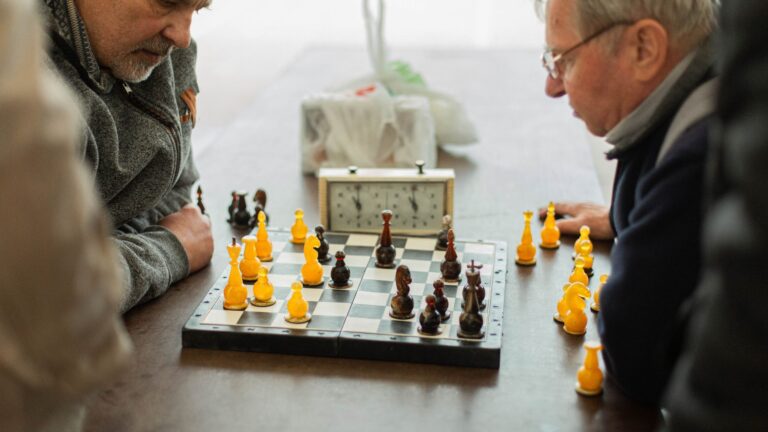
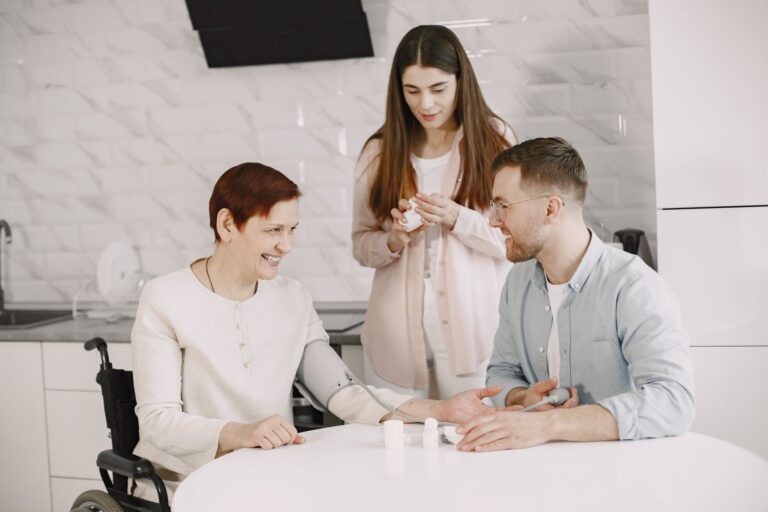
Plan on about 45 minutes for a structured group session, and 10 to 20 minutes for a one-to-one game at home. Those two numbers come from different places: 45 minutes is the format used in formal cognitive stimulation therapy research, while the shorter home figure reflects what attention spans in dementia actually allow. The more important finding is that length matters less than frequency and the person's own tolerance. Twice a week beats once a week in the evidence, and a session that ends when the person is still enjoying it beats one that runs to the clock.
Medical information disclaimer: This article is for general educational purposes only and does not provide medical advice, diagnosis, or treatment. Always consult a physician or other qualified health professional about symptoms, medications, tests, or treatment decisions.
Table of Contents
- Where the 45-minute figure comes from
- Frequency does more work than minutes
- How long at home, one to one
- Let behaviour, not the clock, end the session
- Finding the right length for one person
- What the guidelines do and do not tell you
- Frequently Asked Questions
Where the 45-minute figure comes from
Cognitive stimulation therapy (CST) is a structured group activity programme — themed sessions with games, discussion, word and memory tasks, led by trained staff. The landmark trial by Spector and colleagues, published in the British Journal of Psychiatry in 2003, ran 14 sessions, twice weekly, at 45 minutes each over seven weeks with 201 older people with dementia, and found improvements in cognition and quality of life.
That format stuck. The 2023 Cochrane review of cognitive stimulation for dementia, pooling 37 studies and 2,766 participants with mild or moderate dementia at an average age of 79, describes the typical delivery as trained staff working with a small group "for around 45 minutes twice a week." So 45 minutes is the most-replicated session length in the field. It is a well-tested convention rather than a measured ideal — no trial in that body of work compares session lengths against each other, and as Alzheimer Europe notes in its summary, only 16 of the 37 trials used the original 14-session, 45-minute protocol at all.
Frequency does more work than minutes
Cochrane's review found that offering group sessions twice weekly or more, rather than once a week, produced greater cognitive benefit. That is the clearest dose-related signal in the evidence, and it is about how often, not how long. The spread in everything else is wide.
Across those 37 trials, frequency ranged from one session a week to about five or six, and total sessions from 8 to 520, with most programmes running around 10 weeks and averaging 20 sessions. The practical reading: two short sessions a week are a better use of effort than one long one. If you have 90 minutes of attention and patience available in a week, split it.
How long at home, one to one
Home sessions are a different setting, and the guidance is shorter. The Penn Memory Center's caregiver binder advises choosing "activities that can be done in short bursts" because "people with memory loss often have shorter attention spans and difficulty concentrating," and keeping several alternatives ready for when one stops holding interest.
Digital and game-style cognitive sessions in trials with frail older participants also run shorter than the CST block. One trial in the oldest-old used sessions of approximately 20 minutes — 24 sessions over eight weeks with 69 participants — while comparable trials in cognitively healthier adults used 42 to 60 minutes. A reasonable starting point for a home game session:.
- 10 to 15 minutes for someone with moderate or advanced dementia, or late in the day
- 15 to 25 minutes for someone with mild dementia who still enjoys sustained activity
- Two or three short sessions a day instead of one long one, if the person is willing
- Two alternative games within reach, so a stall does not end the session
Let behaviour, not the clock, end the session
The stopping signal is something you watch for, not something you time. Alzheimer Society guidance states that if a person's attention span is waning or their frustration level is increasing, it is likely time to end or modify the activity.
The National Institute on Aging's material on adapting activities for people with Alzheimer's disease makes the same point as a measurement task: take note of how tired the person gets after a certain amount of time, keep outings from becoming too long, and break activities into small steps with praise for each one. Signs to end or change the game:.
- Looking away, fidgeting, or repeatedly asking what happens next
- Irritation at a rule or a piece they cannot place
- Giving the same wrong answer with rising agitation
- Asking to stop — once is enough
Finding the right length for one person
Treat the first two weeks as calibration. Note the clock time you start, the point where attention visibly shifts, and what was happening at that moment — a hard rule, a long turn, a noisy room. That fatigue point is your real session length, and it is usually shorter than you expect. Then set the session slightly inside it.
Ending while the person is still engaged leaves a good last memory of the game, which makes the next session easier to start. Ending after frustration sets in teaches avoidance. Expect the number to move. It will differ between morning and late afternoon, and it will shorten as dementia progresses. Re-check it every few months rather than treating one measurement as settled.
What the guidelines do and do not tell you
NICE's dementia guideline NG97 tells services to offer group cognitive stimulation therapy to people with mild to moderate dementia. "Offer" is NICE's strong-recommendation wording — a step above "consider." The same guideline advises against cognitive training for people with mild to moderate Alzheimer's disease. The distinction matters when choosing an activity: group cognitive stimulation is themed, sociable and discussion-led, while cognitive training means repeated drills on specific mental skills.
What NG97 does not do is name a minutes-per-session figure. No guideline currently does. That absence is why the 45-minute group block and the shorter home session can both be right at once — the first is a research format worth copying where a service can run it, and the second is what one person's attention will carry.
Frequently Asked Questions
Is a longer session better for cognition?
Nothing in the evidence says so. Cochrane found an advantage for running sessions twice weekly or more rather than once weekly, but no trial compares one session length against another.
Can several short games add up to a 45-minute session?
For home use, yes — short bursts with breaks are the approach Penn Memory Center's caregiver guidance recommends. The unbroken 45-minute block belongs to the staff-led group format, not a one-to-one game at the kitchen table.
What if the person wants to keep playing past the time I planned?
Keep going while engagement holds. The time you set is a guard against frustration, not a cap on enjoyment — the thing to watch is attention and mood, which is also what Alzheimer Society guidance names as the cue to stop.