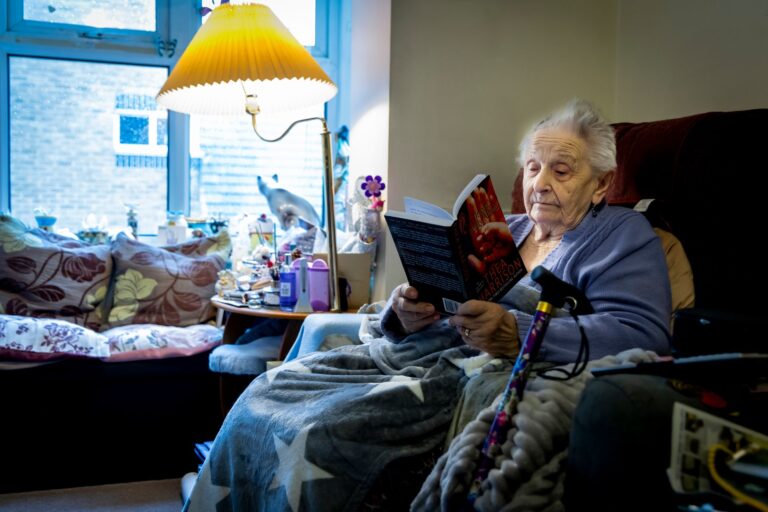
Caregivers read aloud familiar scripture, well-known hymns, short prayers, loved poems, and short faith-centered stories such as "Whispers of Faith: Read-Aloud Stories for Loved Ones Living With Dementia." Lewy body dementia is a progressive brain disease that affects thinking, movement, sleep, and behavior. The Lewy Body Dementia Association describes it as incurable, so families focus on the highest possible quality of life palliative and hospice guidance. Spiritual reading works best when it is short, familiar, and shared. The person hears a calm voice, follows known words, and joins in when able.
Medical information disclaimer: This article is for general educational purposes only and does not provide medical advice, diagnosis, or treatment. Always consult a physician or other qualified health professional about symptoms, medications, tests, or treatment decisions.
Table of Contents
- Which books work best for read-aloud time?
- How do you keep the session familiar and calm?
- Where does spiritual reading fit in daily care?
- How do you adjust as needs change?
Which books work best for read-aloud time?
Start with the person's own tradition. Familiar scripture passages, Bible verses, prayer books, hymnals, and poetry collections often bring recognition faster than new material. The National Institute on Aging advises caregivers to read poems or a book together and to read stories out loud activities families can do.
Short story collections written for dementia care can help on tired days. "Whispers of Faith" offers brief, comforting faith-centered stories made to be read aloud, each with a short prayer to say together for calm and shared faith. Keep one or two favorites ready for repeat use.
How do you keep the session familiar and calm?
Choose words the person has known for years. An Alzheimer's Association handout recommends familiar scripture passages and verses from the person's tradition and playing or singing familiar old hymns to connect with their spirit dementia and spirituality handout. Use the same simple routine each time:.
- Sit close, reduce noise, and hold the book where the person can see it.
- Read slowly in a warm voice and pause between lines.
- Invite joining in, but accept quiet listening.
- Sing or play one known hymn or prayer response after the reading.
Where does spiritual reading fit in daily care?
Pair faith with another pleasant activity. A morning verse, an afternoon poem, or an evening prayer can anchor the day without adding a new task. Worship habits the person has known well, such as prayer, blessing, or Sabbath reading, can continue in shorter form.
This pairing matches common care plans. The palliative-care team includes relief of troubling symptoms, help with medical decisions, emotional and spiritual support, and care coordination. Hospice programs also assess spiritual needs and offer counseling consistent with patient and family beliefs.
How do you adjust as needs change?
A 2024 Reading Buddies study found that reading books with late-stage dementia residents produced very high engagement and appeared to reduce negative symptoms 2024 Reading Buddies report. Short sessions still matter most in Lewy body dementia because attention, alertness, and movement can shift quickly. Watch the person, not the clock.
Keep readings brief, familiar, and focused on enjoyment. Offer a hand, a familiar blanket, or a pause between pages. Stop if the person shows distress or fatigue, and try again later with a shorter passage.