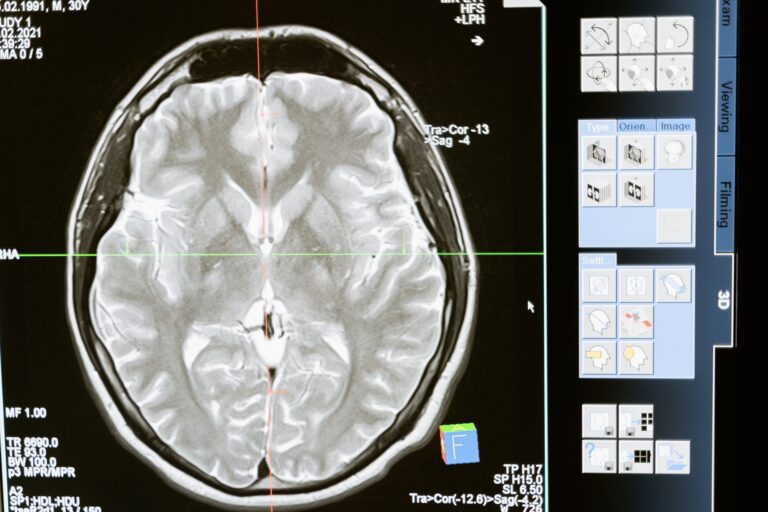
No, a brain MRI alone cannot rule out Alzheimer's or other dementias. A clear scan lowers the odds of some structural causes but leaves Alzheimer's and many other dementias still possible.
Dementia means a decline in memory, thinking, and daily function from brain disease or injury. Alzheimer's disease is the most common cause, marked by memory loss and buildup of amyloid plaques and tau tangles. Physicians combine history, neurological and cognitive exams, brain imaging, and spinal-fluid or blood tests to diagnose it, according to Alzheimer's Association medical tests guidance.
Medical information disclaimer: This article is for general educational purposes only and does not provide medical advice, diagnosis, or treatment. Always consult a physician or other qualified health professional about symptoms, medications, tests, or treatment decisions.
Table of Contents
- What a brain MRI looks for
- Why a normal MRI does not clear you
- How doctors diagnose the cause
- What to do after a "normal" scan
What a brain MRI looks for
Doctors often order MRI when memory or thinking slips. The main job is to rule out structural mimics that need different care. These include brain tumor, stroke or infarction, bleeding under the dura, and fluid buildup in the brain.
That triage role matters because some mimics respond to surgery, stroke care, or other targeted treatment. MRI also helps spot normal-pressure hydrocephalus, where enlarged fluid spaces press on the brain. That condition is often mistaken for Alzheimer's or Parkinson's disease, yet it can improve with proper care.
Why a normal MRI does not clear you
Standard MRI shows brain shape, fluid, blood, and large areas of damage. It cannot show the microscopic amyloid plaques and tau tangles that define Alzheimer's disease. So early Alzheimer's can hide behind a normal-appearing scan.
MRI can support assessment by showing shrinkage in memory centers and cortex. Common patterns include hippocampal and medial-temporal atrophy. Those patterns are nonspecific, though, and cannot alone separate one dementia type from another, according to RadiologyInfo's dementia imaging page.
How doctors diagnose the cause
Alzheimer's care starts with symptoms and a careful exam. Doctors then rule out other causes with medical, neurological, blood, and imaging exams.
Imaging may include CT, MRI, or PET/CT. Useful clues include:.
- symptom history from patient and family, with onset and daily impact
- brief cognitive tests of memory, language, planning, and attention
- blood work for thyroid, vitamin, infection, and metabolic causes
- amyloid or tau PET, spinal-fluid tests, or blood biomarkers when needed
What to do after a "normal" scan
Keep following up if memory, language, judgment, or daily tasks keep slipping. A normal MRI is one result, not a final answer.
Persistent symptoms need cognitive testing plus biomarker checks for amyloid and tau. The National Institute on Aging notes that management depends on the underlying cause, as explained in the National Institute on Aging's diagnosis guide. Bring a dated list of symptoms, drugs, sleep changes, falls, and family observations to the next visit, and ask whether PET, spinal-fluid, or blood biomarker testing fits your case.