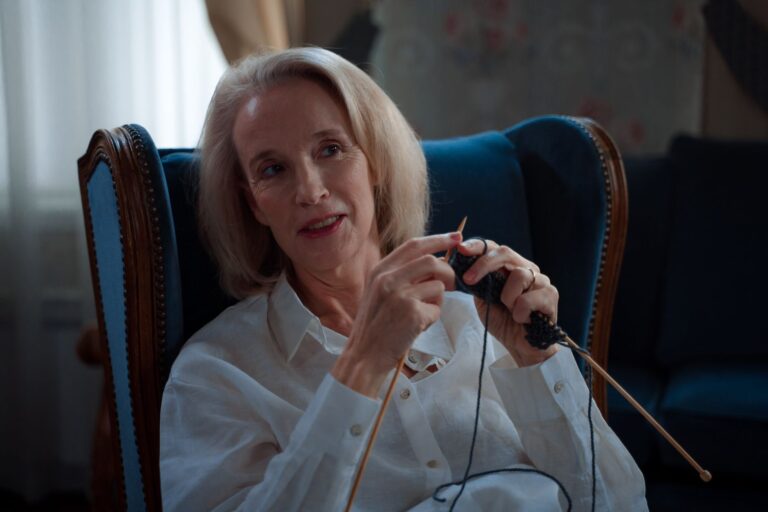
Simple knitting for dementia home care means you set up the needles and your loved one works short, easy rows. You cast on first, place the starting loops, then hand over about 20 stitches in plain knit, the basic loop stitch. The goal is familiar enjoyment, not a finished project. The soothing rhythm and sense of accomplishment matter more than even stitches.
Medical information disclaimer: This article is for general educational purposes only and does not provide medical advice, diagnosis, or treatment. Always consult a physician or other qualified health professional about symptoms, medications, tests, or treatment decisions.
Table of Contents
- Why does this craft fit home care?
- What materials make it easier?
- How do you run a short session?
- What helps restless or anxious hands?
- When should you simplify or stop?
Why does this craft fit home care?
Knitting uses one simple repeated motion that the hands can remember. That motion draws on procedural memory, the memory for learned skills, plus motor control, rhythm, and pattern recognition. The Journal of Neuropsychiatry and Clinical Neurosciences published a 2011 Mayo Clinic population study of 1,321 adults ages 70-89 that linked craft activities such as knitting and quilting with lower odds of mild cognitive impairment, a precursor to dementia, in its study record.
The link was observational, not proof of prevention. Israel's Ministry of Health advises offering a meaningful repetitive activity such as knitting, art, singing, or conversation when boredom drives repetitive behavior, described in its guidance for behavior issues in severe dementia. A familiar hand skill can fill restless time with occupation.
What materials make it easier?
Choose large-gauge needles or hooks with thick, bright, easy-to-handle yarn. Big tools are easier to grip, bright yarn is easier to see, and thick yarn shows progress fast.
DailyCaring recommends large-gauge needles with thick, bright yarn and treating tangled output as normal in its hands-busy suggestions for Alzheimer's care. Uneven stitches, dropped loops, and tangles are expected. A simple chunky scarf is a good fit because it supports hand-eye coordination, occupation, anxiety reduction, and reminiscence of younger-life skills.
How do you run a short session?
Start with one stitch, not a full project. Sit beside your loved one, keep the time short, and let enjoyment lead.
Keep your voice calm and your pace unhurried. Praise the doing, not the product.
- Cast on, then knit a few starter rows yourself.
- Offer about 20 stitches in plain knit for the person to continue.
- Demonstrate one slow stitch, then guide hand-over-hand only if welcomed.
- Stop while it still feels pleasant, even after a few minutes.
What helps restless or anxious hands?
Some days active knitting feels like too much. Knitted sensory tools such as twiddle muffs and the Snuggle Bear fiddle toy give restless hands occupation and help people feel calmer and less anxious. Keep one within reach during sitting time, television time, or visits.
The texture gives fingers work without rules or counting. If words repeat or pacing starts, redirect gently to the muff, a short row, singing, art, or conversation. Familiar touch and rhythm often settle the moment faster than correction.
When should you simplify or stop?
Frustration is the signal to change course. Simplify the task, shorten the row, switch to holding soft yarn, or pause for the day.
Hovi Care notes knitting does not reverse Alzheimer's progression and observational links do not prove prevention in its memory-and-knitting explainer. Supervise needles for safety and store them out of reach between sessions.