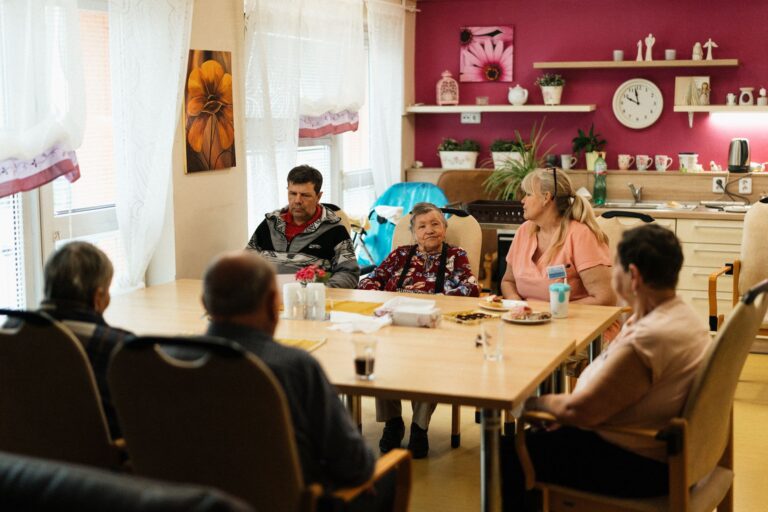
Word-finding trouble often spikes in respite care from fatigue, rushing, noise, and unfamiliar staff, and eases with slow, simple, patient responses. Anomia, difficulty retrieving familiar words, explains why a person may describe an object instead of naming it. Respite care gives family caregivers temporary rest while the person with dementia continues to receive care in a safe setting. Change alone can unsettle language, so steady habits matter more during short stays.
Medical information disclaimer: This article is for general educational purposes only and does not provide medical advice, diagnosis, or treatment. Always consult a physician or other qualified health professional about symptoms, medications, tests, or treatment decisions.
Table of Contents
- Why words go missing
- Which triggers make it worse?
- What helps in the moment?
- When to seek prompt care and coaching
Why words go missing
People with Alzheimer's often lose their train of thought and describe objects instead of naming them. According to the U.S. National Institute on Aging, long conversations become hard to follow for the same reason NIA advice on communication changes.
The National Institute on Deafness and Other Communication Disorders calls this language disorder aphasia, with anomia as its hallmark. In dementia the word feels close but will not come out on demand. The Alzheimer's Association describes respite as temporary rest that sustains caregiving capacity while offering social engagement. That break works best when language support stays consistent across caregivers.
Which triggers make it worse?
The Leeds Community Healthcare NHS Trust lists fatigue, stress, distraction, rushing, background noise, complex sentences, and unfamiliar routines as common triggers dementia communication support strategies. New respite staff can add to that load.
A loud dayroom makes it harder to hold a thought. A rushed intake question can shut speech down. A new face asking long questions can feel like pressure to perform.
- Turn off TV or radio before talking.
- Ask one short question, then pause.
- Keep the same staff member for talk-heavy tasks when possible.
What helps in the moment?
The U.S. National Institute on Aging and Leeds Community Healthcare NHS Trust recommend getting attention first with eye contact and the person's name. Then use short, simple sentences, one idea at a time, at their pace.
Allow extra time for a reply without repeating louder. When a word sticks, offer a first sound, a meaning hint like you drink from it, or a careful guess. As speech-language pathologist Vicky Fukuhara explains in Being Patient, a picture, object, gesture, drawing, or written keyword often works better than finishing the sentence advice on speech impairment in dementia.
When to seek prompt care and coaching
Occasional lapses also happen with normal aging, poor sleep, anxiety, and some medications, note Connected Speech Pathology and Amada Senior Care. Sudden trouble needs prompt medical review because stroke, infection, or head injury can cause sudden aphasia. Speech-language pathologists teach alternate communication methods and coach caregivers, reports Being Patient citing Vicky Fukuhara.
That support cuts frustration, breakdowns, behavioral symptoms, and safety risks as dementia progresses. Share successful cues with every respite worker before the stay starts. Leave a one-page sheet with the preferred name, key words, yes-no options, and calming steps.