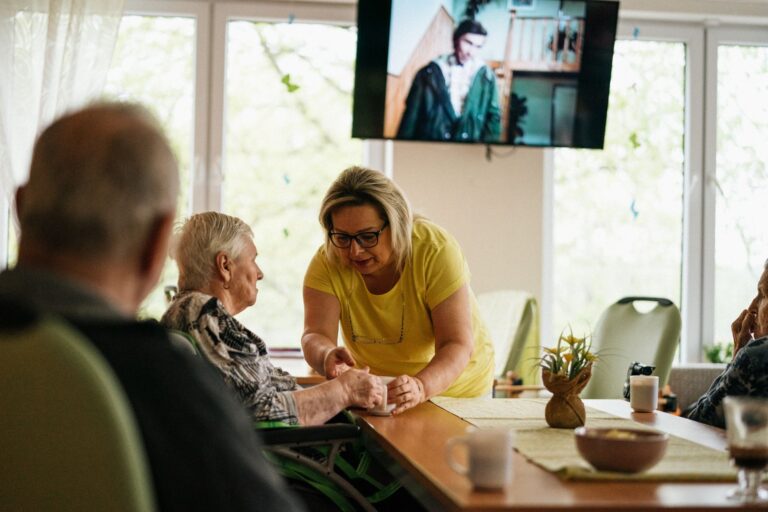
The 2026 National Institute on Aging dementia care priorities call for research on economic and quality-of-life effects, scalable community programs, better data, equitable diagnosis and treatment, and helping people remain at home. Adult day services, licensed daytime programs that supervise, feed, engage, and monitor older adults while caregivers work, sit squarely inside those priorities for employed dementia caregivers.
The work connection is direct. According to the Alzheimer's Association, 60% of caregivers of people with Alzheimer's or another dementia were employed in the past year, cited in the Association's November 2025 caregiver awareness report. When daytime coverage is unreliable or unaffordable, work hours, income, and job retention suffer.
Medical information disclaimer: This article is for general educational purposes only and does not provide medical advice, diagnosis, or treatment. Always consult a physician or other qualified health professional about symptoms, medications, tests, or treatment decisions.
Table of Contents
- Why the NIA put economics and staying home first
- What adult day changes on a workday
- The missing piece is embedded caregiver support
- What to verify before counting on a center
- Frequently Asked Questions
Why the NIA put economics and staying home first
The August 13, 2026 summary of the March 17-19 virtual Dementia Care and Caregiving Summit prioritized economic and quality-of-life impacts alongside scalable community interventions and data infrastructure, as reported in the ARCH News summary citing NIA. It also emphasized equitable diagnosis and treatment and remaining at home. Those themes point to daytime care as practical infrastructure, not just respite.
The cost pressure is large. A USC-led study summarized in June 2026 estimates Alzheimer's and related dementias will cost the United States about $818 billion this year, with about 5.2 million people in prime working years providing 6.8 billion unpaid hours valued at $237 billion. Reliable daytime coverage protects both household budgets and continued employment.
What adult day changes on a workday
On days their relative attends adult day, caregivers report fewer care stressors, more positive experiences, lower anger, and less spillover of other stress into depressive symptoms, according to genusConnect's review of day-center research. That pattern preserves focus, stamina, and patience during work hours. A calmer evening can also mean better sleep before the next shift.
Added caregiver support inside the center can extend the benefit. In the NIA-funded ADS Plus cluster trial across 34 adult day sites with 203 caregivers, ADS Plus versus adult day alone reduced total depression scores at 12 months and increased attendance 60.6%, as reported by University of Minnesota Experts summarizing The Gerontologist. Higher attendance means more predictable coverage for work schedules.
The missing piece is embedded caregiver support
Day centers often provide activities, meals, and supervision for participants. Structured help for the caregiver is less consistently built in. Researchers state there is currently a lack of research on embedding caregiver interventions into home and community services such as adult day services, according to the Journal of Alzheimer's Disease article in PMC.
That gap matches the NIA call for scalable community interventions. A coaching, counseling, or skills program that works in a clinic may fail if no one tests it inside busy day centers. Working caregivers need models that fit drop-off hours, staffing ratios, and short check-ins.
What to verify before counting on a center
Daytime reliability depends on staffing. CDC's July 29, 2025 National Health Statistics Report No. 217 compares aides in adult day services centers and residential care on staffing levels, hours with participants, training, and benefits, described in the CDC NCHS report record.
Ask how those factors play out at your site. One research limit matters for families. Most adult day center research measures caregiver or payer outcomes like burden and cost-effectiveness, while voices of people living with dementia remain significantly underrepresented, according to the 2025 BMC Health Services Research review. Visit with your relative when possible and watch comfort, engagement, and staff tone.
- Ask about consistent aide assignment, backup coverage, sick-day policy, and late-pickup rules.
- Ask about intake assessment, dementia training, medication handling, and communication during the day.
- Ask about total cost, billing increments, attendance minimums, and time needed to start.
- Ask whether caregiver coaching, support groups, referrals, or care planning are included.
Frequently Asked Questions
Are adult day services mainly for social activities?
They provide supervision, meals, activities, and monitoring during the day. Some centers add caregiver support, health checks, or referrals, so ask what is included.
How can working caregivers judge reliability?
Ask about staffing consistency, backup plans, training, communication, costs, attendance rules, and start time. Match the answers to your work schedule before enrolling.
Why does research mention missing voices?
Many studies track caregiver burden or costs more than participant experience. A visit helps show whether your relative feels comfortable, respected, and engaged.
You Might Also Like
- Community-Academic Dementia Partnerships in the 2026 NIA Report: Service Gaps That Matter to Working Dementia Caregivers
- Serious Illness and End-of-Life Dementia Research Priorities in 2026: What Adult Children Can Check in Their Community
- Home-Based Dementia Care Research Priorities in 2026: Cost and Access Questions for Long-Distance Caregivers