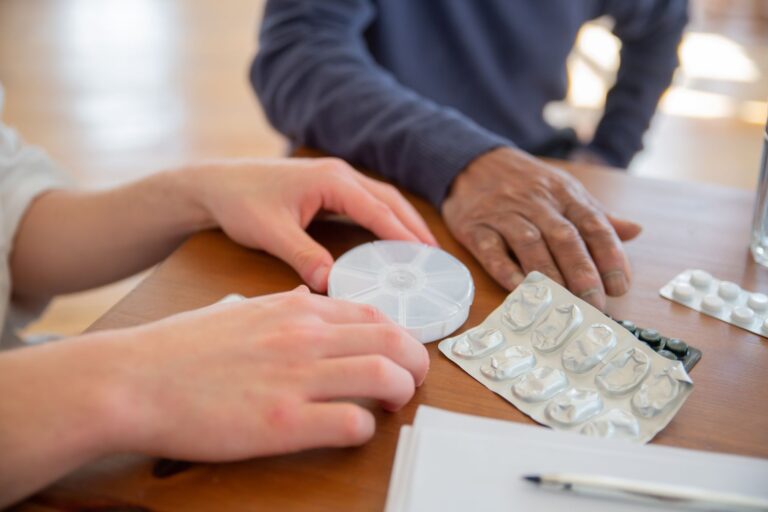
Swallowing problems, or dysphagia, can begin in early-stage dementia and call for prompt changes to the eating space and care plan. Early action supports safer meals, steady weight, and calmer mealtimes. A PubMed-indexed study record found dysphagia in 30 of 40 Alzheimer's patients, with abnormal features already present in early-stage disease electrophysiological swallowing study record. A memory-clinic study reported by Frontiers in Neurology found 86 of 158 older adults with mild impairment or dementia at risk memory-clinic barium-swallow study.
Medical information disclaimer: This article is for general educational purposes only and does not provide medical advice, diagnosis, or treatment. Always consult a physician or other qualified health professional about symptoms, medications, tests, or treatment decisions.
Table of Contents
- How common are early changes?
- How should the eating space change?
- What food changes help early on?
- How do you track nutrition and get help?
- Do thickened drinks solve the problem?
How common are early changes?
Swallowing difficulty is not only a late-stage issue. The memory-clinic study found oral-phase and regurgitation-protection deficits on barium-swallow fluoroscopy even in mild impairment. That means coughing, pocketing food, or slow chewing deserve attention before weight falls.
Early change can be subtle. A person may take longer to start a swallow, need extra swallows per bite, or avoid hard foods. Track what happens, when it happens, and which foods trigger it. Share that record with the doctor, especially after frequent choking.
How should the eating space change?
A calm, supportive space improves intake. Frimley Health NHS Foundation Trust advises enough space, TV off, fewer distractions, good lighting, and colourful food Food First eating and drinking guidance. Make eating social so the person can copy others.
Use these steps at each meal: Keep utensils, cups, and napkins within easy reach. Offer one course at a time to reduce visual clutter. Stay nearby without rushing.
- allow unhurried time and a stable chair and table setup
- turn off the TV and lower background noise
- use good lighting and colourful food for contrast
- sit together and eat together when possible
What food changes help early on?
Match texture to ability. The Alzheimer's Association advises easy-to-chew and easy-to-swallow foods when choking and weight loss appear in middle and late stages. The U.S. Dept.
of Veterans Affairs notes dementia medicines, including antipsychotics, can cause dry mouth and swallowing difficulty. Practical shifts include cutting food small, switching to softer or pureed foods, and offering finger foods or bite-size pieces. For late-stage difficulty, the Alzheimer's Association advises soft chewable foods and thickening water, juice, milk, and soup with cornstarch or unflavored gelatin. Alert the doctor about frequent choking or new cough with meals.
How do you track nutrition and get help?
Weigh regularly and watch meals, energy, and chest infections. NICE nutrition guidance calls for malnutrition screening on care-home admission and when there is clinical concern, using BMI and percentage unintentional weight loss, for example with the MUST tool. Families can use the same logic at home: note appetite loss, looser clothes, and repeated leftovers.
Ask the primary-care doctor for referral to speech therapy, dietetics, dentistry, or pharmacy review. Bring the medicine list, because dry mouth and swallowing difficulty can link to prescriptions. Ask whether dentures fit, saliva is low, or posture needs support.
Do thickened drinks solve the problem?
Thickening is sometimes advised, but it is not a full safeguard alone. Reporting on a JAMA Internal Medicine study found thickened liquids did not reduce mortality or respiratory complications such as pneumonia, aspiration, or choking versus thin liquids in dementia-related dysphagia JAMA Internal Medicine study reporting. Do not rely on thickness while missing other risks.
Use thickening only when a clinician advises it for that person. Continue safer bites, upright posture, distraction-free meals, mouth care, and prompt follow-up for cough, fever, or weight loss. If drinking drops because the person dislikes the texture, tell the care team quickly.