Caregiver communication for word-finding trouble in late-stage dementia means using short, simple speech, patient pauses, and nonverbal support to keep connection. Word-finding trouble means a person knows what they mean but cannot produce the word. Late-stage dementia often brings few words, long delays, or silence. The goal shifts from correct sentences to comfort, recognition, and calm interaction.
Medical information disclaimer: This article is for general educational purposes only and does not provide medical advice, diagnosis, or treatment. Always consult a physician or other qualified health professional about symptoms, medications, tests, or treatment decisions.
Table of Contents
- Get attention before you speak
- What should you say when a word goes missing?
- How can gestures and setting help?
- What if speech is almost gone?
Get attention before you speak
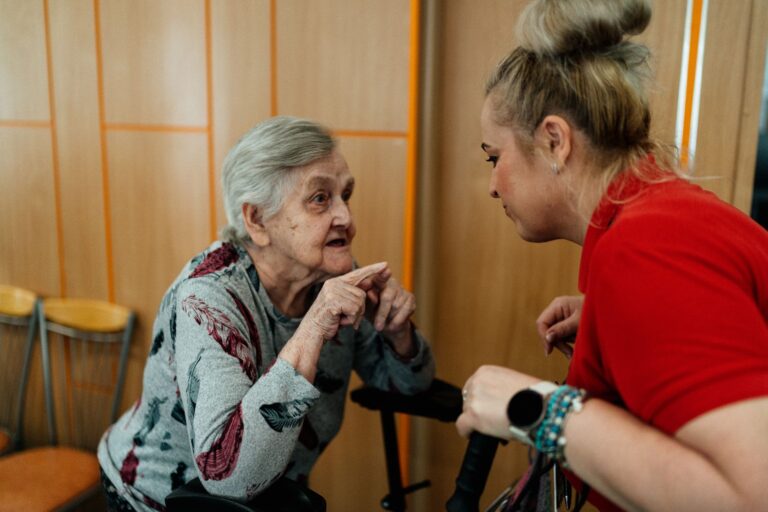
Approach from the front so the person sees you coming. Say your name and their name, make eye contact, and smile. This avoids startling and helps focus, according to NHS 111 Wales in its dementia communication guidance. Keep your tone warm and calm.
Speak slowly and clearly. Avoid rushing the person toward an answer. Talk one-on-one in a quiet place. Turn off television or background chatter first. Tension and tone are felt longer than words.
What should you say when a word goes missing?
Use one idea at a time in a short sentence. Ask only one yes-or-no question at a time, such as "Would you like coffee?" This approach is recommended by NHS England in its living with dementia relationships guide.
If the person uses the wrong word, you can gently offer a guess. If the meaning is clear, you do not need to supply the right word or force recall, according to the Alzheimer's Association in its middle-stage caregiving guidance.
- Allow extra time for a delayed answer.
- Do not argue, correct, quiz, or rush.
- Acknowledge what was said, even if off-topic.
How can gestures and setting help?
Pair speech with gestures, facial expression, and pointing. Show the object, picture, cue card, or written word. Watch body language to check understanding. Keep choices concrete and visible. Hold up a cup while asking about coffee.
Point to a sweater while asking about warmth. Small supports reduce pressure to find words. Reduce competing noise before important care tasks. Sit close, at eye level, in good light. A calm, unhurried manner invites a response.
What if speech is almost gone?
Stay present even when words are few or absent. Use gentle touch when welcome, familiar music, familiar scents, reading, or shared memories. Focus on the feeling behind sounds or expressions.
Do not press for factual accuracy. Dementia weakens information processing, so answers may come late or not at all. Prioritize comfort, validation, and feelings over finishing the sentence.