Simple knitting for early-stage dementia means keeping a familiar craft going in a much easier form. Early-stage dementia describes early decline when a person can still take part with support, and plain knitting fits that window. Start with a small plain piece, big tools, and short rows knit for pleasure. The benefit is calm engagement in the moment, not prevention or treatment.
Medical information disclaimer: This article is for general educational purposes only and does not provide medical advice, diagnosis, or treatment. Always consult a physician or other qualified health professional about symptoms, medications, tests, or treatment decisions.
Table of Contents
- What does the research show?
- Which simple project works best?
- How do you set up for success?
- How do you guide and keep it safe?
What does the research show?
In the Mayo Clinic Study of Aging, 1,929 cognitively normal adults age 70 and older were followed for about four years. Those who did crafts had 28% lower risk of new mild cognitive impairment, according to MedicalXpress coverage of the Mayo Clinic study. An international survey of 3,545 knitters also linked more frequent knitting with feeling calm and happy, plus relaxation, stress relief, and creativity, according to the Craft Yarn Council summary of Riley and colleagues.
That survey team noted the link is observational, not proof against dementia. Avid respondents were mostly white women who already liked knitting. Lower risk in one study does not equal treatment for dementia.
Which simple project works best?
For early-stage dementia, simplify old knitting rather than dropping it. Brain Support Network, summarizing a UCSF Lewy-body-dementia webinar, suggests a plain potholder or block colour with bigger needles and short plain-knit rows, described in the Brain Support Network webinar notes. Pick garter stitch only, one colour, and a small width.
DailyCaring advises large-gauge needles or hooks with thick, bright, easy-to-handle yarn to calm restless hands. Good starters include a six-inch square, a short scarf strip, or a simple potholder. Stop while it still feels pleasant.
How do you set up for success?
Use the person's familiar needles and yarn when possible. Keeping Busy recommends casting on plus knitting starter rows beforehand, then letting the person knit short rows for pleasure.
Familiar tools reduce confusion and false starts. A ready edge lets the hands begin at once.
- Cast on 12 to 20 stitches yourself.
- Knit two starter rows so the edge holds.
- Offer thick, smooth yarn in a bright colour.
- Seat the person upright with elbows supported.
- Keep the first try under fifteen minutes.
How do you guide and keep it safe?
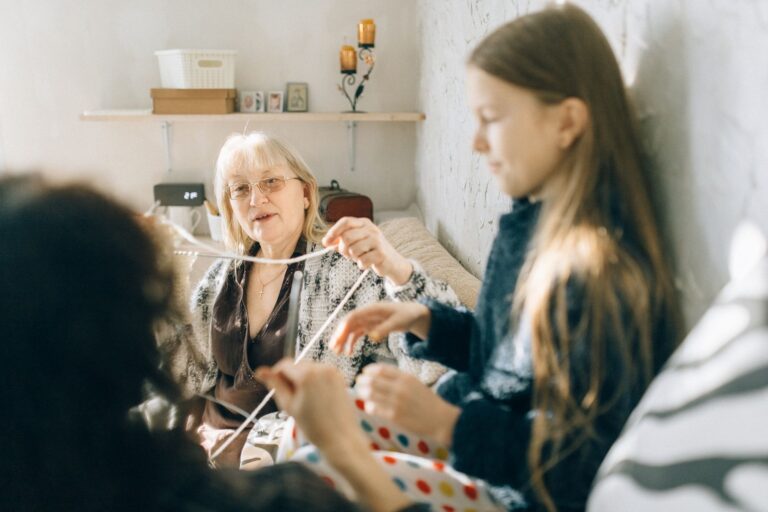
Present one step at a time, repeat patiently, and praise effort. One Caregiver's Journey recommends focusing on process rather than a perfect product, with needle-free finger knitting for fast results, explained in the One Caregiver's Journey dementia crafts guide. Sit beside the person and show each motion slowly.
Let uneven stitches stay, and unravel quietly later if needed. Use washable non-toxic yarn, avoid small chokeable parts and sharp tools, and choose safe seating. Stay nearby, remove clutter from reach, and end with the work placed where it can be found next time.