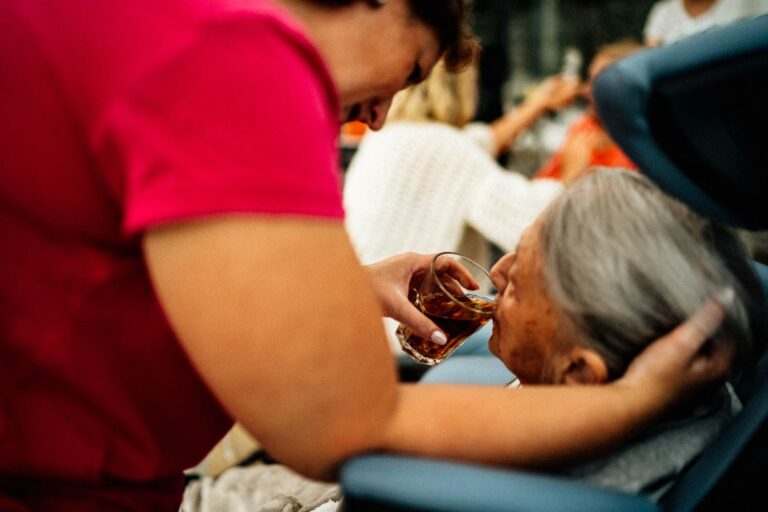
Ask a dementia specialist for a swallow evaluation referral, safe textures and pacing, oral and medication review, and guidance on hand feeding versus tube feeding. Bring notes on coughing, slow eating, and food left in the mouth. Food pocketing means holding chewed food in the cheeks, under the tongue, or in the mouth without swallowing. It reflects trouble forming or managing a food ball and signals swallowing difficulty of the mouth and throat, according to HealthHub Singapore in its dysphagia guide.
Medical information disclaimer: This article is for general educational purposes only and does not provide medical advice, diagnosis, or treatment. Always consult a physician or other qualified health professional about symptoms, medications, tests, or treatment decisions.
Table of Contents
- Why does pocketing happen in dementia?
- Should we request a swallow evaluation?
- What mealtime changes fit this person?
- Could mouth, teeth, or medicines play a role?
- What are the limits of texture changes and tube feeding?
Why does pocketing happen in dementia?
In middle-to-late dementia, brain signals and mouth-throat muscle coordination decline. Chewing and swallowing take more effort and control.
Pocketing, coughing, choking, and very slow eating become more common. Watch for cheeks that stay full, repeated chewing without a swallow, or food found later.
Should we request a swallow evaluation?
Ask for referral to a speech-language pathologist working with a physician for a swallow evaluation. The National Institute on Deafness and Other Communication Disorders describes this team approach in its dysphagia overview. Ask what the exam will involve.
It may use video X-ray swallow study or a scope exam of the throat. Ask how results will shape diet, posture, and exercises. Bring a list of coughing episodes, chest infections, weight loss, and feared foods.
What mealtime changes fit this person?
Ask what textures, bite sizes, pacing, and supervision fit the person. Ask about sitting fully upright with the head slightly forward during meals.
Use small bites and allow extra time. Stay nearby, offer one bite at a time, and check the mouth after meals to confirm food was swallowed.
- small, soft bites and slow pace
- upright seat with head slightly forward
- close supervision through the meal
- mouth check after eating
Could mouth, teeth, or medicines play a role?
Ask about oral care, dental pain, and denture fit. Ask whether any medicine causes dry mouth or sleepiness at meals. Poor oral hygiene leaves bacteria that raise pneumonia risk.
Brush teeth after each meal and report sore gums, bad breath, or loose dentures. Pocketed or misdirected food can enter the airway and cause choking. The National Institute on Aging warns that food or liquid in the lungs can cause pneumonia that can lead to death, in its guide to late-stage Alzheimer's care.
What are the limits of texture changes and tube feeding?
Ask what modified textures and thickened liquids can and cannot do. Reviews report no convincing evidence they prevent pneumonia or death, with added dehydration and consent concerns, according to a 2025 survey of speech-language pathologists in this research review.
For advanced dementia with eating difficulty, ask about careful hand feeding over a feeding tube. The American Geriatrics Society finds tubes do not improve survival, prevent aspiration pneumonia, or improve comfort. Ask how staff will keep hand feeding safe, calm, and respectful when appetite fades.