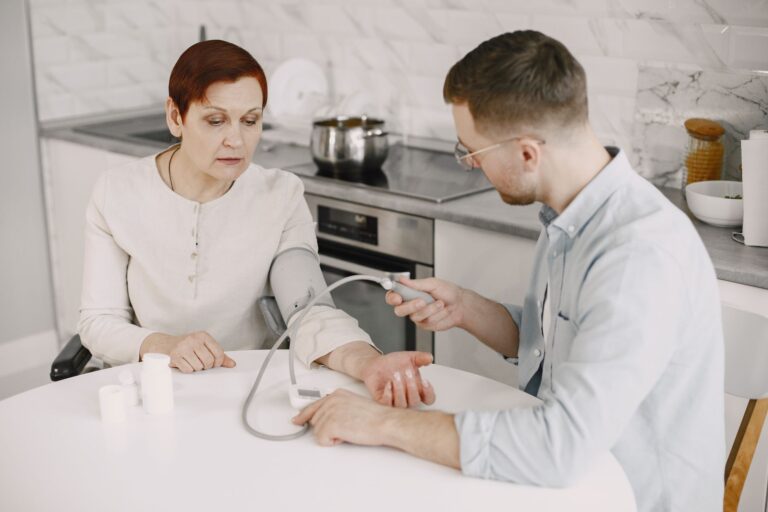
The most common caregiver mistakes with sundowning in middle-stage dementia are letting the person get overtired, allowing late naps and late-day caffeine, filling the evening with noise and activity, treating every episode as purely behavioral when a medical problem is driving it, and reaching for sleep medication before non-drug changes have been tried properly. Sundowning is the restlessness, agitation, irritability or confusion that begins or worsens as daylight fades, and the National Institute on Aging notes in its sundowning guidance that fatigue makes these symptoms worse — so a tiring afternoon is already building the episode.
None of these mistakes look like mistakes in the moment. They look like a normal day: a bath scheduled when there was time, the television on for company, a nap at four because the person was exhausted, an antihistamine because nobody had slept in a week. The fixes below are mostly changes to the shape of the afternoon, and they have to survive years, because the middle stage usually lasts the longest.
Medical information disclaimer: This article is for general educational purposes only and does not provide medical advice, diagnosis, or treatment. Always consult a physician or other qualified health professional about symptoms, medications, tests, or treatment decisions.
Table of Contents
- The errors built into the afternoon
- Assuming it is the dementia when it is a treatable illness
- Over-the-counter sleep aids and the medication order of operations
- Expecting the standard fixes to be more reliable than they are
- Building an evening plan that cannot last years
- Frequently Asked Questions
The errors built into the afternoon
By the time agitation starts at five o'clock, most of its inputs are already set. The National Institute on Aging advises caregivers to limit late naps, avoid alcohol and caffeinated drinks such as coffee or cola later in the day, and keep the evening quiet with lights low and noise reduced. Each of those is worded as a warning because the opposite is the default pattern in a busy household. The Alzheimer's Association adds the scheduling piece in its guidance on sleep issues and sundowning: get morning or midday sunlight, put bathing and appointments earlier in the day when the person is most alert, cut evening stimulation such as television, chores and loud music, and keep the home well lit in the evening.
Note that two of those recommendations pull in different directions on light — low stimulation, but not a dim house. Dim rooms produce shadows and misreadings; the goal is even, adequate light with little going on. The single highest-yield change is usually moving one demanding task — the shower, the dental appointment, the physiotherapy visit — from late afternoon to mid-morning. It costs nothing and removes a reliable trigger.
Assuming it is the dementia when it is a treatable illness
A caregiver who reads late-day agitation as "this is the disease now" will manage behavior and never look for a cause. The Alzheimer's Association warns that physical ailments can cause or worsen the disruption, naming urinary tract infections, incontinence problems, restless legs syndrome and sleep apnea. All four are treatable, and all four can present in a person with dementia as agitation rather than as a complaint.
A sudden change deserves a same-week medical call rather than a new evening routine. Useful signals that something medical is in play include: Pain is the other frequent miss, because a person in the middle stage may no longer say where it hurts. Untreated arthritis, constipation or dental pain shows up as restlessness in exactly the window sundowning occupies.
- Agitation that appeared abruptly over days, not gradually over months
- New or worsened incontinence, or signs of pain on urinating
- Loud snoring, gasping, or long pauses in breathing at night
- Legs that will not stay still in the evening, or constant repositioning
- Any fever, new fall, or new medication started recently
Over-the-counter sleep aids and the medication order of operations
The drugstore sleep aisle is the wrong first stop. The National Institute on Aging states in its guidance on managing sleep problems in Alzheimer's disease that people with Alzheimer's should not regularly use over-the-counter sleep medicines, because the drugs make the person more confused and more likely to fall. Clinical reviews single out diphenhydramine — the active ingredient in most "PM" formulations — for fall risk, residual sedation lasting into the next day, and anticholinergic effects that work directly against cognition. Prescription medication is not off the table, but it has a place in the sequence.
The Alzheimer's Association states that non-drug coping strategies should always be tried first, and that most experts encourage non-drug measures over medication; drug treatment for late-afternoon and evening agitation is for when those approaches have failed, after a discussion of risks and benefits with the doctor. That risk conversation has a specific anchor. Every current FDA antipsychotic label carries the boxed warning "Increased Mortality in Elderly Patients with Dementia-Related Psychosis," stating that such patients treated with antipsychotics face an increased risk of death. The class warning rests on 17 placebo-controlled trials in which roughly 4.5% of drug-treated patients died over about ten weeks against roughly 2.6% on placebo — a 1.6 to 1.7 times increase. That does not make the drugs never appropriate; it makes "let's just try something to settle the evenings" an inadequate reason to start one.
Expecting the standard fixes to be more reliable than they are
Caregivers are frequently sold light therapy as the evidence-based answer, then conclude they have failed when it does nothing. The 2023 Cochrane review of non-pharmacological interventions for sleep disturbances in dementia, by Wilfling and colleagues, concluded that the authors were uncertain whether light therapy has any effect on sleep-related outcomes, rating the evidence very low certainty because of risk of bias, imprecision and inconsistency. Daytime light exposure is still worth doing — it is free, it is part of mainstream guidance, and it has other benefits — but it should be treated as a reasonable attempt, not a cure that was administered wrongly. The published numbers are similarly soft.
Reported sundowning prevalence ranges from 2.4% to 66% across studies, because there is no standard definition of the syndrome; one Alzheimer's cohort of 361 people classed 185 of them (51.2%) as sundowners, while a 2023 memory-clinic study found 21.2%. Any single figure quoted at a caregiver as "how common this is" is one measurement method among many. The practical consequence is that your own records outrank the literature. The Alzheimer's Association recommends tracking what happens before episodes to identify triggers — and a two-week log of time, what preceded the episode, food and drink, naps, activity level and who was present will tell you more about this person than any prevalence rate.
Building an evening plan that cannot last years
Improvising nightly is the mistake that outlasts all the others. The Alzheimer's Association describes the middle stage as typically the longest, lasting many years, and notes that wandering behavior often occurs during it, recommending structured, engaging daily activities along with door alarms and disguising exits. An intervention that depends on the caregiver having spare energy at 6pm will fail somewhere in year two. The test for any change is whether it still works on your worst week.
A fixed dinner time, the same quiet activity in the same chair, lights on before dusk and door alarms that do not need arming are all sustainable. A new calming activity invented each evening, or a plan that requires one person to be awake and patient every night indefinitely, is not. Build the safety layer before you need it, not after the first episode of trying to leave the house at dusk. Door and exit alarms, a removed or covered front-door view, and a plan for who is called at 2am are cheaper to install on a calm afternoon than to arrange during a crisis.
Frequently Asked Questions
How long should I give a new evening routine before deciding it has not worked?
Give any single change two weeks of consistent use alongside a written log, and change one thing at a time. Episodes vary night to night, so a few bad evenings do not prove a change failed — a pattern across two weeks does.
Is melatonin a safe alternative to drugstore sleep aids?
It is still a medication question for the prescribing doctor, not a shelf purchase to try unsupervised. The Alzheimer's Association's position is that non-drug approaches come first and that anything pharmacological follows a risks-and-benefits discussion with the clinician who knows the person's other prescriptions.
My relative naps every afternoon and is unbearable without it. Do I have to stop the nap?
Move it rather than remove it. NIA guidance is to limit late naps, so a short, earlier rest — before mid-afternoon — addresses the fatigue that worsens sundowning without pushing sleep pressure into the evening.
Should I correct them when they are agitated and insisting on something that is not true?
Arguing adds stimulation during the window the guidance says to keep calm and quiet. Reduce noise and activity, make sure the room is well lit, and address the feeling rather than the facts; then record what preceded the episode for your trigger log.