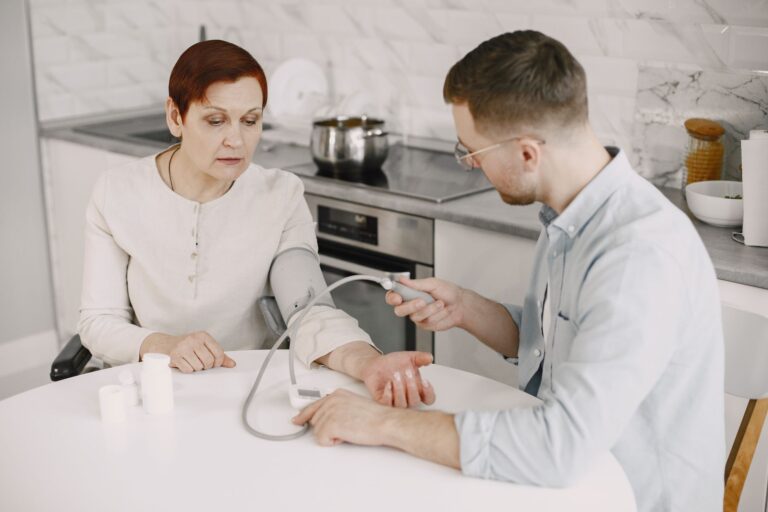
Live-in dementia care for a spouse means a paid caregiver lives in your home and provides daily supervision and personal help. AveeCare reports it usually costs $6,000 to $10,500 per month, while public help depends on strict medical and financial rules AveeCare live-in caregiver guide. This option lets couples stay together at home with steady support through the day and night. Your decision turns on daily care needs, monthly budget, and careful questions before hiring.
Medical information disclaimer: This article is for general educational purposes only and does not provide medical advice, diagnosis, or treatment. Always consult a physician or other qualified health professional about symptoms, medications, tests, or treatment decisions.
Table of Contents
- What does live-in care include?
- How much will it cost each month?
- Will Medicare pay for live-in care?
- Can Medicaid or VA benefits help spouses?
- What should you ask before hiring?
What does live-in care include?
Live-in care covers custodial support such as bathing, dressing, and supervision. The caregiver sleeps overnight but stays available, which makes it different from shift-based hourly care.
It does not replace skilled nursing or therapy. Families often ask what a typical day looks like, because dementia needs change over time and staffing must match them.
How much will it cost each month?
AveeCare reports live-in care typically bills a flat $200 to $350 per day. That is far below round-the-clock hourly care at $480 to $720 per day.
Broader budgets run high as well. ProLife Home Care, citing the Genworth/CareScout 2024 survey, puts median home health aide costs at $77,792 per year and homemaker services at $75,504. The Alzheimer's Association estimates lifetime dementia care at $405,262 per person in 2024 dollars, with families bearing 70%.
Will Medicare pay for live-in care?
Medicare does not pay for long-term custodial care such as daily bathing, dressing, or supervision, according to CareLinkUSA summarizing Medicare guidance Medicare coverage summary from CareLinkUSA. It covers a home health aide only part-time alongside skilled nursing or therapy, never 24-hour home care.
Medicare Part B does cover a cognitive assessment and care-plan visit to diagnose dementia. MyMedicarePlans, checked against Medicare.gov and CMS, reports patients then pay 20% of the approved amount after the $283 Part B deductible for 2026.
Can Medicaid or VA benefits help spouses?
For married couples in 2026, Courtney Elder Law Associates, citing CMS standards, reports the healthy at-home spouse may keep $32,532 to $162,660 in countable assets plus monthly income up to $4,066.50 2026 Medicaid standards from Courtney Elder Law. This spousal protection matters when a partner with dementia qualifies for long-term care.
State Medicaid 1915(c) waivers, described by Medicaid.gov, can pay for home services instead of a nursing facility and may use spousal rules, but they do not cover room and board. Families.care, citing VA rates, reports VA Aid and Attendance pays up to $2,424 monthly for a veteran alone, $2,874 for a veteran with a spouse, and $1,558 for a surviving spouse under a $163,699 net-worth limit VA benefit rates from Families.care.
What should you ask before hiring?
The National Institute on Aging advises families to ask what a typical day looks like and what the fee includes. Ask whether staffing and doctor oversight fit dementia needs, and what insurance, Medicaid, or Medicare may pay. Write down each answer and compare two providers side by side before signing.
- What does a typical day and night look like for my spouse?
- What exactly does the flat fee include and exclude?
- How do you staff for changing dementia needs and medical oversight?
- Will long-term care insurance, Medicaid, or Medicare pay any part?