Forgetting to drink in middle-stage dementia means the person needs steady prompts and hands-on help to stay hydrated. Caregivers can drink together, give short reminders, and keep small sips within sight and reach. Middle-stage dementia brings more severe symptoms and greater need for help with basic tasks. Drinking often slips at this point because thirst fades, memory lapses, and cups and bottles become hard to manage.
Medical information disclaimer: This article is for general educational purposes only and does not provide medical advice, diagnosis, or treatment. Always consult a physician or other qualified health professional about symptoms, medications, tests, or treatment decisions.
Table of Contents
- Why does drinking get harder now?
- How much fluid should caregivers aim for?
- What can you say and do in the moment?
- Which signs need fast action?
- What if swallowing changes?
Why does drinking get harder now?
In middle-stage dementia, damage to brain cells makes routine tasks hard without assistance. The person can still take part with help, according to the Alzheimer's Association in its Alzheimer's stages guide. Forgetting is only one part.
Banner Health explains that people with dementia may feel less thirst, forget where glasses are, struggle to fill a cup or open a bottle, or be unable to say they are thirsty in its expert answer on dehydration in dementia. Fluid-losing medicines and limiting drinks over incontinence worry can add to the risk. That help need widens in the middle stage. Symptoms become more severe and the person starts to need help with washing, dressing, and going to the toilet.
How much fluid should caregivers aim for?
Aim for about 6 to 8 cups or glasses each day, about 1.5 to 2 litres. Offer variety through the day, not only at meals. Useful options include water, tea, coffee, milky drinks, juice, smoothies, squash, soup, and broth.
The Alzheimer's Society sets out this daily amount and drink variety in its drinking and hydration guide. Small amounts offered often work better than a large glass left alone. Keep the target steady but adjust the plan when illness, hot weather, vomiting, or diarrhoea raise fluid needs.
What can you say and do in the moment?
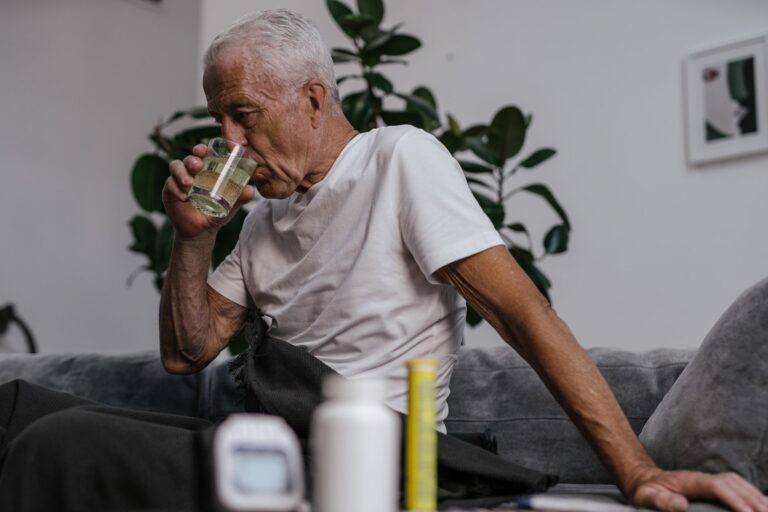
Make drinking social and simple. Sit down, pour one for yourself, and say, "Let's have a drink." Use short reminders such as "Here's your tea" or "Take a sip." Place the drink in eyesight or gently into the person's hand. Use a familiar cup, a clear glass, or a brightly coloured cup that stands out on the table.
Offer small sips often rather than urging large gulps. Keep refills easy and choices narrow. Ask "Tea or juice?" instead of "What do you want?" Replace a full cup that feels heavy with a half cup, and keep it within reach during dressing, resting, and visits.
Which signs need fast action?
Watch for dry mouth, dark or strong-smelling urine, sunken eyes, dizziness, weakness, headache, constipation, agitation, fatigue, and new confusion. Dehydration can develop after only a few hours without fluids. Get urgent or emergency care for worsening confusion, fever of 101F or 38.3C or higher, breathing difficulty, rapid heartbeat, vomiting or diarrhoea, chest or abdominal pain, or no urination for eight hours.
- Note the time of the last drink and last toilet trip before calling.
- Bring a list of medicines, recent fluid intake, and new symptoms.
- Do not press extra thin liquids if coughing, choking fear, or swallowing trouble appears.
What if swallowing changes?
Count high-water foods toward fluid intake, such as soup, jelly, yoghurt, ice cream, and melon. They help on days when cups are refused or meals are small.
Seek clinical advice about swallowing difficulty, choking fear, or need for thickened fluids rather than pressing thin liquids. A speech and language therapy team can advise on safer textures and sipping methods.