The 2026 Dementia Care and Caregiving Research Summit Report, published by the National Institute on Aging in August 2026, moved culturally responsive caregiver support from an aspiration to a method: community advisory boards, culturally tailored interventions, and two-way partnerships between researchers and the families who use the programs. For long-distance caregivers — anyone living an hour or more from the person they help — the practical change is indirect but real: the report's push to find unrecognized caregivers in everyday settings and to deliver support through technology is the route by which an adapted program reaches someone who is not in the room. The report documents a virtual summit series whose first day was held March 17, 2026, and it reads as a research agenda rather than a set of new services. That matters for how you use it: it tells you which kinds of caregiver programs are about to be built and evaluated, and which gaps — including cost, long-term effects, and distance — are still open.
Medical information disclaimer: This article is for general educational purposes only and does not provide medical advice, diagnosis, or treatment. Always consult a physician or other qualified health professional about symptoms, medications, tests, or treatment decisions.
Table of Contents
- What "culturally responsive" now means in NIA's agenda
- The identification problem, and why it decides who gets help
- Where long-distance caregiving actually sits
- Care coordination models and the 2027 evidence date
- The gaps that limit what any of this promises
- What comes next, and the mechanism to watch
- Frequently Asked Questions
What "culturally responsive" now means in NIA's agenda
The older model was to build a caregiver intervention, test it, and then translate it for a new community. The 2026 summit report names a different mechanism in its gaps-and-opportunities section: community advisory boards, culturally tailored interventions, and bidirectional researcher–caregiver partnerships. The community helps adapt the program before it is tested, not after. The report's case study shows what that looks like.
Kula no nā Poʻe, a Hawaiian community-based organization, adapted the Savvy Caregiver Program — a structured education course that teaches families the skills of day-to-day dementia care — for the two Hawaiian homestead communities it serves, forming a community advisory board paired with a research team. The summit treated this as a subject in its own right. Session 2, "The Role of Communities in Dementia Care Research," included a session on adapting caregiver interventions for responsiveness by centering community knowledge and values, scheduled at 3:55 p.m. in the NIA program book, with Lexie Jackson of Laulima Grant Writing and Evaluation LLC among the speakers.
The identification problem, and why it decides who gets help
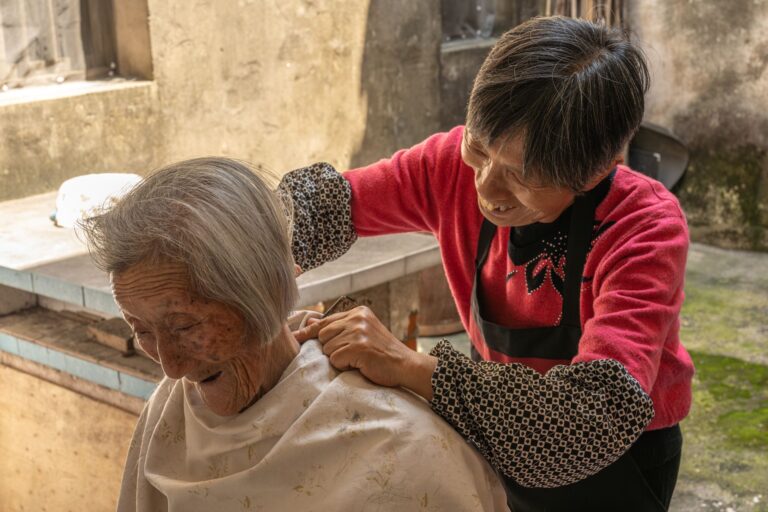
A culturally adapted program only helps people the system can find. Session 3 of the report identifies an unmet need to study how to identify unrecognized caregivers in ordinary community settings, and names dental offices, salons, pharmacies, and faith communities as places worth examining. These are settings where someone mentions a parent's memory loss long before a clinician writes it down. The report also states that using technology and building caregiver identification into routine care could extend interventions both to caregivers and to people living with dementia who have no care partner at all.
It notes, at the same time, that identifying care partners through medical records remains difficult. That combination is the closest the report comes to the distant caregiver. If you are three states away, you are rarely in the exam room, rarely on the chart, and rarely in the local salon or congregation. Identification research aimed at physical community settings will reach you last; identification built into records and technology is the path that reaches you at all.
Where long-distance caregiving actually sits
Geographic distance is not treated as a distinct population in the summit report. The practical guidance for it lives on NIA's separate consumer resource on long-distance caregiving, which sets the one-hour-away definition and covers money management, arranging in-home and respite care, and emergency planning. So the two documents do different jobs, and it is worth knowing which one you are reading.
The summit report tells you what researchers will build next. The consumer page is what you act on this month. A reasonable way to use both:.
- Treat the consumer guidance as your operating manual: who holds financial and medical authority, who the local backup is, what happens at 2 a.m.
- Ask the local clinic or care program to record you by name as a care partner, since the report flags records-based identification as the weak link.
- When a program is offered, ask whether it has a remote or digital version, and whether it was adapted with families like yours.
- Ask who the local community partner is — an advisory board or community organization is now a mark of a program built with its users.
Care coordination models and the 2027 evidence date
The report lists dementia care coordination models that are expanding fast, including the CMS GUIDE Model — a Medicare payment model that funds care navigation and caregiver support for people living with dementia. The report describes GUIDE as having more than 300 participating organizations, and says CMS will report its initial formal evaluation in 2027.
That evaluation is the nearest firm date in this agenda. According to the report, it will cover whether GUIDE improves care quality or lowers costs, along with program attrition, participant alignment, and outcomes. If you are weighing whether to enroll a parent with a participating organization now, understand that you are joining ahead of the first formal results.
The gaps that limit what any of this promises
The report is explicit about what the evidence does not yet show: data on program core components, caregiver outcomes and their economic impacts, effectiveness across different populations and settings, and long-term impacts. For a family choosing between two programs, that means head-to-head comparisons largely do not exist.
It also singles out indirect costs as poorly understood, naming caregivers' long-term financial and workforce-reentry challenges. Long-distance caregivers carry an unusually visible share of those costs — flights, lost workdays, paid local help in place of their own hands — and the research has not priced them.
What comes next, and the mechanism to watch
The route from "culturally responsive" to something a distant caregiver actually receives runs through personalization. The parallel 2026 NIH Alzheimer's and related dementias research progress report points toward personalized caregiver interventions, including digital health tools, better matched to the diverse realities of people providing care.
Put the pieces in order and the next few years are legible: community-adapted programs as the design standard, identification research to find caregivers who are currently invisible, digital delivery as the way an adapted program travels, and the CMS evaluation in 2027 as the first hard verdict on paying for coordination at scale. One concrete step while that unfolds: when you call the local clinic, ask to be added to the record as the care partner and give a phone number that reaches you where you live, not where your parent lives.
Frequently Asked Questions
Does the 2026 summit report create any new service I can sign up for?
No. It is a research agenda and a record of the summit, documenting where the evidence is thin and which approaches researchers should pursue. The services it discusses, such as the CMS GUIDE Model, already exist independently.
What is the Savvy Caregiver Program?
It is a structured dementia caregiver education course. The report's case study describes a Hawaiian community-based organization, Kula no nā Poʻe, adapting it for the two Hawaiian homestead communities it serves through a community advisory board working with a research team.
Why does the report mention salons and dental offices?
Session 3 names them, along with pharmacies and faith communities, as everyday settings where unrecognized caregivers might be identified — a question the report says needs scientific study rather than assumption.
When will we know whether care coordination programs work?
CMS will report its initial formal evaluation of the GUIDE Model in 2027, covering care quality, costs, attrition, participant alignment, and outcomes.
You Might Also Like
- Culturally Responsive Caregiver Support in the 2026 NIA Report: What Changed and What Comes Next for Long-Distance Caregivers
- Early Dementia Diagnosis Economics in the 2026 NIA Report: What Changed and What Comes Next for Long-Distance Caregivers
- Community-Academic Dementia Partnerships in the 2026 NIA Report: What Changed and What Comes Next for Long-Distance Caregivers