The 2026 NIA Summit Report points dementia care toward personhood, joint planning, community partnership, and coordination rather than one best model. For long-distance caregivers, culturally responsive support means services that fit language, values, and family caregiving customs.
The NIA IMPACT Collaboratory's 2026 summit events listing describes a virtual March 17-19, 2026 meeting of researchers, people with dementia, care partners, and providers. NIA treats anyone living an hour or more away as a long-distance caregiver. That definition matters because distance shapes what help is practical.
Medical information disclaimer: This article is for general educational purposes only and does not provide medical advice, diagnosis, or treatment. Always consult a physician or other qualified health professional about symptoms, medications, tests, or treatment decisions.
Table of Contents
- What did the 2026 report prioritize?
- Who must research reach?
- What does tailored support look like?
- What can you handle from an hour or more away?
- How do you help without burning out?
What did the 2026 report prioritize?
ComForCare's San Diego families summary of the NIA report says the report recommends no single treatment or care model. It prioritizes preserving personhood, joint planning with patients and care partners, stronger community partnerships, and better coordination.
Personhood means care protects identity and preferences, not only symptoms. Joint planning means the person, family caregivers, and providers make decisions together. Coordination links medical care with local supports so a far-away caregiver is not the only bridge.
Who must research reach?
NIA's care-support milestone calls for methods to equitably identify unpaid AD/ADRD care partners. The goal is better research engagement and culturally appropriate services, supports, and health care.
Equitable identification matters for distance caregivers who are less visible to clinics. It also matters when language, migration history, or family roles affect who gives care and who asks for help.
What does tailored support look like?
George Mason University's October 2025 grant announcement says Y. Alicia Hong is expanding WECARE with a $3 million NIA grant.
WECARE is a culturally tailored digital intervention built for Chinese American dementia caregivers and designed for adaptation to other groups. A digital format can reach a caregiver who cannot attend in person. Adaptation means core lessons can be reshaped for other languages and customs rather than starting over.
What can you handle from an hour or more away?
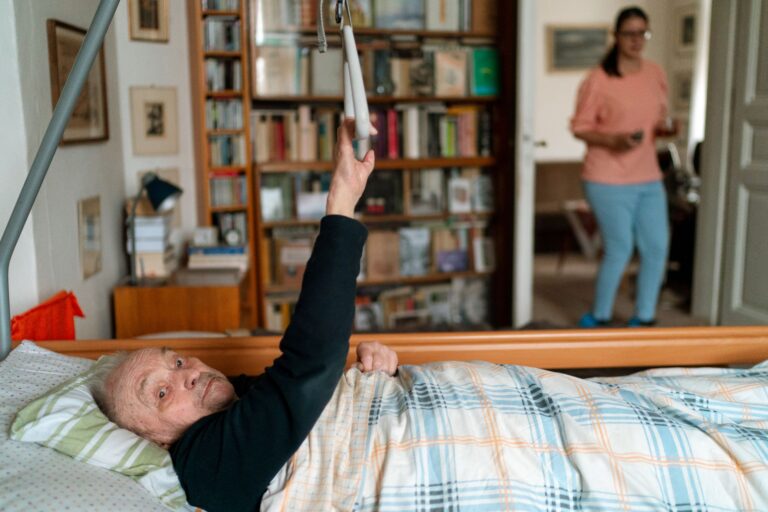
NIA says long-distance caregivers can manage practical tasks that do not require being in the room. Useful tasks include: One family member can track bills and coverage from afar while another handles in-person visits. Written records help both sides see what was paid, ordered, and scheduled.
- manage finances, bills and insurance claims
- arrange care management or home aides
- order medicines, equipment, and supplies
How do you help without burning out?
NIA notes long-distance caregiving brings distinct stress. It cites guilt about distance and limited time together, plus worries about time off work, separation from family, and travel costs.
The Family Caregiver Alliance's far-away help FAQ says long-distance caregivers can call the Eldercare Locator at 1-800-677-1116 to reach the parent's local Area Agency on Aging. It also describes respite lasting hours to weeks by traveling to stay while the primary caregiver rests. Keep 1-800-677-1116 with the care folder so any family member can call the local Area Agency on Aging during a crisis.
You Might Also Like
- Community-Academic Dementia Partnerships in the 2026 NIA Report: A Source-Checked Briefing for Long-Distance Caregivers
- Why the AAIC 2026 Soccer Study Does Not Prove Dementia: What Researchers Still Need to Learn for Adult Children
- Safety Questions After the 2026 LiBBY Dementia Trial: What Researchers Still Need to Learn for Adult Children