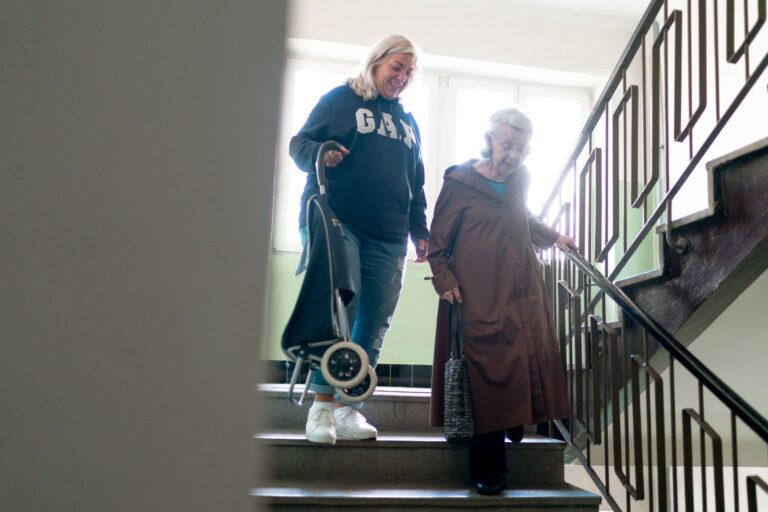
Adapt simple strength exercises for early-stage dementia by using chair-supported moves and giving one small step at a time with a live demo. Keep sessions short, in the same order, with breaks and encouragement. Early-stage dementia means memory loss and trouble with focus are mild but new methods are harder to learn. Strength work keeps legs steady for standing, walking, and daily tasks.
Medical information disclaimer: This article is for general educational purposes only and does not provide medical advice, diagnosis, or treatment. Always consult a physician or other qualified health professional about symptoms, medications, tests, or treatment decisions.
Table of Contents
- Which moves adapt best?
- How do you set up safely?
- How do you cue each step?
- How do you keep a steady routine?
Which moves adapt best?
The NHS lists sit-to-stand from a chair, mini-squats and calf raises holding a chair, and sideways leg lifts as simple strength moves starting at about five slow repetitions. These moves use body weight and a chair for balance. They fit small rooms and need no special gear.
Pick one or two moves per session at first. Do five slow repetitions with good form. Add repetitions gradually as strength and confidence grow.
How do you set up safely?
The NHS advises a solid stable chair without wheels, feet flat with knees at right angles, loose clothing, and water handy. Place the chair against a wall on a flat, clear floor. Stay close enough to give support.
Older adults who have been inactive or have health conditions should speak to a GP first to match activity and intensity to fitness, according to the NHS in its physical activity guidelines for older adults. Use supervision to lower fall risk. Stop if pain, dizziness, or chest discomfort occurs.
How do you cue each step?
The Alzheimer Society of Canada advises caregivers to break tasks into one small step at a time with short sentences, gestures, and a live demo in its guidance on routines and reminders. Do the movement together so the person can copy you. Avoid long verbal explanations.
- Show feet flat and hands on chair.
- Say Now stand, then pause.
- Stand with the person.
- Say Turn, then sit slowly.
- Praise effort after each try.
How do you keep a steady routine?
The Alzheimer Society of Canada notes people with dementia have trouble learning new methods, remembering steps, and sustaining focus. Keep sessions short and in the same order. Go at a patient pace with breaks and praise.
Link exercise to a daily anchor like after breakfast. Use the same chair, same spot, and same order of moves. Track repetitions on a simple card so progress is visible.