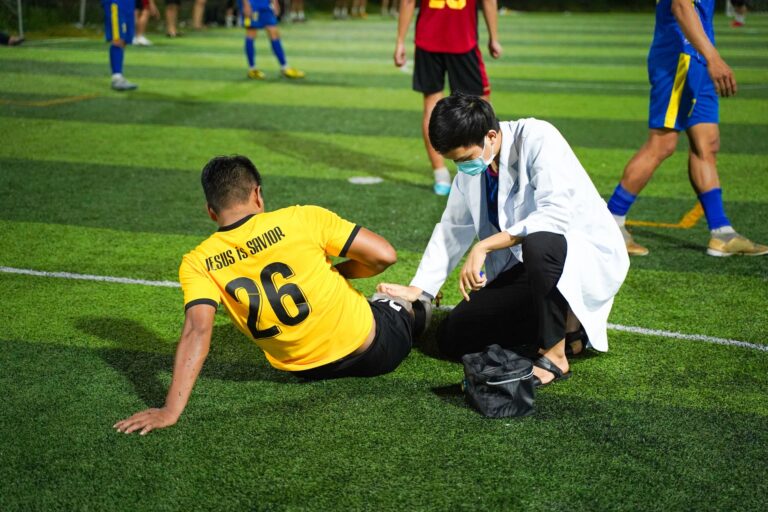
AAIC 2026 findings show retired elite soccer players in midlife reported more depression, anxiety and thinking complaints and showed lower gray-matter volume in selected regions, without a clear gap on objective thinking tests. For people with mild cognitive impairment — noticeable memory or thinking changes that leave daily independence intact — researchers still need long-term biomarker follow-up to learn which midlife changes progress. The Alzheimer's Association AAIC reported that researchers compared 142 retired elite professional players ages 30-60 with 56 healthy adults with no contact-sport, head-impact, concussion or neurologic history in the AAIC report on brain-health changes in soccer players. That design gives a midlife snapshot, not a forecast for any one person.
Medical information disclaimer: This article is for general educational purposes only and does not provide medical advice, diagnosis, or treatment. Always consult a physician or other qualified health professional about symptoms, medications, tests, or treatment decisions.
Table of Contents
- What the midlife scans showed
- Why mood stood out more than test scores
- What heading and career length may add
- What should people with MCI do now?
What the midlife scans showed
MRI scans in 124 former players showed lower gray-matter volume at group level in frontal, cingulate and thalamic regions. Those areas support memory, attention, decision-making and emotional regulation. Imperial College London described the pattern as a group average, not a diagnosis for every player, in the Imperial College London summary.
A group difference means the player group averaged lower than the control group. It does not mean every former player had shrinkage. It also does not identify Alzheimer's disease.
Why mood stood out more than test scores
Nearly one-third of former players, 31%, scored in the clinically significant depression range versus 9% of controls. They also reported higher anxiety and more subjective difficulty thinking and making decisions.
Objective cognitive tests showed no clear group difference in that same study. Imperial College London also reported no proof of Alzheimer's disease, and said the work does not establish that soccer caused the changes.
What heading and career length may add
An Amsterdam UMC amateur-soccer study published in JAMA Neurology and presented at AAIC 2026 tested casual heading. It found short-term rises in blood p-tau217 and S100B, with larger rises after more frequent or harder headers.
A separate Boston University AAIC 2026 analysis linked longer soccer careers to higher risk of chronic traumatic encephalopathy. That condition can currently receive a definitive diagnosis only after death, according to the Alzheimer's Association AAIC overview. Together, these reports point to dose and repetition as key questions for future study.
What should people with MCI do now?
Practical Neurology described the elite-player study as a cross-sectional conference presentation not yet peer-reviewed in the Practical Neurology report. Cross-sectional means researchers measured players once in midlife.
That design cannot show which changes progress to mild cognitive impairment or dementia. For people who already have MCI, the AAIC overview points to four near-term actions while researchers complete the needed longitudinal work:.
- Track mood, anxiety, sleep and day-to-day thinking complaints at visits.
- Treat depression and anxiety promptly rather than attributing them to aging.
- Protect the head during sport, falls, work and travel.
- Ask about longitudinal biomarker follow-up studies that track blood markers, MRI and thinking over time.
You Might Also Like
- AAIC 2026 PROTECT-Cog Lifestyle and GLP-1 Trial: What Researchers Still Need to Learn for People With Mild Cognitive Impairment
- Safety Questions After the 2026 LiBBY Dementia Trial: What Researchers Still Need to Learn for People With Mild Cognitive Impairment
- LiBBY Trial Findings for Late-Stage Dementia Agitation in 2026: What Researchers Still Need to Learn for People With Mild Cognitive Impairment