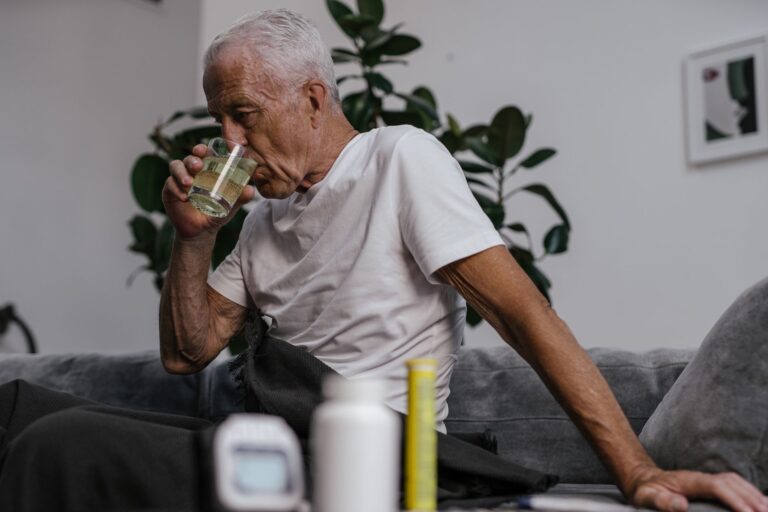
No. Forgetting to drink water is not a recognized early warning sign of dementia — it's the other way around.
A geriatric-medicine review of dehydration-dementia research describes forgetting fluids as a *consequence* of dementia, something that happens once the disease has already disrupted a person's daily routines, not a signal that appears before diagnosis. That distinction matters because dehydration itself can produce confusion and poor concentration that looks a lot like cognitive decline. Separating the two — a true early sign of dementia versus a treatable fluid problem that mimics one — is the practical question this article answers.
Medical information disclaimer: This article is for general educational purposes only and does not provide medical advice, diagnosis, or treatment. Always consult a physician or other qualified health professional about symptoms, medications, tests, or treatment decisions.
Table of Contents
- What the Research Actually Shows
- Why Thirst Changes With Age Anyway
- Who Is Most at Risk for Dehydration
- Dehydration Can Mimic Dementia Symptoms
- What the Official Warning Signs Actually List
- What to Actually Do About Hydration
What the Research Actually Shows
Dehydration is more common in people who already have dementia than in those who don't. A 2024 cross-sectional study of 1,377 geriatric-clinic patients, most of them around age 80, found dehydration in 58% of the 575 patients with dementia, compared with 53% of those without a dementia diagnosis — a statistically significant difference. That same study found dehydration rates varied by dementia type: highest in vascular dementia at 68%, followed by Alzheimer's disease at 57%, Lewy body dementia at 57%, and frontotemporal dementia at 54%.
The differences between subtypes were not statistically significant, so no single form of dementia stands out as distinctly more dehydration-prone than the others. Crucially, this research is cross-sectional — it measured hydration status in people who already carried a dementia diagnosis. No prospective study identified in this body of evidence tracked fluid intake in healthy people over time to see whether forgetting to drink predicted a later dementia diagnosis. The association runs from dementia to dehydration, not the reverse.
Why Thirst Changes With Age Anyway
Part of why dehydration climbs with age has nothing to do with cognition. A classic controlled study published in the New England Journal of Medicine found that healthy men aged 67 to 75 felt less thirsty and drank less water than men aged 20 to 31 after 24 hours without any fluids — even though the older men showed larger rises in blood sodium and osmolality, the body's own markers of dehydration.
In other words, the physical sensation of thirst blunts with normal aging, independent of memory or dementia. This means an older adult can become dehydrated simply because their body isn't sending a strong thirst signal, not because they "forgot" anything. Any discussion of hydration and aging has to account for this baseline decline before layering cognitive factors on top.
Who Is Most at Risk for Dehydration
Within the group of dementia patients studied, certain health conditions raised the odds of dehydration independently of the dementia itself. The same 2024 study found that hypertension, diabetes, chronic kidney disease, dysphagia (difficulty swallowing), and greater cognitive impairment were each independently associated with dehydration. A caregiver or clinician watching for dehydration risk in someone with dementia should treat this list as a practical checklist — the more of these conditions present, the closer hydration should be monitored, regardless of which dementia subtype is involved.
- High blood pressure
- Diabetes
- Chronic kidney disease
- Dysphagia (swallowing difficulty)
- More advanced cognitive impairment
Dehydration Can Mimic Dementia Symptoms
Dehydration doesn't just occur alongside dementia — it can produce symptoms that look like it. Saint Alphonsus Health System and AARP both note that dehydration in older adults can cause confusion, reduced alertness, and trouble concentrating, and can trigger delirium — a sudden-onset confused state that differs from dementia's typically gradual decline. This overlap is why a sudden change in an older adult's mental clarity shouldn't be assumed to be dementia progressing.
Clinicians recommend treating any abrupt confusion as a prompt for medical evaluation rather than assuming it reflects worsening dementia, since dehydration is treatable and reversible once identified. The practical takeaway: a gradual pattern of forgetting to drink, alongside other memory and daily-function changes, fits within dementia's broader picture. A sudden drop in alertness or clarity points first toward dehydration or another acute cause that a doctor can check.
What the Official Warning Signs Actually List
The Alzheimer's Association's list of the 10 early warning signs of Alzheimer's and dementia names things like memory loss that disrupts daily life, confusion with time or place, and poor judgment. Forgetting to drink water does not appear on that list as a distinct, named sign.
That absence is informative. The organizations that track and define dementia's early symptoms point to broader patterns — memory lapses that interfere with work or home life, trouble with familiar tasks, withdrawal from social activities — rather than a single behavior like skipping water. A reader concerned about early dementia signs is better served checking a loved one against that fuller list than watching for missed drinks alone.
What to Actually Do About Hydration
Because dehydration both resembles dementia symptoms and shows up more often in people who already have dementia, the practical guidance from the 2024 study and AARP is the same for every older adult: monitor hydration regardless of cognitive status, and don't wait for thirst to be the cue, since thirst itself weakens with age.
- Offer fluids on a schedule rather than waiting to be asked, especially for someone with dysphagia, diabetes, kidney disease, or hypertension.
- Watch for sudden confusion as a signal to check hydration and seek medical evaluation, not as evidence of dementia worsening.
- Flag swallowing difficulty early — it's one of the independent risk factors tied to dehydration in dementia patients.
- Don't rely on "they'd tell me if they were thirsty" — the thirst sensation itself declines well before any cognitive change enters the picture.