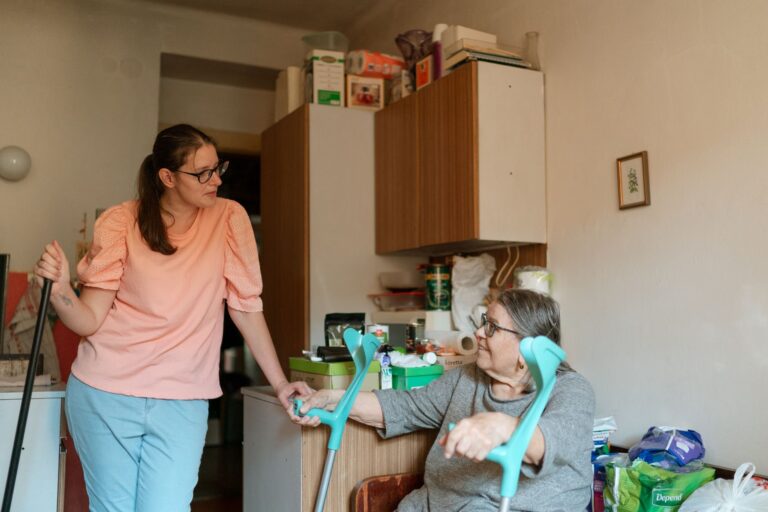
Weekend respite care fits once overnight caregiving has become too demanding, risky, or exhausting for the regular caregiver to sustain without a break. It's appropriate as soon as the caregiver needs rest, not only once a crisis forces the issue — the National Institute on Aging specifically recommends starting respite care early rather than waiting until burnout sets in. Respite care is short-term relief for a family caregiver, delivered in a home, adult day center, or residential facility for anywhere from a few hours to several weeks. Weekend respite — an overnight or multi-day stay away from home — is the version built for caregivers who need more than a few hours off and for a person with dementia whose needs now run past daytime.
Medical information disclaimer: This article is for general educational purposes only and does not provide medical advice, diagnosis, or treatment. Always consult a physician or other qualified health professional about symptoms, medications, tests, or treatment decisions.
Table of Contents
- What Makes a Weekend Stay the Right Fit
- Where a Weekend Stay Actually Happens
- What a Hospice Respite Stay Costs
- Why So Few Caregivers Use It
- What the Evidence Doesn't Settle
- Frequently Asked Questions
What Makes a Weekend Stay the Right Fit
A weekend or residential respite stay becomes appropriate once a person's dementia symptoms exceed what a daytime-only program can handle. Provider guidance draws a clear line here: adult day programs return the person home each evening and generally work for early-stage dementia, while overnight respite is suited to sundowning, wandering, or advancing impairment, according to Dodge Park Rest Home's dementia-care guide. Sundowning — increased confusion, agitation, or restlessness in the late afternoon and evening — is a common trigger for moving to overnight care, because it's exactly the window a daytime program doesn't cover.
Wandering that escalates after dark, or round-the-clock supervision needs that have outgrown a few hours of coverage, point the same way. The caregiver's own condition matters as much as the person's. A caregiver who is sleep-deprived, managing their own health crisis, or needs to travel for a wedding, funeral, or medical procedure has a legitimate reason for a multi-day break, independent of how advanced the dementia is.
Where a Weekend Stay Actually Happens
Weekend respite takes place in a licensed facility, not at home. For caregivers of a terminally ill dementia patient, Medicare's hospice benefit covers inpatient respite of up to 5 consecutive days at a time, repeatable across a benefit period, specifically to give the regular caregiver a break — but only in a Medicare-certified hospice facility, hospital, or skilled nursing facility, according to CMS.
The benefit doesn't cover respite delivered at home. Outside hospice, weekend respite is typically arranged directly through an assisted living community, memory care facility, or skilled nursing facility offering short-term stays, independent of a hospice diagnosis. The National Institute on Aging's broader definition of respite also includes home-based and community/adult-day options for shorter breaks, per the same NIA guidance cited above — those fit a few hours or a single day, not a full weekend away.
What a Hospice Respite Stay Costs
For caregivers using the Medicare hospice respite benefit, the cost is capped and predictable. The patient owes 5% coinsurance of the respite-day payment, capped at that year's inpatient hospital deductible, as specified by CMS.
Outside that benefit, weekend respite is paid privately or through other funding. The federally funded National Family Caregiver Support Program, accessed through local Area Agencies on Aging, funds respite for caregivers of people 60 or older, or of any age with Alzheimer's or dementia, according to the Administration for Community Living. The ACL has also funded grants specifically to expand dementia-specific respite services nationwide, widening availability beyond what a single county or facility previously offered.
Why So Few Caregivers Use It
Despite how common dementia caregiving has become, most caregivers who'd benefit from respite don't use it. The Alzheimer's Association's 2024 Facts and Figures report found 11.475 million family and other unpaid caregivers provided nearly 18.4 billion hours of dementia-related care in 2023, valued at $346.6 billion — a scale of unpaid labor respite care exists to offset, according to the Alzheimer's Association.
Yet a 2025 survey from AARP and the National Alliance for Caregiving found only 13% of family caregivers actually use respite care, even though 39% say it would help. Caregivers cited trust, shame, and quality-of-care concerns as the main barriers, as reported by Home Health Care News. That gap between need and use is worth naming before deciding against a weekend stay: the hesitation is common, but it isn't evidence the stay itself is a bad idea.
What the Evidence Doesn't Settle
Respite care is widely recommended, but a Cochrane systematic review of four trials covering 753 participants found no evidence that respite improved measurable outcomes for people with dementia or their caregivers compared with no respite, and called for more methodologically sound research, according to Cochrane. That doesn't mean weekend respite doesn't help — the trials measured specific outcomes that may not capture what a caregiver experiences as relief, such as sleep, stress, or the ability to keep working.
It does mean a caregiver shouldn't expect a single weekend stay to produce a documented change in the person with dementia's symptoms or trajectory. The practical case for weekend respite rests on the caregiver's own need for rest and the scale of unpaid care documented above, not on a clinical outcome a short stay is unlikely to move.
Frequently Asked Questions
Does Medicare cover a weekend respite stay for every dementia patient?
No — the Medicare hospice respite benefit only applies to a terminally ill patient already enrolled in hospice, and only in a certified hospice facility, hospital, or skilled nursing facility, per CMS.
Is a weekend stay the same as adult day care?
No. Adult day programs return the person home each evening and suit early-stage dementia, while weekend respite provides overnight, round-the-clock care for more advanced symptoms, according to Dodge Park Rest Home.
Where can a caregiver find help paying for respite outside of hospice?
Local Area Agencies on Aging administer the National Family Caregiver Support Program, which funds respite for caregivers of people with dementia at any age, per the Administration for Community Living.