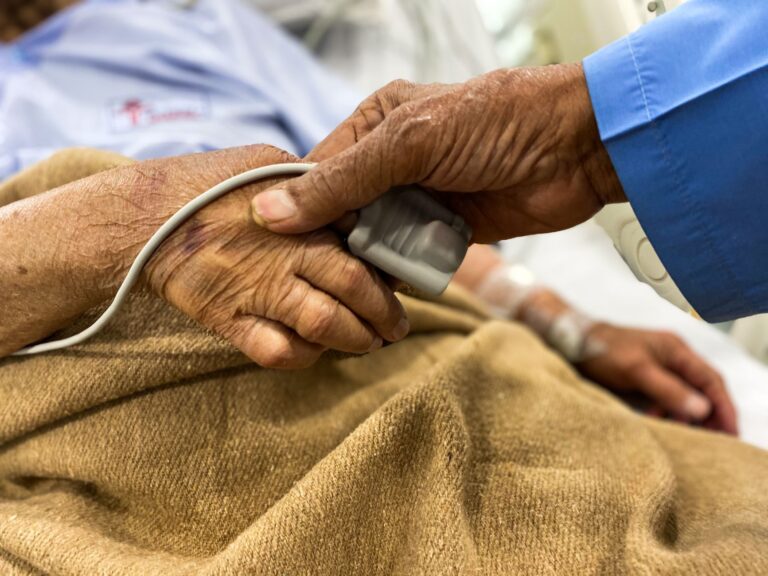
PrecivityAD2 is a blood test that helps doctors evaluate Alzheimer's disease in people as young as 40 who already have cognitive symptoms, including mild cognitive impairment. The FDA cleared it in August 2026, making it the first FDA-cleared Alzheimer's blood test usable at that age, which matters directly for anyone facing a possible younger-onset diagnosis. For someone with mild cognitive impairment who suspects younger-onset Alzheimer's, this clearance changes the options on the table. It doesn't replace a full clinical workup, but it gives doctors a blood-based tool to use earlier in the process than before.
Medical information disclaimer: This article is for general educational purposes only and does not provide medical advice, diagnosis, or treatment. Always consult a physician or other qualified health professional about symptoms, medications, tests, or treatment decisions.
Table of Contents
- What PrecivityAD2 Actually Measures
- Who Qualifies, and Why Age 40 Matters
- Comparing PrecivityAD2 to the Other FDA-Cleared Blood Tests
- What the Test Can and Cannot Decide
- Getting the Test Right Now
- Frequently Asked Questions
What PrecivityAD2 Actually Measures
PrecivityAD2 is made by C2N Diagnostics and uses mass spectrometry — a lab technique that identifies molecules by their mass — to measure two markers in blood plasma: the amyloid beta 42/40 ratio and tau proteins (p-tau217 and np-tau217), according to Patient Care Online. These two readings combine into a single score called the Amyloid Probability Score 2 (APS2), ranging from 0 to 100. The score sorts into three result categories: Negative, Likely Positive, and Positive. In C2N's FDA validation study of 1,142 symptomatic adults, a Positive result carried a 97.6% positive predictive value for amyloid pathology, and a Negative result carried a 93.1% negative predictive value, as reported by Healio.
Amyloid pathology refers to the sticky protein plaques in the brain that are a hallmark of Alzheimer's disease, confirmed in this study by PET scans or cerebrospinal fluid (CSF) testing. The Likely Positive category is the one that needs the most caution. It covered 17.3% of the validation cohort but carried only a 77.3% positive predictive value, meaning roughly one in four people in that group did not actually have confirmed amyloid pathology, per Patient Care Online. Anyone who receives a Likely Positive result needs a follow-up PET scan or CSF test before treating the finding as settled.
Who Qualifies, and Why Age 40 Matters
The FDA clearance applies to adults aged 40 and older who already show signs or symptoms of cognitive impairment, which includes mild cognitive impairment, according to the Alzheimer's Association. It is not cleared for asymptomatic people or for general population screening — someone with no cognitive symptoms cannot use this test to check their risk. That age-40 floor is the test's defining feature.
Younger-onset Alzheimer's refers to disease that begins before age 65, and families facing it have historically struggled to get a diagnosis because most tools and protocols are built around older patients. Alzheimer's Association leadership framed the clearance specifically around that gap, calling younger-onset Alzheimer's a reality many families face and often struggle to get diagnosed, per the Alzheimer's Association. A person in their 40s or early 50s with memory or thinking problems now has a blood test option that didn't name-check their age group before. Someone over 55 has more choices, covered next.
Comparing PrecivityAD2 to the Other FDA-Cleared Blood Tests
PrecivityAD2 is the third Alzheimer's blood test to receive FDA clearance, not the first. Fujirebio's Lumipulse test, which measures the pTau217/amyloid-beta ratio, was cleared first, in May 2025, according to BrightFocus Foundation. Roche and Eli Lilly's Elecsys pTau217 test followed with FDA clearance in August 2026, the same month as PrecivityAD2. Elecsys pTau217 is limited to adults 55 and older.
In its 2,148-adult study, it matched PET scan results in 88% of participants with cognitive impairment and 91% of those without impairment, per BrightFocus Foundation. That accuracy is strong, but the age cutoff rules it out for anyone under 55, which is exactly the group most affected by younger-onset disease. Here is how the three compare for a patient deciding which test might apply to them: PrecivityAD2 stands alone among the three as usable starting at age 40, which is why it is the one relevant to a younger-onset diagnosis question, as BrightFocus Foundation notes. Younger patients are typically evaluated outside standard late-onset protocols altogether, so having any cleared blood test that includes them is a meaningful change, not just a modest improvement over existing options.
- **Lumipulse (Fujirebio)** — first cleared, May 2025; measures pTau217/amyloid-beta ratio.
- **Elecsys pTau217 (Roche/Eli Lilly)** — cleared August 2026; limited to ages 55 and up; matched PET results in 88-91% of a 2,148-person study.
- **PrecivityAD2 (C2N Diagnostics)** — cleared August 2026; usable starting at age 40; three-tier result (Negative, Likely Positive, Positive) with predictive values noted above.
What the Test Can and Cannot Decide
The FDA's clearance is explicit on one point: PrecivityAD2 is not a stand-alone diagnostic test, and it is not meant for population screening. It has to be used alongside a clinical evaluation, and a positive result does not by itself confirm Alzheimer's disease, according to the Alzheimer's Association.
That distinction matters most for the Likely Positive category, where roughly one in four results don't hold up against confirmatory testing. A clinician ordering PrecivityAD2 for a patient with mild cognitive impairment should plan for the possibility that a PET scan or CSF test will still be needed, rather than treating the blood draw as the final step. A Negative or Positive result carries much stronger predictive value on its own — over 93% in both directions — but both still sit inside a broader clinical evaluation that looks at symptoms, history, and other test results together.
Getting the Test Right Now
The FDA-cleared version of PrecivityAD2 was expected to reach the market later in 2026. In the meantime, C2N's existing CLIA-validated version of the same test — a lab-developed test validated under the Clinical Laboratory Improvement Amendments rather than the newly cleared version — has remained available directly through C2N's own clinical laboratory, according to Practical Neurology.
For a patient with mild cognitive impairment who wants to pursue testing now rather than waiting for the commercial FDA-cleared rollout, that CLIA-validated route through C2N's lab is the practical path. Anyone considering it should go through a doctor who can order the test, interpret the APS2 score, and arrange confirmatory PET or CSF testing if the result comes back Likely Positive.
Frequently Asked Questions
Can PrecivityAD2 diagnose Alzheimer's on its own?
No. The FDA cleared it as an aid to clinical evaluation, not a stand-alone diagnostic, and a positive result alone does not confirm Alzheimer's disease, per the Alzheimer's Association.
What happens if someone gets a "Likely Positive" result?
That result needs confirmatory testing with a PET scan or CSF test, since it carries only a 77.3% positive predictive value compared to over 97% for a Positive result, according to Patient Care Online.
Why can't someone under 55 use the Elecsys pTau217 test instead?
Its FDA clearance restricts it to adults 55 and older, so PrecivityAD2 is currently the only FDA-cleared option for people between 40 and 54, per BrightFocus Foundation.
You Might Also Like
- The Third FDA-Cleared Alzheimer’s Blood Biomarker Test in 2026: How People With Mild Cognitive Impairment Can Compare Testing Options
- PrecivityAD2 as an Adjunct to a 2026 Alzheimer’s Assessment: How People With Mild Cognitive Impairment Can Compare Testing Options
- FDA’s 2026 PrecivityAD2 Alzheimer’s Blood Test Clearance: How People With Mild Cognitive Impairment Can Compare Testing Options