Leqembi Iqlik now covers both phases of treatment at home. On July 13, 2026, the FDA approved a subcutaneous starting dose for lecanemab, extending the at-home injection option to the first phase of treatment for early Alzheimer's disease, not just the maintenance phase approved the year before, according to Biogen/Eisai's announcement. For a person newly diagnosed, or a caregiver managing their care, this means the entire regimen can now run through weekly injections rather than clinic infusions. What changes is logistics and training, not the drug's monitoring requirements, which remain exactly as strict as before.
Medical information disclaimer: This article is for general educational purposes only and does not provide medical advice, diagnosis, or treatment. Always consult a physician or other qualified health professional about symptoms, medications, tests, or treatment decisions.
Table of Contents
- What the New Starting-Dose Approval Actually Covers
- Does Injection Training Actually Work for People With Memory Loss?
- How to Get Trained Before the First Injection
- Is At-Home Dosing as Effective and Safe as the IV Version?
- What the Evidence Doesn't Yet Show
- Frequently Asked Questions
What the New Starting-Dose Approval Actually Covers
Before July 2026, at-home injections were only available after a patient had already completed 18 months of IV infusions. The FDA's August 29, 2025 approval covered maintenance-only subcutaneous dosing — 360 mg weekly through a 1.8 mL autoinjector — and only after that induction period, according to Eisai/Biogen's 2025 announcement. The new approval removes that waiting period.
The initiation regimen is 500 mg once weekly, given as two separate 250 mg injections, each taking about 15 seconds, replacing the biweekly IV infusions that previously opened treatment, according to Eisai/Biogen's investor materials. A patient diagnosed today can start on injections from day one instead of spending a year and a half tethered to infusion appointments. This matters most for patients who live far from an infusion center, or whose mobility or anxiety makes clinic visits difficult. It does not change who qualifies for lecanemab itself — that eligibility is still determined by amyloid confirmation and disease stage, independent of delivery method.
Does Injection Training Actually Work for People With Memory Loss?
The honest concern with any self-injection regimen for Alzheimer's patients is whether someone with cognitive impairment can learn and repeat the steps correctly. A human factors study of 110 participants tested this directly, and the results show training is not optional — it is the difference between success and failure. Among patients with low cognitive scores (measured by MMSE, the Mini-Mental State Examination), 93.3% completed two consecutive self-injections correctly after formal training, compared with just 53.3% without it.
Trained caregivers succeeded 94.1% of the time versus 73.3% untrained, according to the peer-reviewed human factors study. That gap — roughly 40 percentage points for patients, 20 points for caregivers — means an untrained attempt carries a real chance of a missed or incorrect dose. The same study found that 91.8% of participants correctly understood the critical safety information on the device labeling after training, which leaves about 8% who did not demonstrate that understanding even with instruction. For a caregiver managing a loved one's regimen, that residual gap is a reason to confirm comprehension directly rather than assume a training session alone closed it.
How to Get Trained Before the First Injection
Eisai and Biogen run a support program called Leqembi Companion, launched in October 2025, specifically to walk patients and caregivers through device use. It offers in-person or virtual instruction from nurse educators, a welcome kit, and an app built with Medisafe for tracking injection schedules and doses, according to Biogen's program announcement.
A few things to know going in: Scheduling training before the first dose — not after a missed or fumbled attempt — is the point of the program. Given the error-rate gap in the human factors study, treating training as mandatory rather than optional is the practical takeaway for any family starting this regimen.
- The program covers device mechanics only — how to prepare, inject, and track doses. It does not weigh in on broader treatment decisions, such as whether to continue therapy or how to interpret side effects.
- Both patient and caregiver should attend training together when possible, since the human factors data shows caregivers have their own, separate error rate to close.
- The tracking app exists specifically because a once-weekly schedule, split into two injections, is easy to lose track of without a reminder system.
Is At-Home Dosing as Effective and Safe as the IV Version?
Pharmacokinetic data presented at the 2026 Alzheimer's Association International Conference (AAIC) directly compared the two delivery routes. The 500 mg subcutaneous starting regimen achieved bioequivalence to IV initiation, with an exposure ratio of 104% (90% confidence interval: 99.1%–109%), meaning the drug reaches the bloodstream at essentially the same levels either way, according to the AAIC 2026 presentation. Anti-drug antibody formation was low, at 1.4%, with no neutralizing antibodies detected. The boxed warning for ARIA — amyloid-related imaging abnormalities, which can involve brain swelling or bleeding — carries over unchanged to the subcutaneous route.
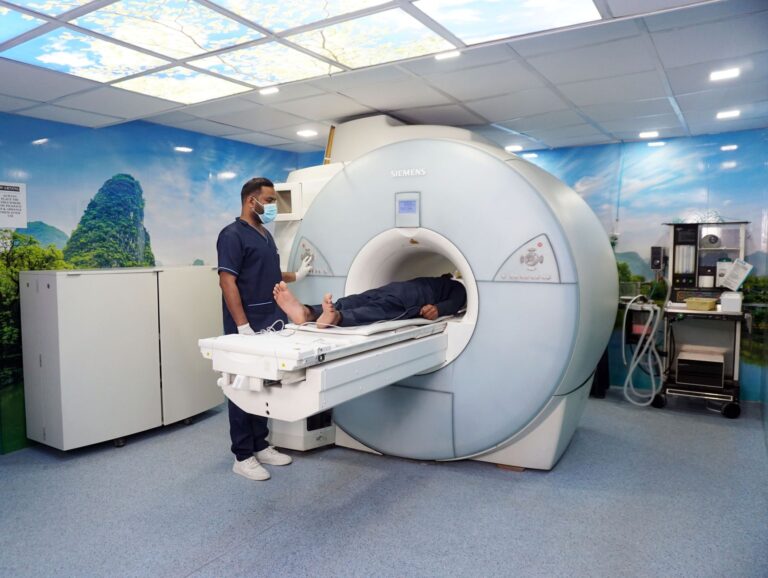
Scheduled MRI monitoring is still required on the same schedule, regardless of whether the drug is infused in a clinic or injected at home, according to the FDA label. Switching to injections does not reduce or replace that monitoring. One trade-off is specific to the injection route itself: localized injection-site reactions occurred more often with subcutaneous dosing than systemic reactions did, according to the same AAIC presentation. This is a different risk profile than IV infusion, which carries its own, separate set of infusion-related reactions. Neither route eliminates the need to watch for ARIA symptoms between scheduled scans.
What the Evidence Doesn't Yet Show
No study has directly compared outcomes between patients who self-inject without supervision and those who rely on a caregiver for every dose. The human factors and caregiver-burden research available so far — including a Duke Clinical Research pilot that produced only 18 complete datasets — are small, preliminary studies rather than trials measuring real-world treatment outcomes, according to Duke's published pilot.
That gap matters for a specific, practical reason: it means there is no data yet showing whether an occasional missed step in an unsupervised injection translates into a measurable difference in disease progression or safety events. Families deciding between full self-injection and caregiver-administered dosing are making that choice without outcome data to lean on — only the device-accuracy numbers from the human factors study above. Where that uncertainty exists, the training program and its tracking tools are the concrete tool available now, even though they weren't designed to answer the outcomes question directly.
Frequently Asked Questions
Do patients still need MRI monitoring if they switch to at-home injections?
Yes. The FDA label's boxed warning for ARIA and its scheduled MRI monitoring apply the same way regardless of whether lecanemab is infused in a clinic or injected at home.
Can a new patient start on injections immediately, or do they need IV infusions first?
As of the July 2026 approval, a new patient can start directly on the subcutaneous initiation regimen — 500 mg weekly as two injections — without first completing IV infusions.
What's the one safety trade-off that's specific to the injection route?
Localized injection-site reactions occurred more often with subcutaneous dosing than systemic reactions did, a pattern that doesn't arise with IV infusion.
You Might Also Like
- MRI and ARIA Monitoring With At-Home Leqembi in 2026: Benefits, Limits, and Evidence Gaps for People With Early Alzheimer’s
- Day-One Subcutaneous Leqembi for Early Alzheimer’s in 2026: Access, Coverage, and Training Questions for People With Mild Cognitive Impairment
- AAIC 2026 Evidence on Blood Tests and Diagnostic Plans: What Is Established and What Remains Uncertain for People With Mild Cognitive Impairment