Injection training for the 2026 at-home Leqembi regimen means a healthcare provider teaches a patient or caregiver to give the subcutaneous starting dose correctly before they ever do it alone, and that same provider has to check their technique again over time. The FDA approved Leqembi Iqlik (lecanemab-irmb), a subcutaneous autoinjector, on July 13, 2026, letting people with early Alzheimer's begin and stay on treatment entirely at home instead of starting on IV infusions, according to Biogen's July 13, 2026 announcement.
That approval covers the full course, not just maintenance dosing, which Eisai and Biogen describe as the first at-home option worldwide for an anti-amyloid Alzheimer's drug, with U.S. pharmacy availability expected in late August 2026 according to the Biogen/PharmaTimes report. The shift moves day-to-day injection responsibility onto patients and caregivers, while the MRI monitoring schedule and the genetic risk counseling that go with lecanemab treatment stay exactly as they were on IV dosing.
Medical information disclaimer: This article is for general educational purposes only and does not provide medical advice, diagnosis, or treatment. Always consult a physician or other qualified health professional about symptoms, medications, tests, or treatment decisions.
Table of Contents
- What the New Autoinjector Changes
- What Injection Training Actually Involves
- The MRI Schedule Hasn't Changed
- Why ApoE ε4 Status Matters Before Starting
- Warning Signs That Need Immediate Attention
- Frequently Asked Questions
What the New Autoinjector Changes
The approved starting regimen is 500 mg once weekly, delivered as two separate 250 mg subcutaneous injections, each taking about 15 seconds through the autoinjector, according to Biogen's announcement. After 18 months of prior IV or subcutaneous treatment, patients move to a maintenance dose of 360 mg once weekly, also given subcutaneously.
Before Leqembi Iqlik, every patient needed an infusion center visit for IV dosing, at least for the initial phase of treatment. Now a patient can start and continue the entire regimen at home, which removes the travel and scheduling burden of infusion visits but adds a new requirement: someone has to give the injection correctly every week, without clinical staff standing by.
What Injection Training Actually Involves
The FDA's prescribing information requires a healthcare provider to instruct the patient or caregiver on correct subcutaneous injection technique before the first at-home dose, and to periodically reassess their ability to inject safely over time, according to the FDA-approved Instructions for Use. This is not a one-time demonstration; the provider checks back in to confirm the technique still holds up. Approved injection sites are the abdomen, the upper thigh, and the back of the upper arm.
The injection must avoid moles, scars, bruises, tattoos, or irritated skin, per the same Instructions for Use. The autoinjector has to sit at room temperature for 20 minutes before use, must never be warmed by any external heat source, and is single-use only — it cannot be reused for a second dose. For a caregiver managing early Alzheimer's care, this means building the injection into a weekly routine with the same rigor as medication timing, since a site rotation mistake or a warmed device isn't something that corrects itself.
- Let the autoinjector reach room temperature for 20 minutes before injecting.
- Rotate among the abdomen, upper thigh, and back of the upper arm.
- Skip any skin that has a mole, scar, bruise, tattoo, or irritation.
- Use each autoinjector once, then discard it.
- Confirm technique with the prescribing provider again at follow-up visits, not just at the start.
The MRI Schedule Hasn't Changed
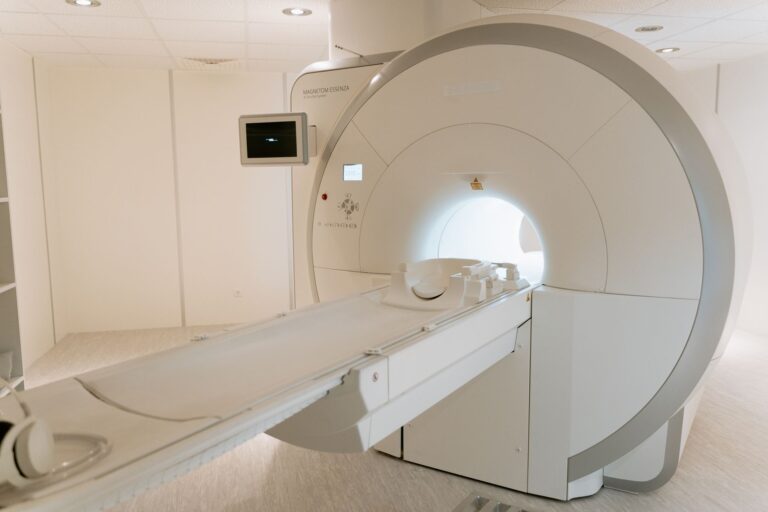
Moving dosing into the home does not change how often a patient needs brain imaging. On August 28, 2025, the FDA added an earlier monitoring MRI, now required between the 2nd and 3rd dose, on top of the existing MRIs before the 5th, 7th, and 14th doses, according to the FDA's Drug Safety Communication. That update followed a review of 6 early-treatment deaths and 24 serious cases of ARIA-E (amyloid-related imaging abnormalities with swelling) found through safety monitoring before patients reached their 4th infusion.
The Alzheimer's Association confirms that this clinical schedule and the genetic risk counseling tied to lecanemab remain the same whether the drug is given by IV or at home, according to its 2026 statement. At-home dosing changes who gives the injection; it does not change when a patient needs to come in for imaging. That distinction matters for scheduling: a family managing injections at home still has to keep every MRI appointment on the clinical calendar, even during stretches when no clinic visit is otherwise needed for the dose itself.
Why ApoE ε4 Status Matters Before Starting
The FDA's boxed warning on lecanemab states that people who carry two copies of the ApoE ε4 gene (homozygotes) face markedly higher risk of ARIA than those with one copy or none. In clinical trials, any ARIA occurred in 45% of homozygotes, compared with 19% of heterozygotes and 13% of noncarriers; serious ARIA occurred in roughly 3% of homozygotes versus about 1% of the other two groups, according to the FDA prescribing information.
The label directs genetic testing before treatment to estimate this risk, though testing is not a mandatory requirement to begin lecanemab. A patient and their care team can decide, knowing the risk profile, whether to test before starting and how closely to watch for symptoms once at-home dosing begins. This risk information applies the same way regardless of whether a patient receives lecanemab by IV or by the new autoinjector, since the drug and its ARIA risk are unchanged — only the delivery method is new.
Warning Signs That Need Immediate Attention
ARIA-E is usually asymptomatic, found only on an MRI, but it can be serious or fatal when symptoms do appear. The FDA advises patients and caregivers to contact a healthcare professional or go to the nearest emergency room immediately for certain warning signs, according to the FDA's Drug Safety Communication.
For a caregiver who is also now the person giving the weekly injection, this list functions as a standing checklist to review after every dose — not just at MRI visits. Because ARIA-E often shows no outward symptoms at all, the scheduled MRIs before doses 3, 5, 7, and 14 remain the only way to catch many cases, regardless of how closely a caregiver watches for symptoms at home.
- Headache
- Confusion
- Dizziness
- Vision changes
- Nausea
Frequently Asked Questions
Does switching to the at-home autoinjector reduce how often MRI monitoring is needed?
No. The MRI schedule — now starting between doses 2 and 3, plus before doses 5, 7, and 14 — applies the same way to IV and at-home dosing, per the FDA's Drug Safety Communication.
Can a patient skip genetic testing and still start the at-home regimen?
Yes. Testing for ApoE ε4 status is recommended to estimate ARIA risk but is not mandatory before starting lecanemab, according to the FDA prescribing information.
How long does each at-home injection take?
Each of the two 250 mg subcutaneous injections in the weekly starting dose takes about 15 seconds through the autoinjector, according to Biogen's announcement.
When does the at-home version become available to patients?
U.S. availability through specialty pharmacies was expected in late August 2026, according to the Biogen/PharmaTimes report.
You Might Also Like
- FDA’s 2026 At-Home Leqembi IQLIK Starting Dose: Safety and Monitoring Questions for People With Early Alzheimer’s
- At-Home Leqembi vs IV Infusions After the 2026 FDA Decision: Safety and Monitoring Questions for People With Early Alzheimer’s
- MRI and ARIA Monitoring With At-Home Leqembi in 2026: Safety and Monitoring Questions for People With Early Alzheimer’s