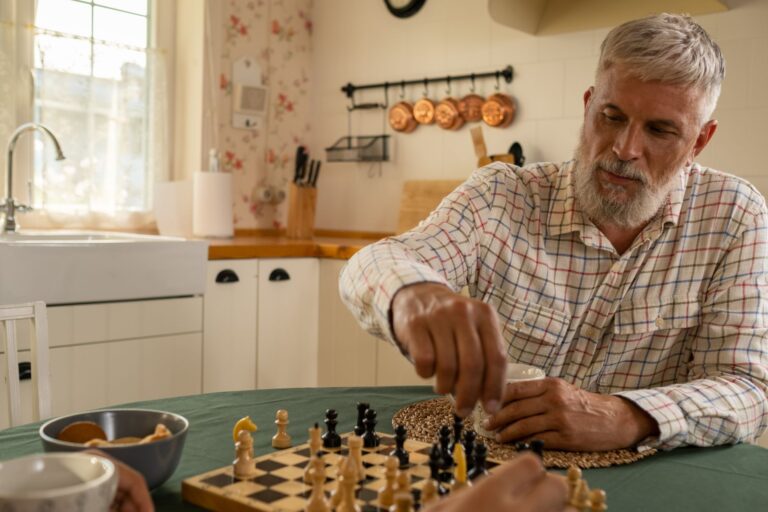
On a low-energy day, replace matching games with familiar chores, calm music, simple art, gentle sensory activities, and shared memories. These options need less focus and still offer usefulness, comfort, and time together.
Matching games ask the player to pair cards, pictures, or objects by color, shape, or theme. University of Exeter research reported by McKnight's describes apathy and loss of interest as common in dementia. Withdrawal can make routine tasks like dressing and eating harder over time.
Medical information disclaimer: This article is for general educational purposes only and does not provide medical advice, diagnosis, or treatment. Always consult a physician or other qualified health professional about symptoms, medications, tests, or treatment decisions.
Table of Contents
- Why does interest drop on tired days?
- Which household tasks work as substitutes?
- How can music and art stay calm?
- What helps when games no longer appeal?
Why does interest drop on tired days?
Fatigue lowers patience for rules and concentration. The National Institute on Aging advises matching the activity to what the person can still do in its adapting activities guidance.
Help the person start, then watch for frustration. Save outings for the best time of day and keep the pace slow when energy dips.
Which household tasks work as substitutes?
Familiar chores give a clear role without rules or scores. They use practiced movement and offer a visible result.
The National Institute on Aging lists these tasks as low-pressure options. Offer one task at a time and work alongside. Stop if frustration rises and switch to rest or music.
- Fold laundry or sort socks and mail.
- Wash dishes, set the table, or dust.
- Help prepare food.
How can music and art stay calm?
Music listening, singing, and simple art projects can build a sense of accomplishment and self-expression. The Alzheimer's Association advises lowering stimulation in its art and music guidance by turning off the TV, closing windows and doors, and keeping volume low.
A 2025 Cochrane review found that at least five music-based therapy sessions probably reduce depression and may improve behavior problems compared with usual care in its 2025 Cochrane review. It may have little to no effect on thinking, agitation, or aggression.
What helps when games no longer appeal?
When games lose appeal, the National Health Service recommends simplified sensory activities in its activities guidance focused on sight, hearing, touch, taste, and smell. Try playing familiar music, offering safe objects to handle, or giving a gentle hand massage.
Photos, objects, video clips, and music clips in a book or tablet can support shared memories. The National Health Service also points to singing groups and informal memory cafés for confidence, mood, and time with carers.