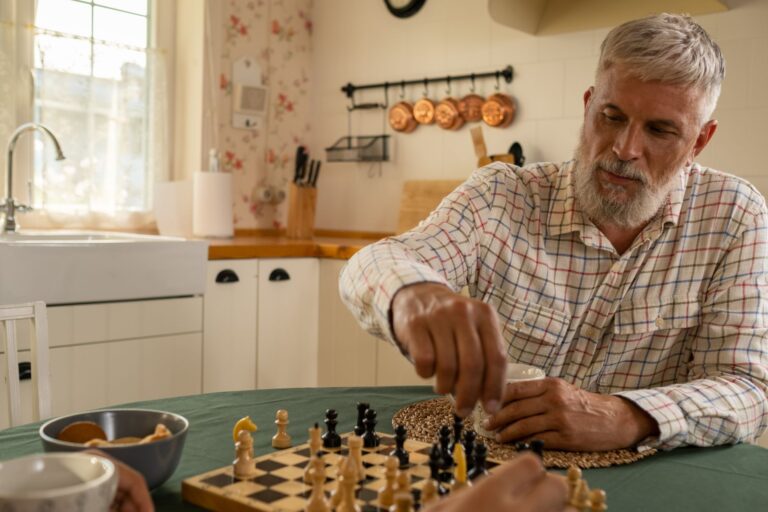
Offer one brief matching session in the morning or early afternoon on a low-energy day, then rest. Matching games mean simple pairing or sorting play, such as matching familiar picture pairs or sorting cards by suit. A low-energy day calls for less demand and more flexibility. The goal is calm engagement, not completion, because success varies day to day.
Medical information disclaimer: This article is for general educational purposes only and does not provide medical advice, diagnosis, or treatment. Always consult a physician or other qualified health professional about symptoms, medications, tests, or treatment decisions.
Table of Contents
- Why Morning Works Best
- How Much Play Is Enough?
- Which Matches Fit Low Energy?
- How to Support Play and When to Stop?
Why Morning Works Best
People living with dementia are often more alert in the morning or early afternoon. The Alzheimer's Association explains that demanding activities fit best in that window, with calm evenings to limit sundowning confusion, described in Alzheimer's Association guidance on sleep issues and sundowning.
Watch when your person functions best and protect wake and sleep times. Family Caregivers Online advises leaving room for short, low-effort activities when energy dips. A regular rhythm makes the morning offer easier to accept.
How Much Play Is Enough?
Offer one short session, then pause for rest. Family Caregivers Online suggests retrying later only if energy and mood recover. One good ten-minute exchange beats three tired attempts.
People with dementia need a balance of activity and rest. Family Caregivers Online notes the value of frequent breaks and varied tasks. You do not need to fill every minute.
Which Matches Fit Low Energy?
Choose familiar and simple over new and complex. The Miami Jewish Health Memory Matters program points to sorting playing cards by suit or playing simple familiar pairs instead of complex unfamiliar board games. Large pictures, few cards, and known images lower strain.
Treat the game as enjoyment and connection. Puzzles and brain-training games have limited convincing evidence of special protection beyond other active pastimes, according to the Alzheimer's Society UK review of dementia risk and prevention. Pleasure, attention, and time together are the real payoff.
How to Support Play and When to Stop?
Start the activity with the person and keep steps small. The National Institute on Aging advises helping the person begin, breaking tasks into simple steps, and letting watching count as participation, detailed in National Institute on Aging tips for adapting activities.
Stop or switch if the person seems tired, frustrated, restless, or distressed. Alzheimer's WA and Dementia Australia advise changing course rather than pressing for completion, noted in their activities helpsheet for caregivers. Put the cards away and offer rest, a drink, music, or quiet company.
- Set out two to four large familiar cards face up.
- Demonstrate one match, then invite one choice.
- Accept watching, holding cards, or sorting colors as play.