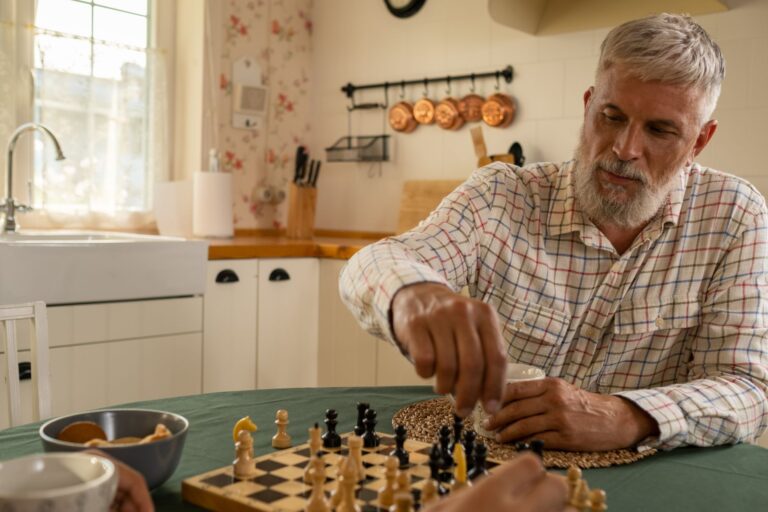
Shrink the matching game to 3-6 large, high-contrast pairs and sort them face-up by color, shape, or suit instead of playing face-down recall. Match the activity to what the person can do today, help them start, and stay close if they need hands-on help. A matching game pairs identical or related cards, tiles, or household objects. On a low-energy dementia day, the goal shifts from testing memory to calm engagement and connection.
Medical information disclaimer: This article is for general educational purposes only and does not provide medical advice, diagnosis, or treatment. Always consult a physician or other qualified health professional about symptoms, medications, tests, or treatment decisions.
Table of Contents
- Match the game to today's ability
- Use fewer, larger, familiar pairs
- Say less and set a calm space
- Keep sessions brief and follow enjoyment
- Keep expectations realistic
Match the game to today's ability
Choose an activity the person enjoys and can still do, such as sorting, pairing, or singing along while you sort. The National Institute on Aging advises caregivers to fit the task to current ability and decide whether to offer hands-on help or let the person participate alone, as explained in its adapting activities guide. Offer a smaller role when energy is low. Let them place one pair while you handle the rest.
Focus on retained strengths rather than recall. Mayo Clinic guidance carried by St. Clair Health recommends activities the person can still do, like dancing, painting, sorting, or singing, to support connection in its dementia care guide. Stop pushing pairs and simply handle, name, or group the pictures together.
Use fewer, larger, familiar pairs
Use 3-6 oversized pairs with clear pictures tied to past interests, such as flowers, foods, tools, or family pets. The Kensington Falls Church recommends this smaller face-up sort by color, shape, or suit for low-energy days in its brain-stimulating activities guide. Familiar items hold attention better than abstract symbols.
High contrast and large print reduce visual strain. Lay all cards face-up on a plain table. Remove extra decks, scorekeeping, and timers.
- Keep 3 pairs for very tired days, up to 6 when alertness lifts
- Choose one sorting cue: same color, same shape, or same picture
- Use thick cards or real objects that are easy to grip
Say less and set a calm space
Work in a quiet, well-lit place with television and phone alerts off. Harvard Health Publishing advises giving one short instruction at a time and starting with one or two sentences, because longer directions cause loss of thread, in its dementia communication strategies article. Say, "Find the red apples." Pause.
Wait for action before adding more. Point, tap the match, or hand them the card to start. Use names for objects rather than hints about memory. Keep your tone warm and unhurried.
Keep sessions brief and follow enjoyment
Keep play to a few minutes and watch for overwhelm or frustration. Miami Jewish Health advises keeping sessions brief, simplifying rules, offering encouragement rather than correction, and switching activities when enjoyment drops, in its Memory Matters activity guide. Praise effort, not accuracy.
If sorting stalls, finish the last pair together and close the game. End while the mood is still pleasant. Offer water, a short rest, music, or a walk. Return to matching later only if interest returns.
Keep expectations realistic
Mentally stimulating games plus social and physical activity are linked to lower mild-cognitive-impairment risk, but games alone are not treatment and do not reverse dementia. Mayo Clinic researchers report this distinction in their mild cognitive impairment findings.
The practical win on a tired day is calm time together. Choose comfort over challenge when energy is low.